


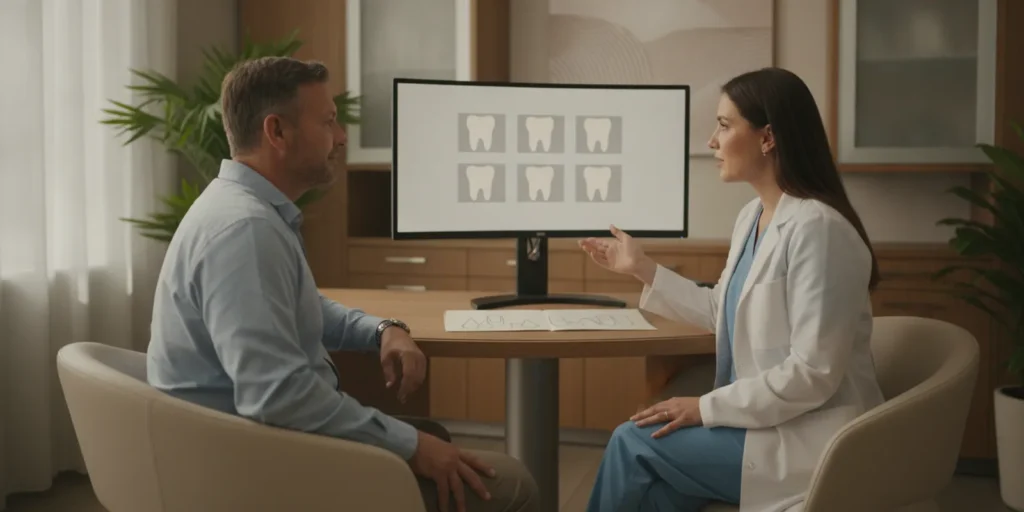
When a dental treatment plan involves several teeth, implants, or a major change in function, it is reasonable to want a clear understanding of the findings and choices. A dental second opinion can offer another professional perspective before you decide how to proceed. The goal is not to collect opinions until one matches a preference; it is to understand the diagnosis, the reasoning behind the plan, and what alternatives may be appropriate to discuss.
When can a dental second opinion be useful?
A second opinion may help when a proposed plan is extensive, has several stages, or includes choices that can affect the shape and function of the bite. It can also be useful when you leave an appointment unsure what problem the treatment is meant to address, why a particular option was presented, or what the likely sequence would be.
Patients seek another perspective for different reasons. A research article on second opinions describes patients wanting more information or feeling dissatisfied with the explanation they received (study on patient reasons for seeking a second opinion). The reasons are personal, and seeking clarification does not by itself mean that the first clinician was wrong. In California’s Medi-Cal dental benefits guidance, members are told they may request another dentist or specialist before deciding on a plan; benefit details depend on the specific program. Read the Medi-Cal dental plan guidance.
A second opinion may be especially relevant in situations such as:
- A complex restorative plan: The proposed work involves multiple crowns, bridges, implants, or a combination of procedures.
- Different paths are being discussed: You want to understand how preserving a natural tooth, restoring it, or replacing a missing tooth may fit the clinical findings.
- The cause is unclear: You want a fuller explanation of what is contributing to pain, wear, changes in your bite, or repeated restoration problems.
- Timing or sequencing matters to you: You want to understand which steps are planned first and what depends on healing or evaluation.
- You have unanswered questions: You do not yet understand the expected benefits, limitations, maintenance, or trade-offs of the proposed choices.
A second opinion is a conversation and an evaluation, not a promise that another clinician will reach a different conclusion. Sometimes the second clinician agrees with the original assessment and explains it in a way that is easier to understand. Sometimes the evaluation identifies questions or alternatives that should be discussed further.
What makes complex dental plans hard to compare?
Two plans may use different terms while trying to address overlapping concerns. For example, one plan may focus on replacing damaged restorations, while another first explains how tooth wear or the bite relates to those restorations. That difference does not automatically make one plan better. It does mean you can ask each clinician to explain the problem being treated, the evidence behind the proposed steps, and the consequences of choosing among the options.
It can also help to separate the immediate concern from the larger planning question. A tooth may need attention, but the clinician may also be considering how it fits with the surrounding teeth, existing restorations, and the way the bite functions. Ask what needs to be addressed first to protect oral health, what is intended to improve function, and which choices relate mainly to appearance. That order helps keep a conversation focused on health first, then function, then beauty, without treating those goals as interchangeable.
Complex restorative care is not simply a list of procedures. A prosthodontist evaluates how teeth, restorations, jaw relationships, and appearance work together. If you are unfamiliar with the specialty, Dr. Clark explains why a prosthodontist may be involved in complex dental care. For broader context, see the practice’s explanation of how a prosthodontist differs from a general dentist.
In an evaluation, the clinician may review your dental and medical history, examine your mouth, and consider appropriate diagnostic records. The purpose is to understand the situation, not to validate a predetermined plan. A thorough conversation should connect the findings to the options being considered and make clear what is known, what remains uncertain, and what additional information may be needed.
What should you gather before the appointment?
Organized records make it easier for a second clinician to understand what has already been evaluated. Ask the original dental office how to obtain copies of relevant records and whether they can be sent directly to the clinician you plan to see. You do not need to decide in advance which records are essential; the receiving office can explain what would be useful.
- The written treatment plan: Include the proposed procedures, the order of care, and any notes or estimates you were given.
- Diagnostic images and reports: Ask whether existing radiographs, scans, photographs, or test results can be shared. A new clinician can determine whether the available material is adequate for an evaluation.
- A concise timeline: Note when the concern began, what has changed, and any previous treatment related to it. Keep it factual and brief.
- A medication and health-history list: Bring current information that may be relevant to dental planning, and share it directly with the clinician.
- Your questions and priorities: Write down what you most want to understand, including concerns about function, appearance, timing, maintenance, or cost.
A simple preparation routine can keep the visit productive. First, request records early and confirm how they will be transferred. Next, mark the specific parts of the plan you do not understand; avoid trying to interpret diagnostic images on your own. Then write a brief description of your main concern and the outcome you hope to understand, such as preserving a tooth if that is clinically appropriate or learning how a proposed restoration affects function. Finally, bring the estimate and ask which items are included, optional, or contingent on later findings. This gives the clinician concrete questions to address without assuming that a written plan alone tells the whole story.
If records are not available before the visit, you can still explain what you know and ask what additional information is needed. Avoid assuming that an older image or a brief description can substitute for an examination. The clinician who evaluates you can tell you what can and cannot be concluded from the information on hand.
What questions help you understand the options?
Useful questions invite the clinician to explain the reasoning rather than simply name a procedure. You may want to ask:
- What findings are driving the proposed plan?
- Which parts of the plan are necessary to address the main concern, and which are optional or primarily address appearance?
- What reasonable alternatives should I understand, including the option of waiting or monitoring if appropriate?
- What are the benefits, limitations, and possible trade-offs of each option?
- How would the sequence work, and what could change the timeline?
- What information is still uncertain, and what further evaluation would clarify it?
- How might each option affect the teeth, bite, comfort, appearance, or future maintenance?
- What follow-up and ongoing care would each approach involve?
- What is included in the financial estimate, and what circumstances could change it?
These questions are prompts for discussion, not a checklist that determines which treatment is right. Ask the clinician to explain any unfamiliar term in plain language. If the explanation is difficult to follow, it is reasonable to pause and ask for a written summary of the proposed choices.
When the plan includes several stages, ask for a plain-language map rather than only a list of procedures. For each stage, note its purpose, what needs to happen beforehand, and how the clinician will decide whether to move forward. You might also ask which choices are reversible, which involve removing tooth structure, and whether a temporary restoration or a period of observation is part of the discussion. These questions do not prescribe a particular course of care; they help you understand the commitment and decision points before agreeing to a plan.
How can you compare two recommendations fairly?
Start by comparing the problem each clinician says they are addressing. Then look at the reasons for the proposed care, what each plan is intended to accomplish, and what limitations or uncertainties were explained. A difference in terminology or order does not necessarily indicate a disagreement about the underlying condition.
| What to compare | Questions to ask | Why it helps |
|---|---|---|
| Findings | What did the examination and records show? | Connects each plan to the stated clinical picture. |
| Goals | What is each step intended to improve or protect? | Clarifies whether plans are solving the same problem. |
| Alternatives | What other reasonable options were considered? | Shows the choices and trade-offs discussed. |
| Sequence and timing | Which steps depend on earlier care, healing, or more information? | Helps set realistic expectations for a multi-stage plan. |
| Risks and limitations | What could be uncertain, difficult, or require future maintenance? | Prevents a comparison based only on the procedure name. |
| Cost and scope | What does the estimate include, and what might be separate? | Makes the financial comparison more meaningful. |
Cost matters, but it is most useful to compare estimates after you understand what each includes. Plans can differ in the number and type of restorations, laboratory work, appointments, and follow-up. Ask for an itemized explanation where available instead of assuming two totals describe the same care.
In Dr. Clark’s practice, treatment discussions follow a multi-visit consultation model. The practice is private-care and out of network with all insurance; this model is designed around longer appointments and detailed planning, rather than insurance participation. Patients can review the practice’s approach to care and ask the office how fees and payment policies apply to their situation. No insurance participation should be assumed.
Why does specialist experience matter in restorative decisions?
When a plan involves a combination of restorative procedures, it can help to have the whole picture considered rather than viewing each tooth in isolation. Prosthodontics is the dental specialty focused on restoring and optimizing oral function, appearance, and complex rehabilitation. Dr. Jefferson Clark is a board-certified prosthodontist (FACP) with advanced specialty training. The relevance of that training depends on the details of the case; credentials do not replace an individualized examination or guarantee a particular result.
Custom restorations also depend on design and fabrication. Dr. Clark’s practice has an in-house dental laboratory with digital design and manufacturing capabilities. The clinician and laboratory team can collaborate on restorations as part of the planning process. Learn more about the in-house dental laboratory and how it supports custom restorative work.
For example, if a discussion involves replacing a missing tooth, a clinician may explain how an implant-supported restoration differs from other options and what factors need evaluation. The practice’s pages on the dental implant procedure and options for restoring lost teeth provide background, but they cannot determine which option fits an individual case.
How do timing, records, and plan changes fit together?
A second opinion does not always need to happen on a fixed schedule, but timing can matter when symptoms are changing or a clinician has described a time-sensitive concern. Ask the treating office what the stated timing is based on and what the risks of delay might be. If you have a new or worsening concern, contact a dental professional directly to discuss the appropriate next step. This article is general education, not individual medical or dental advice.
Complex care may involve several visits and stages. An implant plan, for example, can include evaluation, placement, healing, and restoration; the sequence depends on the clinical situation. A specialist can explain which steps are being proposed and what conditions could affect timing. Do not assume that one person’s timeline applies to another case.
When a second clinician’s assessment differs from the first, ask both offices to clarify the specific point of difference. Is it the interpretation of a finding, the order of procedures, the material, the goal, or the level of urgency? Sometimes sharing the second clinician’s questions with the original office helps resolve misunderstandings. You are not required to choose a plan during the appointment; you can ask for time to review the information.
Keep a short comparison note after each visit while the explanations are fresh. Record the proposed goal, the evidence or findings mentioned, the next step, and any open question. If the recommendations appear to conflict, identify one specific issue at a time and ask for clarification. For instance, if one plan places a restoration before another procedure and a second plan reverses the order, ask what clinical condition drives that sequence and whether the order depends on additional records. A focused question is more likely to clarify the difference than asking which clinician is simply right.
What does a second opinion cost, and how does coverage work?
Fees and benefits vary by practice and plan, so ask the office and your benefit administrator directly about your own situation. Rules can also differ between public programs. For example, Washington’s Apple Health program describes a specific second-opinion benefit; that does not establish coverage for other plans or locations. See the Apple Health second-opinion program details for that program’s terms.
Dr. Clark’s practice does not participate with insurance and is out of network with all insurance. If you are considering a consultation, ask the office about fees and the information needed to explain the cost of an evaluation. The practice’s contact page is the place to request details or begin a conversation. Coverage and reimbursement, if any, should be confirmed with the relevant plan rather than assumed.
How do you decide what to do after hearing another opinion?
After the visit, summarize what you learned in your own words. Note what the clinician believes is happening, why the proposed options were discussed, what remains uncertain, and what further records or evaluation may be needed. If you still have questions, ask for clarification before making a decision.
It can help to compare the explanations rather than count the number of recommendations. Consider whether each clinician addressed your concerns, explained the reasoning, discussed limitations, and connected the plan to your priorities. You can also ask whether the clinicians are willing to review records or communicate with one another, if that would help coordinate care.
A second opinion is most useful when it improves understanding. It may confirm a plan, identify a point that needs discussion, or help you understand alternatives. The right next step depends on your examination and personal circumstances, so treatment decisions should be made with a qualified dental professional who has evaluated you.
Frequently Asked Questions
Does asking for a second opinion mean I do not trust my dentist?
No. Patients may want more information, a specialist perspective, or a clearer explanation of a complex plan. You can frame the request as a way to understand your options and make an informed decision.
Should I bring my dental images to the second appointment?
Ask the office what records it would like and whether they can be transferred directly. Existing images may help, but the evaluating clinician decides whether they are current and sufficient for the questions being considered.
Can two clinicians recommend different plans?
Yes. Differences may involve the interpretation of findings, treatment goals, sequencing, or the options each clinician considers. Ask each clinician to explain the reasoning and the trade-offs rather than assuming that a different plan means one clinician is wrong.
Can a second opinion tell me which plan will work?
No clinician can guarantee an outcome. An evaluation can clarify the findings, explain options and limitations, and help you understand what factors may influence a plan.
Will insurance pay for a second opinion?
Coverage depends on the specific plan and circumstances. Dr. Clark’s practice is out of network with all insurance; contact your plan directly with questions about benefits or reimbursement.
If you are weighing complex restorative options, bring your records and questions to a consultation so the findings, alternatives, and next steps can be discussed in context.