


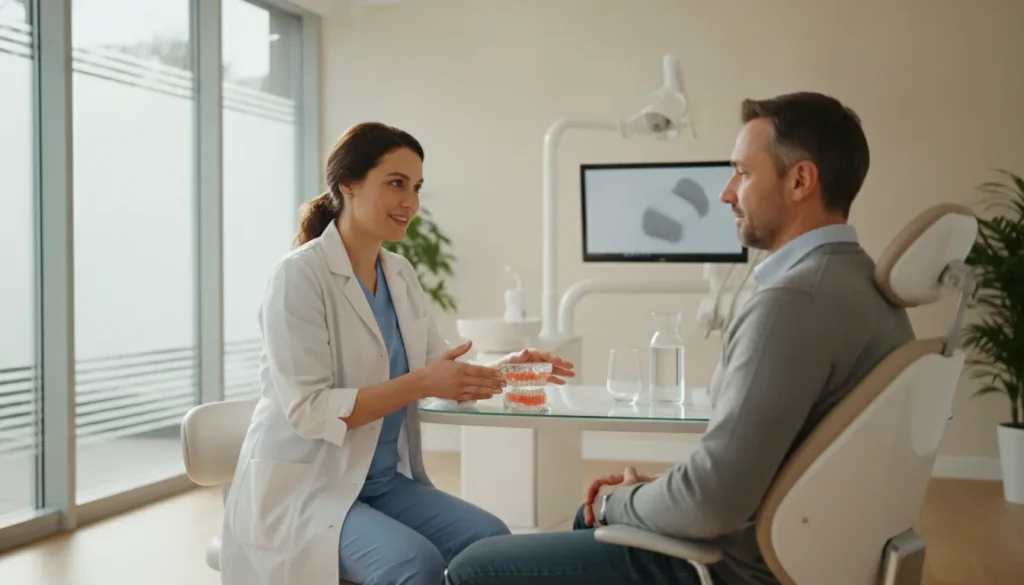
Complex restorative treatment is not simply a matter of repairing a tooth. When implants, extensive tooth loss, bite concerns, or full mouth reconstruction are involved, diagnosis and long-term planning can shape every stage of care. For patients evaluating their options, the search phrase board certified prosthodontist california often points to a practical question: what training and oversight distinguish specialist care?
A board-certified prosthodontist has advanced post-doctoral training focused on restoring and replacing teeth, including complex implant and reconstructive cases. In California, Dr. Jefferson Clark is one of fewer than 500 board-certified prosthodontists and brings more than eight years of post-doctoral training to treatment planning and restorative care.
This level of care is designed around the whole mouth, not an isolated symptom. It may include a careful, multi-visit consultation and close coordination between diagnosis, function, appearance, and the final restoration. Understanding what prosthodontics encompasses is the first step in deciding when that depth of expertise matters.
What Is a Prosthodontist, and How Is the Specialty Different From General Dentistry?
A prosthodontist is a dental specialist trained to restore and replace teeth when treatment requires more than a routine filling, crown, or cleaning. The American Dental Association defines prosthodontics as the specialty concerned with diagnosing, planning, rehabilitating and maintaining oral function, comfort, appearance, and health in patients with missing or deficient teeth or oral tissues. This may involve biocompatible replacements such as crowns, dentures, and dental implants.
Prosthodontics is one of the dental specialties recognized by the ADA. The ADA explains that recognized specialties require advanced knowledge, skills, and training beyond a standard predoctoral dental education. That distinction matters because complex restorative care is not simply a larger version of general dentistry. It requires the clinician to understand how individual restorations work together with the bite, jaw joints, gums, bone, facial appearance, and remaining natural teeth.
General dentists provide broad oral health care for patients across many needs. Their work commonly includes preventive examinations, cleanings, fillings, and basic restorative procedures. They also identify problems and coordinate referrals when a patient’s condition would benefit from specialized care. A prosthodontist, by contrast, has dedicated postdoctoral training focused on restoring oral function and replacing teeth in complex situations.
That additional focus is especially relevant when several parts of the mouth must be considered at once. A prosthodontist may plan treatment for multiple missing teeth, failing crowns, severely worn natural teeth, implant restorations, dentures, or full mouth reconstruction. The goal is not merely to place an individual restoration. It is to develop a coherent plan that respects the patient’s health, comfort, function, appearance, and long-term ability to maintain the result. The ADA’s glossary definition of prosthodontics reflects this comprehensive scope.
The difference is also visible in the planning process. Complex cases often benefit from a careful examination of the underlying causes of tooth damage or loss, followed by a staged plan rather than an isolated repair. Prosthodontic treatment may involve coordination with other dental disciplines and close attention to how a restoration will interact with the entire mouth. In a practice with an in-house dental laboratory, digital design, CAD/CAM workflows, and custom fabrication can further support that planning process.
Patients researching a board certified prosthodontist california provider should distinguish between the specialty itself and board certification, which is a separate professional achievement within prosthodontics. To understand the specialist training required for board certification, it helps to look beyond the title and ask what education, experience, and treatment-planning process stand behind it. The relevant question is not whether a dentist can perform one procedure, but whether the clinician is prepared to evaluate the whole restorative problem and guide its care with specialist-level judgment.
Why a Board Certified Prosthodontist in California Matters for Complex Care
When restorative treatment is complex, credentials can help you distinguish advanced specialty training from general experience. A board certified prosthodontist in California has pursued a formal standard of professional achievement beyond dental school and specialty residency. Board certification does not promise a particular result, but it does provide meaningful information about a clinician’s preparation, examination, and commitment to prosthodontics.
Prosthodontics focuses on diagnosing, planning, restoring, and maintaining oral function, comfort, appearance, and health when teeth or oral tissues are missing or compromised. That work may involve implants, crowns, dentures, full-mouth reconstruction, or the interaction of several treatments. The American Dental Association’s description of recognized specialties explains that specialty knowledge and skills exceed those taught in a predoctoral dental education program.
What the FACP designation represents
In prosthodontics, board certification is conferred through the American Board of Prosthodontics. A Diplomate of the American Board of Prosthodontics, often recognized through the FACP designation, has demonstrated advanced knowledge and clinical judgment through a demanding certification process. It includes rigorous written and oral examinations, along with presentations of completed patient cases. These case presentations require the specialist to show how a complex condition was evaluated, how treatment was planned, and how the clinical decisions fit together.
That process matters because complex restorative care is not simply a sequence of isolated procedures. The health of the remaining teeth, bite, jaw joints, gums, bone, smile, and long-term maintenance requirements can all influence the plan. A specialist who has been tested across diagnosis, treatment planning, and rehabilitation is better positioned to consider those relationships before treatment begins. The American Board of Prosthodontics Diplomate directory gives patients and professionals a way to verify certified prosthodontists.
Why the distinction matters in high-value care
For patients investing substantial time and resources in implants, extensive crowns, aesthetic rehabilitation, or full-mouth reconstruction, the planning process deserves as much attention as the final restoration. Board certification signals the highest level of achievement in the specialty and offers assurance that the clinician has pursued verified, specialist-level expertise. The American College of Prosthodontists describes prosthodontists as dental specialists with expertise in restorative, implant, and cosmetic dentistry, while supporting high standards in education, research, and care.
Dr. Jefferson Clark is an FACP and one of fewer than 500 board-certified prosthodontists in California. His practice uses a thorough, multi-visit consultation process to understand each patient’s concerns, evaluate the underlying causes, and develop a customized plan. Patients seeking more information can learn about the board-certified prosthodontist in Roseville and his approach to complex restorative care.
The Road to Board Certification: Years of Training Behind a Specialist
Choosing a board-certified prosthodontist means choosing a clinician whose education extends well beyond the foundational training required to become a dentist. Prosthodontics is a recognized dental specialty focused on diagnosing, planning, restoring, and maintaining oral function, comfort, appearance, and health when teeth or oral tissues are missing or deficient. The American Dental Association explains that recognized specialties require advanced knowledge, skills, and training beyond a pre-doctoral dental education program. Learn more about ADA-recognized dental specialties.
That path is cumulative. Each stage develops a different part of the judgment required for complex restorative care. From understanding the foundations of dentistry to coordinating treatment across function, aesthetics, biology, and long-term maintenance.
- Complete four years of dental school. The process begins with a DDS or DMD degree. Dental school establishes the broad clinical foundation every dentist needs, including diagnosis, prevention, restorative procedures, oral biology, and patient care. It is the starting point, not the endpoint, for someone who intends to manage advanced tooth replacement or full-mouth reconstruction.
- Complete three additional years of accredited prosthodontic residency. After dental school, a prosthodontic resident undertakes focused post-doctoral education. This residency centers on the diagnosis and treatment planning of complex conditions involving missing, damaged, or worn teeth. Training includes restorative dentistry, fixed and removable prostheses, implant treatment, aesthetics, occlusion, and the coordination of care when multiple clinical factors must be considered together.
- Build extensive clinical experience with complex cases. Advanced training must become practical clinical judgment. Residents work through demanding cases involving complex restorative care, implant dentistry, aesthetic treatment, and oral reconstruction. They learn to evaluate the causes of dental breakdown, sequence treatment responsibly, and plan restorations that serve both appearance and function. The goal is not simply to replace a tooth, but to understand how each restoration fits into the patient’s overall oral health.
- Complete the written and oral board examinations and present a case portfolio. Board certification requires more than completing a residency. Candidates must demonstrate their knowledge through rigorous written and oral examinations and submit clinical cases for review. This process evaluates how they diagnose, plan, execute, and assess complex treatment. It is a demanding assessment of clinical reasoning, not merely a record of attendance in an educational program.
- Maintain certification through the American Board of Prosthodontics. Board certification is an ongoing professional commitment. The American Board of Prosthodontics provides public access to information about certified prosthodontists through its Diplomate roster. While certification maintenance keeps the specialist accountable to the standards of the field.
Together, these stages represent an advanced post-doctoral commitment of eight or more years beyond the general dental foundation. For patients evaluating a board certified prosthodontist in California, understanding this progression helps put the credential in context. It reflects sustained preparation for cases where the right answer depends on careful diagnosis, detailed planning, and a comprehensive view of oral function and health.
Prosthodontist vs. General Dentist: When You Need a Specialist
General dentists provide essential care for many everyday needs, including examinations, preventive treatment, fillings, and straightforward crowns. A board-certified prosthodontist is the more appropriate resource when treatment involves multiple teeth, substantial tooth wear. Missing teeth, or a restoration that must coordinate appearance, bite, comfort, and long-term function.
Prosthodontics is the dental specialty focused on diagnosing, planning, rehabilitating, and maintaining oral function, comfort. Appearance, and health when teeth or oral tissues are missing or deficient, according to the American Dental Association. That broader responsibility matters when one procedure cannot be planned in isolation from the rest of the mouth.
| Consideration | General Dentist | Board-Certified Prosthodontist |
|---|---|---|
| Training depth | Broad dental education covering routine diagnosis, prevention, and treatment. | Advanced specialty training focused on complex restoration, replacement, and treatment planning. |
| Case complexity | Often a strong fit for a single filling, uncomplicated crown, or routine restorative need. | Designed for full mouth reconstruction, multiple implants, extensive wear, and interconnected restorative problems. |
| Restoration precision | Can restore individual teeth when the surrounding bite and structures are stable. | Coordinates tooth form, bite, function, materials, and aesthetics across a larger treatment plan. |
| Best-fit scenarios | Preventive care and straightforward treatment for otherwise stable oral health. | Implant-supported dentures, All-on-4, worn-down teeth, complex crowns, and TMJ/TMD-related restorative care. |
When the problem involves more than one tooth
A single routine filling or uncomplicated crown may not require specialist care. The decision changes when several teeth are failing together, the bite has shifted, or teeth have become severely worn down. In those situations, replacing one tooth without understanding the surrounding teeth can create an incomplete plan. Prosthodontists are specifically trained to address both functional and aesthetic needs in patients with multiple missing or deficient teeth, rather than treating each restoration as an isolated repair.
The same principle applies to TMJ or TMD symptoms. Custom splints and restorative treatment may need to be considered alongside bite relationships, tooth wear, and the underlying causes of dysfunction. A careful assessment can help determine whether the priority is conservative care, staged restoration, or a more comprehensive plan.
Why implant timelines require careful planning
Multiple implants and full-arch treatment involve biological healing as well as prosthetic design. Implant osseointegration generally takes three to six months. If bone grafting is needed, healing commonly requires three to six months before implant placement. With All-on-4, patients may receive same-day temporary teeth, but the final prosthesis typically follows three to six months of integration and healing.
That timeline makes sequencing important. A prosthodontist can coordinate the surgical and restorative stages, including implant-supported dentures and other tooth replacement options, while keeping the intended function and appearance in view. In Dr. Clark’s practice, custom restorations are also supported by an in-house lab with CAD/CAM technology, 3D printing, and 5-axis milling. The goal is not to label routine care as complex. It is to match the level of expertise and planning to the demands of the case.
How the In-House Dental Lab Improves Your Restorative Results
A restoration is not simply a replacement tooth. It must fit the surrounding teeth, support comfortable function, complement facial proportions, and remain appropriate as part of a broader treatment plan. That level of coordination is especially important when care involves multiple veneers, crowns, implants, or implant-supported dentures.
At Dr. Clark’s practice, custom restorations are designed and fabricated in an in-house dental lab located in the same building as the clinical team. The lab combines digital CAD/CAM planning, 3D printing, and 5-axis milling. This brings the planning and fabrication stages into closer collaboration, rather than treating the laboratory as a separate step that happens somewhere else.
More control over the design and fabrication process
When the dentist and lab team work in the same setting, details can be discussed directly and evaluated in the context of the patient’s actual treatment plan. The team can consider the way a restoration relates to bite, gum contours, tooth position, speech, appearance, and the health of the remaining teeth. Those factors matter whether the goal is a single crown or a more involved reconstruction.
Digital design helps organize the restoration before it is produced. CAD/CAM workflows allow the team to plan custom shapes and relationships with greater control. While 5-axis milling supports the detailed fabrication of restorations such as crowns and implant prostheses. 3D printing can also support the production of highly customized components during the treatment process. These technologies do not replace clinical judgment. They give a specialist more information and control with which to apply it.
Closer collaboration can support a more predictable fit and finish
Outsourced laboratory work can be appropriate in many dental settings. But it creates more distance between the clinician who plans the treatment and the technicians who fabricate the restoration. An in-house lab reduces that separation. Questions can be addressed as they arise, and the design can remain closely connected to the clinical objectives established during consultation.
That continuity is valuable when aesthetics and function must be considered together. Veneers need to look natural while respecting tooth structure and the bite. Crowns must protect and restore a tooth without creating unnecessary interference. Implant-supported dentures require careful coordination between the implants, the prosthesis, and the patient’s ability to speak and chew comfortably. The in-house workflow gives Dr. Clark’s team greater oversight of these decisions from planning through fabrication.
This is one reason the lab should be understood as part of the depth of specialist care, not merely as a technology feature. To learn more about how the practice designs and fabricates custom restorations, visit the in-house dental laboratory.
What to Expect From a Prosthodontist Consultation in Roseville, California
A consultation with Dr. Jefferson Clark is designed to give your concerns the time and clinical attention they deserve. As a board-certified prosthodontist (FACP) in Roseville, California, Dr. Clark serves patients from Rocklin, Granite Bay, Folsom, and the greater Sacramento area who need complex restorative, implant, aesthetic, or functional care. The goal is not to select a procedure before the full picture is understood. It is to determine what is affecting your oral health and build a plan around your long-term goals.
The process may take place over multiple visits. That structure is intentional. A thorough consultation allows the team to evaluate your teeth, gums, bite, jaw function, existing restorations. And overall treatment priorities without reducing a complex case to a single symptom or rushed decision.
A careful evaluation and complete records
The first stage is a detailed conversation about what brought you to the practice, what has changed, and what you hope treatment will accomplish. The clinical evaluation is supported by appropriate imaging and records so that the condition of your teeth, supporting structures, bite, and jaw can be assessed together. These details matter whether you are considering tooth replacement, full-mouth reconstruction, cosmetic restoration, or help with discomfort and jaw dysfunction.
Rather than treating one painful tooth or worn surface in isolation, the consultation looks for contributing factors. For patients with TMJ or TMD concerns, that may include assessing how the teeth and jaw work together. Treatment can involve custom splints and restorative care, with attention directed toward underlying causes and functional longevity rather than temporary symptom management.
A step-by-step plan with realistic timelines
Once the findings are understood, Dr. Clark explains the available paths forward and how they relate to your priorities. The resulting plan may address immediate needs first, then move through stabilization, restorative treatment, and maintenance. If implants or bone grafting are involved, the plan accounts for healing and integration periods rather than presenting an artificially compressed schedule. You should leave with a clear understanding of the recommended sequence, what each stage is intended to accomplish, and which decisions still require your input.
The private-care, fee-for-service model supports longer appointments, better materials, and individualized planning for complex restorations. It also creates room for questions and thoughtful review. When custom crowns, veneers, implants, or other restorations are part of the plan. The in-house lab and its CAD/CAM, 3D-printing, and 5-axis milling capabilities provide close coordination between clinical planning and fabrication.
Frequently Asked Questions
What does a prosthodontist do that a general dentist may not?
A prosthodontist specializes in diagnosing, planning, restoring, and maintaining oral function, comfort, appearance, and health when teeth or oral tissues are missing or damaged. That specialty includes complex care involving implants, crowns, dentures, and full mouth reconstruction. The American Dental Association defines prosthodontics as a recognized dental specialty.
What does board certification mean in prosthodontics?
Board certification indicates that a prosthodontist has completed an additional certification process involving rigorous examinations and case presentations beyond specialty training. The American Board of Prosthodontics maintains a public diplomate roster so patients can verify certification status. You can search the ABP diplomate roster here.
How many years of training does a prosthodontist complete?
Prosthodontists complete dental school followed by advanced post-doctoral specialty training focused on complex diagnosis and treatment planning. Dr. Jefferson Clark’s training includes more than eight years of post-doctoral education, a depth of preparation that supports comprehensive restorative planning.
How long does dental implant treatment usually take?
The timeline depends on bone health, treatment design, and the type of restoration. Osseointegration, the process by which an implant gains structural stability in the jaw, commonly takes three to six months. All-on-4 treatment may provide same-day temporary teeth, while the final prosthesis is typically completed after three to six months of integration.
Schedule a Consultation With Dr. Clark
A thoughtful consultation can help clarify your priorities, evaluate the factors affecting your oral health, and shape a restorative plan around your needs. Dr. Jefferson Clark takes a thorough, individualized approach to specialist dental care in Roseville and the greater Sacramento area. To discuss your goals and next steps, schedule a consultation with the practice.