


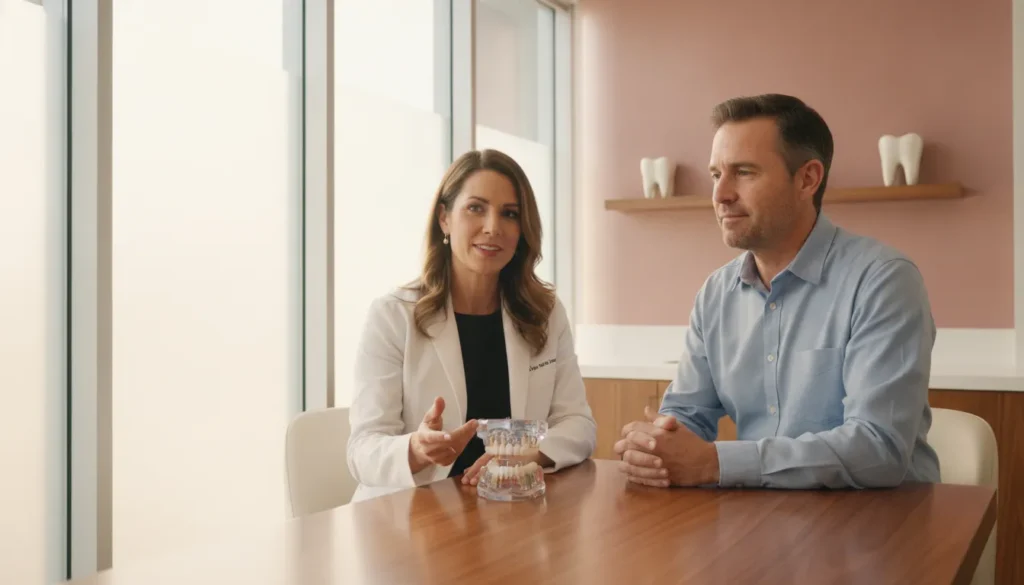
Replacing a missing tooth involves more than placing an implant. The result also depends on how the implant, bone, bite, gums, and final restoration work together over time. Many patients begin by asking which specialist can evaluate the full picture rather than treating one isolated step.
For patients researching dental implants roseville ca, a board-certified prosthodontist can assess candidacy, plan around bone and oral-health needs, and coordinate the restoration with an in-house lab. Dr. Jefferson Clark uses a multi-visit consultation model to develop a personalized plan, without promising that one treatment path fits every patient.
Prosthodontists complete three additional years of advanced training after dental school focused on restoring and replacing teeth. That preparation matters when care involves complex reconstruction, staged healing, or a custom restoration. You can review the practice’s dental implant treatment options, then consider how specialist planning and direct lab collaboration shape the care process.
Why Roseville Patients Choose a Prosthodontist for Dental Implants
Replacing a missing tooth is not only a surgical question. The implant must be planned in relation to the surrounding teeth, gum tissue, bite, facial support, and the restoration that will complete the treatment. That broader perspective is central to prosthodontics, a dental specialty focused on the restoration and replacement of teeth. Prosthodontists complete three additional years of advanced training after dental school, with an emphasis on complex restorative care and treatment planning. The American College of Prosthodontists describes prosthodontists as specialists in restoring and replacing teeth.
For patients researching dental implants in Roseville, CA, specialist training can matter most when the case involves more than one isolated missing tooth. A prosthodontist evaluates how a proposed implant will function within the entire mouth. That may include assessing the bite, the condition of existing restorations, the space available for a crown, and the long-term relationship between the implant and natural teeth. The goal is not to rush toward a procedure. It is to understand the cause of tooth loss and develop a restoration plan that fits the patient’s oral health and priorities.
Planning the restoration before placing the implant
Implant treatment includes both a foundation and a finished tooth. The foundation depends on adequate bone and healthy supporting tissues. If the jawbone is too soft or not thick enough, bone grafting may be needed before implant surgery, according to the Mayo Clinic. A thoughtful evaluation helps identify those issues early rather than treating implant placement as an isolated appointment. When grafting is appropriate, the healing period may require three to six months before implant placement.
After placement, osseointegration describes the structural and functional connection between living bone and the implant surface. This biological process is important to implant stability and typically takes three to six months in the practice’s guidance. These timelines are not promises or shortcuts. They are part of setting realistic expectations and deciding when the mouth is ready for the next restorative step.
A preservation-focused approach to complex care
Dr. Jefferson Clark is a board-certified prosthodontist and Fellow of the American College of Prosthodontists, or FACP. He is also an honors graduate of Loma Linda University. Those credentials support a specialist-level approach. The practical value is found in how each case is evaluated: preserve healthy natural tooth structure where possible, address underlying problems, and replace only what needs to be replaced.
Patients can review the practice’s dental implant treatment options while considering how their needs fit into a larger restorative plan. Dr. Clark’s multi-visit consultation model allows time for comprehensive, personalized planning rather than compressing every decision into one visit. The practice also maintains an in-house lab with 3D printing and 5-axis CNC milling for custom restorations, supporting direct collaboration between the doctor and dental technicians. For Roseville patients seeking careful planning and a preservation-minded path forward, that integrated model can make the treatment conversation more thorough and more personal.
What Happens During the Dental Implant Process in Roseville, CA?
Dental implant treatment is not a single appointment or a one-size-fits-all procedure. Each phase builds on the one before it, allowing the restorative plan to account for your oral health, available bone, bite, appearance, and long-term function. At a private-care prosthodontic practice, a multi-visit consultation model gives the doctor and patient time to evaluate these factors carefully before treatment begins.
-
Comprehensive consultation and examination
The process begins with a detailed discussion of your concerns, health history, previous dental treatment, and goals. The examination considers the teeth, gums, jaw joints, bite, and the areas where teeth are missing. This is also an opportunity to determine whether an implant is the right solution, or whether preserving a natural tooth or considering another restorative option makes more sense. Because the practice uses multiple visits for consultation, questions can be addressed as the evaluation develops rather than compressed into one rushed appointment.
-
Diagnostic records and individualized planning
Next, the clinical team gathers the records needed to understand your anatomy and design the restoration. The plan may include diagnostic imaging, digital records, photographs, and an assessment of how the proposed teeth will fit within your smile and bite. Implant placement is planned together with the final restoration, not as an isolated surgical step. You can learn more about this comprehensive dental implant procedure and the considerations that shape each phase.
-
Preparatory treatment when needed
Some patients need care before an implant can be placed. If the jawbone is not thick enough or is too soft to support an implant, bone grafting may be recommended. The graft then needs time to heal, commonly about 3 to 6 months, before implant placement can proceed. Other preparatory care may address infection, gum health, or a tooth that must be removed. The exact sequence depends on your findings, so treatment timing is individualized rather than assumed in advance.
-
Implant placement
Once the site is ready, the implant is placed in the jawbone according to the approved surgical and restorative plan. The implant serves as an artificial root. Depending on the number of teeth being replaced and your clinical circumstances, temporary solutions may be discussed while the site heals. Your prosthodontist will explain the expected appointments, home-care instructions, and signs that should prompt a call to the office.
-
Healing and osseointegration
During healing, the bone gradually forms a direct structural and functional connection with the implant surface. This process is called osseointegration, and it is important to the implant’s stability. It commonly takes approximately 3 to 6 months, although your timeline depends on the treatment site, health factors, and whether grafting was required. Follow-up visits allow the team to monitor healing rather than relying on a calendar alone.
-
Custom restoration and long-term follow-up
After healing is confirmed, the final crown, bridge, or implant-supported prosthesis is designed and placed. The practice’s in-house lab uses 3D printing and 5-axis milling for custom restorations, supporting direct communication between the doctor and technicians. Final visits focus on fit, bite, appearance, and function, followed by periodic maintenance and examinations. Ongoing care helps the team monitor the restoration and the surrounding tissues over time.
What Makes Someone a Good Implant Candidate?
Implant candidacy is not determined by a single symptom, age threshold, or checklist. The right question is whether an implant-supported restoration can be planned safely, function well with the surrounding teeth and tissues, and remain maintainable over time. That requires an evaluation of your specific anatomy, oral health, medical history, goals, and ability to participate in ongoing care.
The condition of the teeth and supporting tissues
Missing teeth, teeth that cannot be predictably restored, or failing restorations may all lead to a conversation about implants. However, the replacement itself is only one part of the decision. A clinician must also assess the gums, neighboring teeth, bite, and the amount and shape of bone available at the proposed implant site. The objective is to understand the underlying reason for tooth loss and create a restoration that fits the broader function of your mouth.
Thin or soft jawbone may not provide the foundation needed for implant surgery. In that situation, bone grafting may be recommended before implant placement. The Mayo Clinic explains that grafting can be needed when the jawbone is not thick enough or is too soft to support an implant: learn more about dental implant surgery and bone grafting. When grafting is part of the plan, healing may require approximately 3 to 6 months before implant placement, depending on the individual treatment plan.
Oral health, medical history, and daily habits
Active oral-health problems, inflammation, untreated gum disease, and bite-related concerns may need attention before implant treatment proceeds. Your medical history and medications are also relevant because they can affect healing, surgical planning, or the type and timing of care that is appropriate. These factors do not automatically rule out treatment. They help the clinician identify risks, sequence preparation, and determine whether additional medical coordination is needed.
Smoking is another important evaluation topic. Tobacco use can affect oral tissues and healing, so it should be discussed candidly during consultation. The same is true of maintenance. Implants are not maintenance-free replacements. Long-term success depends on individualized home care, professional examinations, and cleaning around the restoration. Your ability and willingness to maintain the implant-supported teeth should be part of the treatment conversation from the beginning.
Why a careful evaluation matters
A thorough consultation turns a broad question into a personalized answer. Diagnostic records, examination findings, and discussion of your priorities help determine whether an implant, grafting, another restoration, or a staged combination of treatments is most appropriate. A multi-visit planning model allows these decisions to be considered carefully rather than rushed into a single appointment. The goal is not to promise a particular outcome, but to build a plan that respects your health, anatomy, function, and long-term needs.
How the In-House Lab Supports a Precise Implant Restoration
An implant restoration is more than a replacement tooth placed on top of an implant. It must be planned as part of the patient’s bite, facial proportions, speech, gum contours, and remaining teeth. That requires communication between the clinician who evaluates the mouth and the technician who helps design and fabricate the restoration. When those roles operate in the same practice, the treatment team can review the restoration as a connected clinical and technical project.
At Dr. Jefferson Clark’s practice, the in-house dental lab supports direct collaboration between the doctor and dental technicians. This allows the team to discuss the details of a custom implant restoration in the context of the patient’s examination and treatment plan. Questions about contours, contacts, material selection, occlusion, and the relationship between the implant and neighboring teeth can be addressed within that shared workflow. It does not eliminate the biological variables involved in implant treatment, and it cannot guarantee a particular result. It does create an environment for deliberate communication and individualized decision-making.
Digital fabrication for a custom restoration
The lab uses 3D printing and 5-axis CNC milling for custom restorations. These technologies support different stages of digital design and fabrication. Three-dimensional printing can be used to produce models, guides, prototypes, or other components based on the treatment plan. Five-axis milling allows a block of restorative material to be shaped across multiple planes. Which can be useful when fabricating a restoration with complex anatomy and carefully planned contours.
The practical benefit is not that a machine replaces clinical judgment. Rather, digital tools give the doctor-technician team additional ways to visualize, evaluate, and refine the proposed restoration. The team can consider how the implant crown or full-arch prosthesis will function with the patient’s existing bite and how its shape should support cleanability and comfortable use. The appropriate design still depends on the patient’s anatomy, bone, gum tissue, oral health, implant position, and restorative needs.
Patients exploring the in-house dental lab can learn more about how this integrated model supports custom restorative care. Implant treatment remains a staged process, often involving healing and clinical reassessment before the final restoration is delivered. Direct collaboration helps keep the technical work connected to those clinical decisions throughout treatment.
How Much Do Dental Implants Cost in Roseville, CA?
When comparing the investment in dental implants, it helps to think beyond the implant itself. The final treatment plan may include diagnostic records, preparatory care, the number of teeth being replaced, and the design and fabrication of the final restoration. These factors are evaluated together so the proposed care reflects your anatomy, oral-health needs, and functional goals.
For general planning, the practice publishes the following ranges. They are not fixed quotes. A consultation is necessary to determine which procedures apply to your case and whether additional stages are needed before implant placement or restoration.
| Treatment. | Range. | Common variables. |
|---|---|---|
| Single implant. | $3,000-$6,000. | Diagnostics, preparation, and restoration design. |
| Full-arch restoration. | $25,000-$60,000 per arch. | Implant number, preparation, and prosthesis design. |
Preparatory care can be important when the existing foundation needs attention. For example, if the jawbone is not thick enough or is too soft to support an implant, bone grafting may be recommended before implant surgery. The graft may require a healing period of 3-6 months before implant placement. After placement, osseointegration, the structural connection between living bone and the implant surface, typically takes 3-6 months. These stages can affect both the timeline and the overall treatment investment.
The practice follows a private-care, fee-for-service model and does not participate in insurance networks. This approach is designed around thorough evaluation, longer appointments, individualized planning, and careful coordination of custom restorations. The in-house lab, including 3D printing and 5-axis milling, supports direct collaboration between the doctor and dental technicians when the restoration is designed and refined.
A multi-visit consultation allows those considerations to be reviewed before treatment begins. Rather than reducing a complex case to a single number, the process clarifies what is recommended, why each stage matters, and how the proposed restoration fits your needs.
Planning Your Consultation for Dental Implants in Roseville, CA
A thoughtful implant plan begins with understanding more than the missing tooth. Dr. Clark’s multi-visit consultation model allows time to evaluate your oral health, review your concerns, and develop a restoration that fits your function, appearance, and long-term goals. This is intentionally different from a single appointment built around a generic treatment checklist.
During the first visit, bring a list of medications and supplements, relevant medical or dental records, information about previous procedures, and any questions you have about treatment. If you have photographs showing how your smile or bite has changed, those may also help explain your concerns. Be prepared to discuss what matters most to you, such as chewing comfortably, replacing a front tooth, stabilizing a failing restoration, or understanding options for several missing teeth.
How diagnostics shape the plan
Diagnostics help connect your goals to the underlying conditions that may affect treatment. The evaluation may consider the health of your gums, the available jawbone, your bite, adjacent teeth, and the space available for a natural-looking restoration. If the jawbone is too soft or thin to support an implant, bone grafting may be considered before implant surgery. Healing after grafting can require three to six months, so identifying that need early creates a more realistic sequence.
The planning process also accounts for osseointegration, the structural and functional connection between living bone and an implant surface. Practice guidance places that phase at approximately three to six months, although individual treatment plans vary. These details influence the timing of provisional and final restorations, follow-up visits, and any preparatory care.
Questions worth asking
Ask what is causing the tooth loss or restoration failure, which alternatives should be considered, what diagnostic information supports the recommendation, and which steps could change the timeline. You can also ask who will design and fabricate the restoration, how your bite will be evaluated, and what follow-up will involve. The practice’s in-house lab uses 3D printing and 5-axis milling for custom restorations, supporting direct collaboration between the doctor and dental technician.
When considering dental implants roseville ca, a specialist evaluation can provide a more useful framework than comparing isolated procedures. Dr. Jefferson Clark is a board-certified prosthodontist and FACP, with advanced training focused on restoring and replacing teeth. That perspective helps the consultation address the complete restoration rather than treating the implant as a stand-alone component.
Frequently Asked Questions
What should I know before getting dental implants?
Implant treatment is a process, not a single appointment. Your evaluation should consider your oral health, bite, available bone, medical history, and the final restoration you need. A multi-visit consultation allows time for diagnostic planning and informed decisions. If the jawbone is too thin or soft, bone grafting may be needed before implant surgery, which can add a healing period of 3 to 6 months. Mayo Clinic explains when bone grafting may be required.
Can I have all my teeth removed and get implants?
Some patients may be candidates for full-arch implant treatment, but removing teeth is not automatically the best solution. A prosthodontist should first determine whether any natural teeth can be predictably preserved and evaluate bone, gum health, function, and the proposed restoration. If full-arch treatment is appropriate, the plan still includes surgery, healing, temporary teeth when indicated, and a carefully designed final prosthesis.
Can you get dental implants for $5,000?
It depends on what the quoted fee includes. At this practice, a single dental implant generally ranges from $3,000 to $6,000, while full-arch treatment ranges from $25,000 to $60,000 per arch. The total can vary with extraction, grafting, imaging, sedation, abutments, and the custom restoration. Ask for a written breakdown so you can compare complete treatment plans rather than isolated prices.
How long does it take for a dental implant to heal?
After placement, osseointegration, the bonding of living bone to the implant surface, typically takes about 3 to 6 months. The timeline may be longer when bone grafting or other preparatory care is required. Your clinician will determine when the implant is ready to support its final restoration based on healing and clinical evaluation, rather than using a fixed calendar date. Read more about osseointegration.
Schedule Your Dental Implant Consultation
A thoughtful consultation can help clarify your candidacy, treatment sequence, and the factors that may shape your personalized plan. Dr. Clark’s multi-visit approach allows time for careful evaluation and discussion before treatment begins. To discuss your dental implant options in Roseville, schedule a consultation with the practice.