


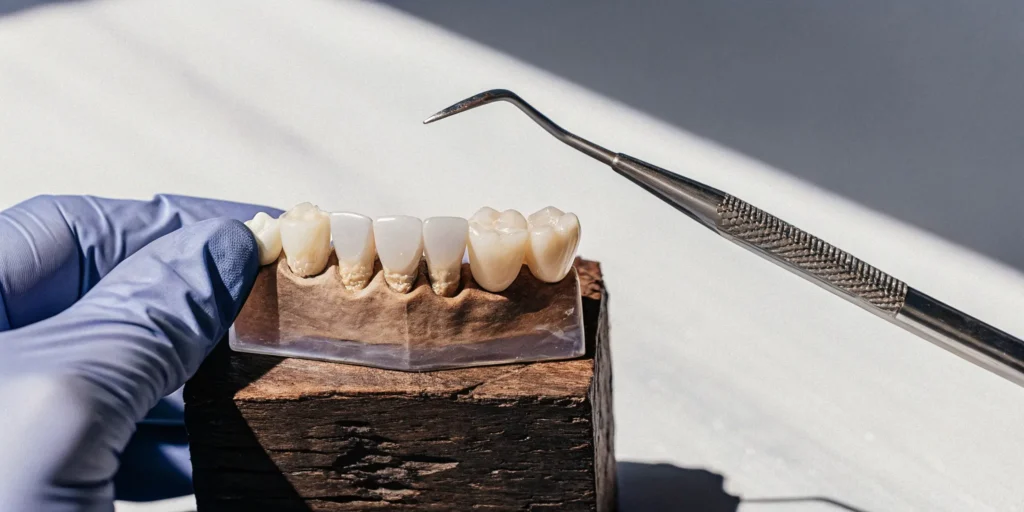
Replacing a missing tooth is equal parts science and artistry. It’s not just about filling a space; it’s about creating a restoration that looks, feels, and functions so naturally that no one would ever guess it isn’t your original tooth. This is the philosophy behind a well-crafted dental bridge. But what is a dental bridge from a prosthodontist’s perspective? It is a highly customized prosthetic, meticulously designed to match the color and shape of your unique smile while restoring the proper mechanics of your bite. With an expert eye and the precision of an in-house lab, a bridge becomes more than a replacement; it becomes a seamless part of you.
Key Takeaways
- A bridge is a fixed solution for missing teeth: It uses a false tooth held in place by crowns on neighboring teeth to restore your smile’s appearance and your ability to chew. Unlike a removable denture, it is cemented in place for a stable, secure fit.
- The right bridge depends on your specific needs: Your dentist will recommend a design based on the gap’s location and the health of your surrounding teeth. A traditional bridge uses crowns for support, while options like Maryland or implant-supported bridges can preserve natural tooth structure.
- The biggest trade-off involves your healthy teeth: A traditional bridge requires permanently reshaping the healthy teeth next to the gap to fit crowns. This is a key difference from a dental implant, which stands alone, making it a crucial factor to discuss with your dentist.
What Is a Dental Bridge?
If you have one or more missing teeth, you know the gap in your smile can affect more than just your appearance. It can make chewing difficult and cause you to feel self-conscious. A dental bridge is a trusted and effective solution designed to literally “bridge” that gap. Think of it as a fixed restoration where one or more custom-made false teeth are held in place by the teeth on either side of the space. Unlike partial dentures, a bridge is cemented in place and isn’t removable, giving you a secure and stable replacement.
The primary goal of a dental bridge is to restore both the look and function of your smile. By filling the empty space, a bridge helps you chew properly, speak clearly, and maintain your natural face shape. At our practice, we see a bridge as a way of restoring lost teeth while preserving the harmony of your entire mouth. We carefully design each bridge to blend seamlessly with your natural teeth, ensuring the final result is both beautiful and functional. It’s a wonderful option for bringing back the confidence that comes with a complete, healthy smile.
How Do Dental Bridges Work?
The structure of a dental bridge is quite straightforward. It consists of two main parts: the abutments and the pontic. The abutment teeth are the healthy teeth on either side of the gap that act as anchors for the bridge. To prepare these teeth, we typically place dental crowns on them. These crowns provide the strength and stability needed to support the entire restoration.
Once the abutment teeth are prepared, the pontic, which is the false tooth, is fused between the two crowns. This creates a single, solid unit that we then permanently bond into place. In some cases, especially if the neighboring teeth aren’t strong enough, dental implants can be used as the abutments instead. This method provides an incredibly strong foundation without altering your natural teeth.
What’s a Pontic Tooth?
The “pontic” is simply the technical term for the false tooth that fills the empty space in a dental bridge. Its job is to look, feel, and function just like the tooth you lost. Pontics can be crafted from various durable materials, including porcelain, ceramic, or metal alloys, but porcelain is often preferred for its ability to mimic the translucency and color of natural tooth enamel.
Creating a pontic that looks completely natural is an art form. This is where having an in-house dental lab makes a significant difference. We can meticulously customize the shape, size, and shade of your pontic to ensure it blends flawlessly with your surrounding teeth. No one should be able to tell you have a bridge; they’ll just see your beautiful, complete smile.
Exploring the Types of Dental Bridges
Dental bridges aren’t a one-size-fits-all solution. The best type of bridge for you depends on several factors, including the location of the missing tooth (or teeth), the health of your surrounding teeth, and your overall oral health goals. As a prosthodontist, Dr. Clark specializes in identifying the ideal approach for each unique smile. Understanding the different options can help you feel more prepared for your consultation. Let’s walk through the four main types of dental bridges.
Traditional Dental Bridges
Think of the traditional bridge as the most common and time-tested design. This type of bridge is used when you have healthy, natural teeth on both sides of the gap. The structure consists of a pontic (the replacement tooth) fused between two dental crowns. These crowns are then placed over the neighboring teeth, called abutment teeth, anchoring the bridge securely in place. According to the Cleveland Clinic, this approach is ideal when you have healthy teeth on either side of the missing one. It’s a strong and reliable way to restore your smile’s function and appearance, blending in seamlessly with your natural teeth.
Cantilever Dental Bridges
A cantilever bridge is a variation of the traditional bridge, but it’s used in a very specific situation: when there is a healthy tooth on only one side of the gap. Instead of being anchored on both sides, the pontic is supported by a crown on just one abutment tooth. This design works a bit like a balcony, with the fake tooth extending into the empty space. Because it’s not supported on both ends, a cantilever bridge isn’t as strong as a traditional one. It’s typically recommended for areas of your mouth with less chewing force. Deciding if this is the right choice requires careful planning to ensure the single supporting tooth can handle the pressure, which is why an expert evaluation is so important for restoring lost teeth.
Maryland Dental Bridges
A Maryland bridge is a more conservative option, often used to replace missing front teeth. Instead of using crowns to support the bridge, this design has a metal or porcelain framework with “wings” on each side of the pontic. These wings are bonded directly to the back of your adjacent natural teeth, hidden from view. The main advantage here is that your healthy neighboring teeth don’t need to be filed down for crowns. This makes it a great choice for saving natural teeth and preserving as much healthy tooth structure as possible. While not as strong as a traditional bridge, it’s an excellent and less invasive solution for the right situation.
Implant-Supported Dental Bridges
For those missing several teeth in a row, an implant-supported bridge offers the ultimate in stability and strength. Instead of relying on natural teeth for support, this bridge is anchored by dental implants. These small titanium posts are surgically placed into your jawbone, where they act as artificial tooth roots. Once the implants have integrated with the bone, the bridge is attached to them. This creates an incredibly secure foundation that doesn’t put any stress on your remaining natural teeth. It also helps stimulate the jawbone, preventing the bone loss that typically occurs when teeth are missing. This is often the preferred method for a long-lasting and functional restoration.
What Are the Benefits of a Dental Bridge?
Deciding to replace a missing tooth is a big step, and a dental bridge offers more than just a cosmetic fix. It’s a comprehensive solution that restores the harmony of your mouth, impacting everything from your confidence to your overall health. When you lose a tooth, it sets off a chain reaction. The empty space can cause surrounding teeth to shift, alter your bite, and even change the shape of your face over time. A dental bridge effectively stops these issues in their tracks.
By filling the gap, a bridge gives you back a complete smile and makes it easier to chew your favorite foods and speak with clarity. It also plays a crucial role in maintaining the structure of your jaw and preventing the remaining teeth from drifting out of alignment. Think of it as a way to not only restore what was lost but also to protect the healthy teeth you still have. It’s a functional, reliable, and aesthetically pleasing option that supports your long-term oral wellness, helping you feel comfortable and confident in your smile for years to come.
Restore Your Smile and Facial Shape
One of the most immediate and noticeable benefits of a dental bridge is the restoration of your smile. An empty space can make you feel self-conscious, but a bridge fills that gap with a custom-crafted tooth that blends seamlessly with your natural teeth. At our practice, we prioritize creating results that honor your unique smile, ensuring the color, shape, and size of the new tooth look completely natural. Our focus on lifelike aesthetics means your bridge will complement your features beautifully.
Beyond just your smile, a bridge also provides crucial support for your facial structure. When a tooth is missing, the bone in that area can begin to shrink, and your facial muscles can lose support. This can lead to a sunken or aged appearance. A dental bridge helps maintain your natural face shape by providing the structure needed to keep everything in its proper place.
Improve How You Chew and Speak
A missing tooth can make simple, everyday activities surprisingly difficult. Chewing can become uncomfortable or inefficient, forcing you to avoid certain foods and potentially impacting your nutrition. A dental bridge restores your ability to chew properly by distributing bite forces evenly across your teeth. This allows you to enjoy a varied, healthy diet without discomfort or limitation, fully restoring the function of your bite.
Similarly, your teeth play a vital role in pronunciation. A gap, especially near the front of your mouth, can interfere with your ability to form certain sounds, leading to a lisp or slurred speech. By closing that gap, a dental bridge allows your tongue to make proper contact with your teeth, helping you speak clearly and confidently again.
Prevent Neighboring Teeth from Shifting
Your teeth are designed to work together, supporting one another to maintain their correct positions. When a tooth is lost, the neighboring teeth lose that support and can begin to drift or tilt into the empty space. This shifting can create a domino effect of dental problems, including a misaligned bite, crooked teeth, and even jaw pain or TMJ disorders.
A dental bridge acts as a permanent placeholder, holding the space open and preventing this unwanted movement. By keeping your teeth in their proper alignment, a bridge not only preserves your bite but also protects your healthy teeth from uneven wear and tear. This preventative measure is a key part of our philosophy of saving your natural teeth and avoiding more complex issues down the road.
Support Your Long-Term Oral Health
A dental bridge is an investment in the long-term health of your entire mouth. The gap left by a missing tooth can become a trap for food particles and bacteria, making it a difficult area to clean effectively. This can increase your risk for plaque buildup, tooth decay, and gum disease in the adjacent teeth. By closing the gap, a bridge makes your daily oral hygiene routine simpler and more effective.
Furthermore, by preventing teeth from shifting and ensuring your bite remains balanced, a bridge helps protect your teeth from excessive or unnatural forces. This reduces the risk of chips, cracks, and unnecessary wear on your enamel. It’s a proactive solution that helps maintain a stable, healthy oral environment, reducing the likelihood you’ll need more extensive dental work in the future.
Are You a Good Candidate for a Dental Bridge?
Figuring out the right way to replace a missing tooth can feel like a big decision, and a dental bridge is a fantastic option for many people. But is it the right one for you? While a personal consultation is the only way to know for sure, understanding the factors we look at can help you feel more prepared for the conversation. Your unique dental situation, from the health of your gums to the condition of the teeth surrounding the gap, plays a huge role in determining the best path forward for restoring your smile.
What Makes You an Ideal Candidate?
You might be a great candidate for a dental bridge if you’re missing one or more teeth and have healthy, strong natural teeth on either side of the gap. These neighboring teeth act as the anchors for the bridge, so their stability is key. We’ll also look at your overall oral health. Healthy gums and sufficient bone structure are essential to support the bridge for years to come. The goal is to find a solution that not only fills the space but also supports our commitment to saving your natural teeth and promoting long-term function.
When a Bridge Might Not Be the Best Fit
A dental bridge might not be the best solution if the teeth next to the gap are not strong enough to serve as anchors. If these potential supporting teeth have extensive decay, large fillings, or advanced gum disease, placing a bridge on them could lead to future problems. Similarly, if you’re missing several teeth in a row, a traditional bridge may not have enough support to be stable. In these situations, we would explore other ways of restoring lost teeth, such as dental implants, which don’t rely on adjacent teeth for support and can provide a durable, long-lasting foundation for your new smile.
What to Expect During the Dental Bridge Procedure
Getting a dental bridge is a common and predictable restorative process that usually takes place over two main appointments. Knowing what happens at each stage can help you feel more prepared and confident about your treatment. We’ll walk you through every step, making sure you’re comfortable and informed from your first consultation to the final placement of your beautiful new bridge.
Step 1: Your Consultation and Treatment Plan
Your journey begins with a one-on-one consultation. During this initial visit, we’ll perform a thorough examination of your teeth and gums to make sure a bridge is the right solution for you. We’ll look at the health of the teeth next to the gap, the size of the space, and your overall oral health. This helps us create a personalized treatment plan and decide which type of bridge will give you the best, most lasting results. It’s also the perfect time for you to ask questions and share your goals for your smile. Our focus is always on creating a plan that supports both function and aesthetics.
Step 2: Preparing the Supporting Teeth
At your first treatment appointment, we’ll prepare the teeth that will support your new bridge. These are called abutment teeth. After making sure the area is completely numb and you’re comfortable, we will gently reshape these teeth to create the ideal foundation for the crowns that will anchor the bridge. We’ll then place a temporary bridge to protect your teeth and gums while your permanent one is being crafted. This temporary restoration allows you to eat and speak normally and maintains the appearance of your smile between visits. This preparation is a key step in ensuring your final dental crowns and bridge fit perfectly.
Step 3: Taking Impressions for Your Custom Bridge
Once your abutment teeth are prepared, we will take precise digital impressions of your mouth. These impressions serve as a detailed blueprint for your custom restoration. This is where having an in-house dental lab makes all the difference. Instead of sending your case to an outside facility, our skilled technicians get to work right here in our office. This close collaboration between the clinical and lab teams allows for unmatched precision and artistry. We can meticulously match the color, shape, and size of your new bridge to your natural teeth, ensuring a seamless and beautiful result.
Step 4: Placing Your Permanent Bridge
When your custom bridge is ready, you’ll come in for your final appointment. We’ll start by removing the temporary bridge and cleaning the underlying teeth. Then, we will carefully place your new permanent bridge, checking the fit, bite, and appearance. We take the time to make any necessary adjustments to ensure it feels completely comfortable and looks just right. Once you are happy with the result, we will permanently bond the bridge into place. You’ll leave our office that day with a complete, functional, and confident smile, ready to get back to life without giving your teeth a second thought.
How Long Can You Expect a Dental Bridge to Last?
A dental bridge is a durable, long-term solution for missing teeth. On average, you can expect most dental bridges to last between five and 15 years. With excellent care and regular dental check-ups, some can last even longer. While bridges are considered a “permanent” fixture because they can only be removed by a dentist, they are not meant to last a lifetime and will eventually need replacement.
The good news is that you have a lot of influence over how long your bridge lasts. The materials used to create the bridge, your personal oral hygiene habits, and the overall health of your mouth all play significant roles. Think of it as an investment in your smile; the more you care for it, the better your return will be. At our practice, we focus on restoring lost teeth with solutions that are both beautiful and built to last, and we’ll give you all the guidance you need to protect that investment.
Factors That Influence a Bridge’s Lifespan
The longevity of your dental bridge depends heavily on the health of the teeth and gums that support it. Your bridge is only as strong as its foundation. The most critical factor is the condition of the abutment teeth, which are the natural teeth on either side of the gap that anchor the bridge in place. If these teeth develop decay or gum disease, the bridge can lose its support and fail. This is why it’s so important to maintain your oral hygiene. Consistently brushing, flossing (especially under the pontic), and attending regular cleanings are the best ways to ensure your bridge serves you well for years to come. Our philosophy centers on saving natural teeth whenever possible, and that includes protecting the teeth that support your restorations.
Signs It’s Time to Replace Your Bridge
It’s important to pay attention to your bridge and let your dentist know if something feels off. If you notice any of the following signs, it may be time to replace your dental bridge:
- The bridge feels loose or shifts when you chew.
- You see visible cracks in the porcelain.
- You experience pain or discomfort around the bridge.
- Your teeth feel newly sensitive to hot or cold.
- Your gums are sore, swollen, or bleeding around the bridge.
Don’t ignore these symptoms. A loose bridge can sometimes be re-cemented if addressed quickly, but if the problem is caused by decay, a new restoration may be necessary. A prompt evaluation will determine the best course of action. Because we create custom restorations in our in-house lab, we can ensure a new bridge will fit your smile perfectly.
How to Care for Your Dental Bridge
A dental bridge is a fantastic way to restore your smile, but just like your natural teeth, it needs consistent care to stay in great shape. Think of it as protecting your investment. With a few simple habits, you can keep your bridge looking, feeling, and functioning its best for years to come. A solid daily routine and regular professional check-ins are the keys to ensuring your bridge and the surrounding teeth remain healthy and strong.
Your Daily Cleaning Routine
Good cleaning is essential for keeping your bridge and gums healthy. Your goal is to prevent plaque buildup, especially in the tricky spots around the bridge. Make sure to brush your teeth for two minutes, twice a day, paying close attention to the area where the bridge meets your gums. The real game-changer, however, is cleaning underneath the pontic (the false tooth). Since a regular toothbrush can’t reach this space, you’ll need a special tool like a floss threader, an interdental brush, or a water flosser. This step is crucial for removing food particles and plaque, which helps in saving your natural teeth that support the bridge.
Foods to Eat with Caution
While your new bridge is built to be durable for everyday chewing, it’s wise to be mindful of certain foods. You can generally eat normally, but it’s best to avoid putting excessive force on the bridge. Try to steer clear of very hard foods, such as hard candies, ice, or whole nuts, as they can potentially damage the porcelain or the structure itself. Sticky foods like taffy or caramel can also pose a risk by pulling on the bridge. Cutting tougher foods into smaller pieces is a simple adjustment that can make a big difference in protecting your restoration and ensuring it lasts as long as possible.
Why Regular Check-ups Are Key
No matter how diligent you are with your home care, nothing replaces a professional eye. Regular dental check-ups and cleanings are your best defense against potential issues. During these visits, we can thoroughly clean around your bridge and inspect its fit and stability. We’ll also check the health of the supporting teeth and the gums underneath to catch any problems before they become serious. As a prosthodontist, Dr. Clark has specialized training in complex restorations, making him uniquely qualified to monitor your bridge and ensure its long-term success. These appointments are a simple way to protect your oral health and the function of your smile.
Dental Bridge vs. Dental Implant: Which Is Right for You?
Deciding how to replace a missing tooth is a big step, and both dental bridges and dental implants are excellent solutions. Neither one is universally “better” than the other; the right choice really comes down to your specific situation. Think of it like choosing between two great cars that serve different purposes. One might be a better fit for your budget right now, while the other might be a better long-term investment for your lifestyle.
To make a confident decision, it helps to compare them across a few key areas: cost, longevity, the effect on your other teeth, and what the procedure itself involves. Dr. Clark is an expert in both restorative options and can give you a personalized recommendation based on your oral health, goals, and financial considerations. Understanding these differences is the first step toward figuring out which path will lead you to a healthy, functional, and beautiful smile that you love.
Comparing Costs: Upfront vs. Long-Term
When you first look at the numbers, a dental bridge usually has a lower initial price tag. Because it’s a long-established and less invasive procedure, dental insurance plans are also more likely to cover a portion of the cost, making it a more accessible option for many people right away.
However, it’s important to think about the cost over your lifetime. A dental implant often requires a larger upfront investment. But since implants are designed to last for decades (or even a lifetime), they can be more cost-effective in the long run. Bridges, on the other hand, typically need to be replaced every 5 to 15 years, and those replacement costs can add up over time.
Longevity and Your Jawbone Health
One of the most significant advantages of a dental implant is its ability to preserve your jawbone. When you lose a tooth, the bone underneath it begins to shrink from lack of use. An implant acts like a natural tooth root, fusing with your jaw to provide the stimulation needed to keep the bone strong and healthy. This helps maintain your facial structure over the years.
A dental bridge, while effective at filling a gap, sits on top of the gums and doesn’t interact with the jawbone. The bone beneath the missing tooth will still recede over time. While bridges are very durable, their lifespan is generally shorter than that of implants. Properly caring for your restoration is key to restoring lost teeth for the long haul, regardless of which option you choose.
The Impact on Surrounding Teeth
How each option affects the teeth next to the gap is a crucial difference. To place a traditional dental bridge, the dentist must reshape the adjacent healthy teeth by filing them down to fit the supporting crowns. This process removes healthy enamel and permanently alters these teeth, potentially making them more susceptible to future problems.
A dental implant, in contrast, is a self-contained solution. It is placed directly into the jawbone without affecting the neighboring teeth at all. This is a huge benefit because it allows you to replace a missing tooth while saving your natural teeth and keeping them completely intact. For many people, this is a deciding factor in favor of an implant.
Procedure and Recovery Time
The timeline for getting a dental bridge is relatively quick. The entire process is usually completed in just two or three visits over a few weeks. The first appointment involves preparing the abutment teeth and taking impressions, and the final visit is for cementing your permanent bridge into place. Recovery is minimal, and you can get back to normal almost immediately.
Getting a dental implant is a more involved process that takes several months. It begins with a minor surgery to place the implant post into your jawbone. Then, you’ll have a healing period of a few months while the implant fuses with the bone. Once that’s complete, Dr. Clark will attach the final crown. While the timeline is longer, patients find the predictable, lasting results are well worth the wait.
Ready to Restore Your Smile in Roseville, CA?
If you’re exploring options for a missing tooth, you understand that it’s about more than just filling a space. It’s about restoring your ability to chew comfortably, speak clearly, and smile with complete confidence. A dental bridge is a fantastic, time-tested solution that can bring back the natural function and appearance of your smile while preventing surrounding teeth from shifting out of place.
Choosing the right professional for this treatment is the most important step. Here in Roseville, Dr. Jefferson Lee Clark is a prosthodontist with advanced training in complex dental restorations. His expertise goes beyond general dentistry, focusing on the intricate details of creating a smile that is both beautiful and functional. Dr. Clark’s philosophy is centered on restoring lost teeth in a way that looks and feels completely natural.
A key advantage of our practice is our in-house dental lab. This allows our team to craft your custom bridge with an exceptional level of precision and artistry, ensuring the color, shape, and fit are a perfect match for your unique smile. We have complete control over the quality from start to finish, which means a better, more seamless result for you.
If you live in the Roseville, Granite Bay, or greater Sacramento area and are ready to take the next step, we invite you to schedule a consultation. Dr. Clark can talk with you about your specific situation, answer your questions, and help you determine if a dental bridge is the ideal solution to restore your smile.
Frequently Asked Questions
Will getting a dental bridge hurt? We make sure you are completely comfortable during the entire process. Before preparing your teeth, we will numb the area so you won’t feel any pain during the appointment. After the numbness wears off, it’s normal to experience some mild sensitivity or soreness in your gums for a few days, but this is temporary and can usually be managed with over-the-counter pain relievers.
Can a dental bridge replace several missing teeth in a row? A traditional bridge is typically best for replacing one or two missing teeth. For a longer gap involving three or more missing teeth, a traditional bridge may not have enough support to handle chewing forces, which could put too much stress on the anchoring teeth. In these cases, an implant-supported bridge is often a much more stable and durable solution.
What happens if one of the teeth supporting my bridge gets a cavity? The health of the supporting teeth is the foundation of your bridge, so a cavity is a serious concern. If decay develops, the bridge may need to be removed so we can treat the tooth. Depending on the extent of the damage, we might be able to place a new filling and re-cement the original bridge, but often a new bridge is required. This is why regular check-ups are so important, as they allow us to catch these issues early.
How do I clean under my dental bridge? Cleaning under the pontic, or false tooth, is essential for the long-term health of your bridge. Since the pontic sits on top of your gums, food and plaque can get trapped in that small space. You’ll need to use a special tool like a floss threader, which helps guide dental floss underneath the bridge, or a water flosser to flush out debris. Making this a part of your daily routine is the best way to prevent gum inflammation and decay in the supporting teeth.
Is a bridge my only option if I can’t get a dental implant? Not at all. While bridges and implants are two of the most common solutions for missing teeth, they aren’t the only ones. Depending on your specific needs, the number of teeth you’re missing, and your budget, a removable partial denture could also be a viable choice. The best way to understand all your options is to have a thorough consultation where we can create a personalized plan just for you.