


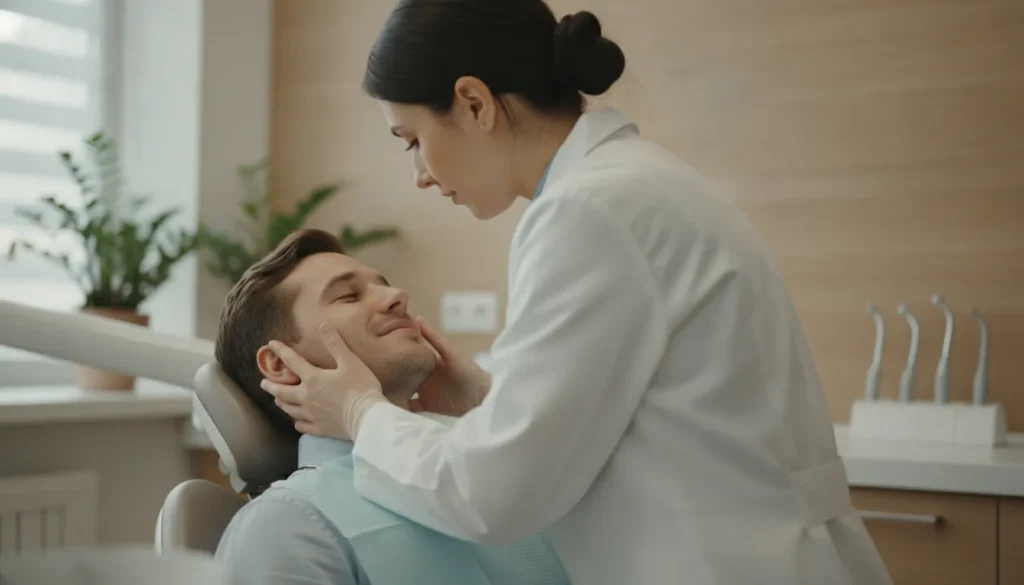
Jaw pain is rarely just a problem to quiet for a few days. Aching while chewing, morning tightness, limited opening, or painful clicking can reflect stress in the chewing muscles, the temporomandibular joints, or both. The right evaluation begins by understanding how those parts work together rather than assuming one bite issue explains everything.
A tmj treatment specialist northern california can assess jaw movement, joint health, muscle function, and related oral factors before recommending care. Temporomandibular disorders include more than 30 conditions, so treatment should be individualized and conservative when appropriate, not based on a one-size-fits-all appliance or promise. The National Institute of Dental and Craniofacial Research also notes that TMDs may occur alongside headaches, sleep problems, and other pain conditions.
For patients in Roseville, Rocklin, Granite Bay, Folsom, and the greater Sacramento area, specialist care can provide a more complete view of function and comfort. That starts with the training, diagnostic perspective, and deliberate consultation process behind a thoughtful treatment plan.
If jaw symptoms have lingered or disrupted your daily life, a prosthodontist who evaluates function from the inside out can help you see what may be driving them.
A consultation with a TMJ treatment specialist in Northern California can begin a focused, root-cause evaluation.
Why Northern California Patients Choose a TMJ Treatment Specialist
Jaw pain is often easy to normalize. Patients may adjust how they chew, avoid certain foods, accept morning headaches, or assume that clicking is simply part of getting older. That can allow discomfort and restricted movement to continue for years before the underlying problem receives focused attention. According to the National Institute of Dental and Craniofacial Research. Temporomandibular disorders affect about 5% of adults in the United States and are the second most common musculoskeletal pain condition after low back pain. NIDCR data on TMD and jaw pain helps put the concern in perspective.
For patients in Roseville, Rocklin, Granite Bay, Folsom, and the greater Sacramento area, the question is not simply how to quiet a sore jaw. It is whether the joint, chewing muscles, bite, teeth, and broader functional pattern have been evaluated together. That is where a TMJ/TMD treatment specialist can offer a more comprehensive starting point.
Specialist training matters when function is complex
Prosthodontics is the dental specialty focused on restoring oral function and complex dental structures. A board-certified prosthodontist has completed three additional years of post-doctoral training in complex restorative and implant dentistry. That background supports a broader evaluation of how the teeth meet, how the jaw moves. And how existing restorations or missing teeth may fit into the overall functional picture. It does not mean every patient needs extensive dental treatment. It means the assessment is informed by training designed for complicated relationships among teeth, muscles, joints, and restorative work.
This distinction is important because jaw symptoms can have more than one contributing factor. Muscle tension, joint irritation, clenching, tooth wear, and changes in the bite may require different questions and different forms of care. A specialist can help separate what is clinically significant from what is merely incidental, then discuss appropriate options without promising a predetermined result.
A thorough consultation is a process, not a quick label
At Dr. Jefferson Clark Personalized Oral Health, the consultation is intentionally multi-visit. This approach allows the team to map jaw movement, evaluate joint tissues. Review the condition and function of the teeth, and develop a treatment plan around the patient’s specific findings. The additional time is part of the care itself. It creates room for education, careful observation, and informed decisions rather than forcing a complex concern into a single rushed appointment. The goal is to understand the cause of the concern and identify a thoughtful path forward for each patient.
What Is a TMJ Disorder? The Joint, the Muscles, and More
The terms TMJ and TMD are often used interchangeably, but they describe different things. The temporomandibular joints, or TMJs, are the paired joints that connect the lower jaw to the skull and allow you to speak, chew, and open your mouth. Temporomandibular disorders, or TMDs, are a group of more than 30 conditions involving the jaw joints, the muscles that control chewing, and related tissues. The distinction matters because discomfort may come from the joint, the muscles, or both. An accurate evaluation looks for the source rather than treating every case as the same problem.
Three broad categories of TMD
Clinicians commonly organize TMD into three broad categories.
- Joint disorders: These include conditions affecting the TMJ itself, such as inflammation, arthritis, or disorders involving the small disc that helps the joint move smoothly. The disc can change position or function, sometimes contributing to pain, catching, or altered movement.
- Masticatory muscle disorders: The muscles used for chewing can become painful, fatigued, or overly tense. Clenching, grinding, stress, and altered movement patterns may increase muscular strain, but the contributing factors differ from one person to another.
- Headaches associated with TMD: Irritation or dysfunction in the jaw system can be associated with pain that is felt in the temple, forehead, or other areas of the head. Head pain may also have several possible causes, so it should be considered as part of the broader clinical picture rather than assumed to be a jaw disorder.
This joint-and-muscle framework is described by the National Center for Biotechnology Information in its clinical overview of TMD: TMD can involve both the masticatory muscles and the TMJ. It also explains why a symptom-focused approach may miss important connections within the oral system.
What symptoms should you pay attention to?
Common symptoms include pain in the chewing muscles or jaw joint, jaw stiffness, limited movement, or locking. Some people notice painful clicking, popping, or grating when opening or closing the mouth. Ear ringing can also occur. The Mayo Clinic lists these symptoms among the possible signs of TMJ disorders. While noting that jaw sounds without pain are often common and do not necessarily require treatment. Persistent pain, reduced movement, or a change in how the jaw functions deserves a more careful assessment.
If jaw discomfort is interfering with eating, speaking, sleep, or daily comfort, Schedule a consultation for a thoughtful evaluation. The goal is to understand whether the problem is centered in the joint, the muscles. Or a combination of factors, then match the next step to what the examination reveals.
What Causes TMJ Pain? A Prosthodontist’s Root-Cause View
Jaw pain rarely has a single, obvious explanation. Temporomandibular disorders can involve the chewing muscles, the temporomandibular joints, or both, and different factors may interact over time. That is why a thoughtful evaluation looks beyond the location of the pain. The goal is to understand how the teeth, muscles, joints, habits, sleep, and broader health picture may be influencing one another.
Why the bite is not always the answer
It is common to hear that a “bad bite” caused someone’s TMD, or that braces created the problem. Current evidence does not support that belief. The National Institute of Dental and Craniofacial Research specifically notes that research has not shown a bad bite or orthodontic treatment, such as braces, to cause TMDs. That does not mean the way your teeth meet is irrelevant to evaluation. It means bite findings should be considered as part of the complete functional picture, not treated as an automatic explanation or a reason for irreversible changes.
A root-cause approach also avoids assuming that every clicking sound needs treatment. Popping or clicking without pain is common and generally considered normal. Pain, stiffness, limited movement, locking, or a change in function deserve closer attention, especially when they persist or interfere with eating and daily life.
Bruxism and the wider health picture
Clenching and grinding, known as bruxism, can place repeated pressure on the jaw system. According to Mayo Clinic, bruxism may contribute to jaw pain and headaches. It can occur during sleep without a person realizing it, or during the day in response to concentration, stress, or other triggers. Identifying the pattern matters. A night guard may protect teeth and reduce strain for some patients. But an appliance should be selected and adjusted within a broader assessment rather than used as a universal answer.
TMDs may also occur alongside headaches, back pain, sleep problems, irritable bowel syndrome, or fibromyalgia, according to NIDCR. This does not prove that one condition caused another. It does show why a narrow, symptom-only approach can miss important context. Sleep quality, muscle tenderness, medication history, stress load, and other pain patterns may all help explain why symptoms began or continue.
For patients seeking a TMJ treatment specialist in Northern California, a prosthodontic evaluation should connect these details into a functional picture. A multi-visit consultation can allow careful observation of jaw movement, joint health, bite relationships, and contributing habits before treatment is selected. That measured process supports personalized care while avoiding guarantees, rushed conclusions, or irreversible treatment based on an assumed cause.
How a Prosthodontist Diagnoses TMJ: A Multi-Visit Assessment
Jaw pain is not a diagnosis by itself. Temporomandibular disorders can involve the chewing muscles, the temporomandibular joints, or both, and symptoms may overlap with other sources of facial pain. A careful evaluation therefore looks beyond a single tooth, a single image, or the position of the bite.
At Dr. Clark’s practice, the multi-visit consultation is designed to make that evaluation thorough. Time between visits allows the clinical team to compare findings, understand how your symptoms behave. And develop a plan around the likely causes rather than simply quieting one symptom. The National Institute of Dental and Craniofacial Research reports that TMD symptoms are twice as common in women as in men, especially among women ages 35 to 44. That pattern is useful context, but it does not replace an individualized assessment.
- Discuss symptoms, history, and daily function. The assessment begins with your experience: where the discomfort is located, when it began. What makes it better or worse, and whether you notice stiffness, locking, headaches, painful clicking, clenching, or difficulty chewing. Your dental history, previous treatment, sleep patterns, and relevant health conditions also help place the jaw symptoms in context. A prosthodontist listens for patterns instead of assuming that every clicking sound or every change in the bite represents the same disorder. Clicking or popping without pain is often common and does not automatically require treatment, according to NIDCR.
- Examine jaw movement and the surrounding tissues. The clinician watches how far and how smoothly you open and close, whether the jaw deviates, and whether movement is limited or uncomfortable. The jaw joints and chewing muscles are palpated while you move and rest. Pressure around the jaw helps identify specific sites of tenderness or reproduced pain. This hands-on examination can distinguish a symptom that is coming from a muscle from one that may involve the joint. While also revealing how the teeth, muscles, and joints work together.
- Use imaging when the findings call for it. Dental X-rays may help evaluate the teeth and the bony structures of the jaw. When more detail is needed, a CT scan can provide a closer view of bone. An MRI may be appropriate when the joint disk or other soft tissues need to be assessed. Imaging is selected to answer a clinical question, not ordered simply to collect pictures. Mayo Clinic describes X-rays, CT scans, and MRI as possible parts of TMJ diagnosis, depending on the symptoms and examination findings: Mayo Clinic’s TMJ diagnosis guidance.
- Synthesize the findings into a customized plan. The final step is connecting the history, physical examination, imaging, and functional observations. This is where a multi-visit process becomes valuable. The goal is to identify the most reasonable starting point, explain what is known and what remains uncertain, and choose appropriately measured care. Treatment may begin with conservative strategies when appropriate, while more involved restorative or functional care is considered only when the findings support it. A board-certified prosthodontist can evaluate the relationship between jaw function and the broader restorative condition of the mouth as part of that planning. The result is a root-cause treatment plan tailored to your anatomy, symptoms, goals. And tolerance for care, not a standardized appliance or irreversible procedure offered before the diagnosis is clear.
This deliberate pace is not an unnecessary obstacle. It gives you time to ask questions and gives the clinician time to verify the working diagnosis before recommending next steps. For patients in Roseville, Rocklin, Granite Bay, Folsom, and the greater Sacramento area, that level of planning can make specialist TMJ care more understandable and more purposeful.
TMJ Treatment Options: Conservative Care vs. Specialist Treatment
Many jaw symptoms improve with time and do not require an aggressive intervention. Research notes that TMD symptoms may resolve on their own, and when they do not. Conservative methods are generally the first line of treatment, with positive results for most patients. Read the clinical overview of TMD treatment for additional context.
Conservative care is not lesser care. It is a thoughtful way to reduce irritation, observe how the jaw responds, and avoid irreversible changes before the cause is understood. A specialist evaluation becomes especially valuable when pain persists, jaw movement is limited. Clenching is pronounced, or symptoms suggest a broader functional problem involving the teeth, muscles, and joints.
| Approach | What it involves | When it fits |
|---|---|---|
| Self-care | Temporarily choosing softer foods, avoiding extreme jaw movements, using comfort measures, and noticing habits such as daytime clenching. | Mild or recent symptoms, particularly when the jaw is moving normally and there is no concerning progression. |
| Medication | Anti-inflammatory or pain-relieving medication may be discussed with a qualified clinician as part of a short-term plan. | When discomfort is interfering with daily activities and medication is medically appropriate for the patient. |
| Physical therapy | Guided exercises and manual techniques can address jaw mobility, muscle tension, posture, and coordinated movement. | When muscle tightness, restricted movement, or related neck and posture patterns contribute to symptoms. |
| Custom oral splint or orthotic | A precisely fitted appliance can help manage loading and protect the teeth. Custom-made appliances may reduce muscular strain on the TMJ while sleeping. | When nighttime clenching, grinding, muscle fatigue, or an unstable bite pattern warrants an individualized appliance. Explore custom splint therapy. |
| Specialist functional planning | A multi-visit assessment examines jaw movement, joint tissues, bite relationships, and the oral system before treatment is selected. | Persistent, complex, or recurrent symptoms, especially when a root-cause plan is needed rather than symptom management alone. |
| Restorative or functional reconstruction | When significant tooth wear, missing teeth, or joint-related damage affects function, restorative treatment may be considered as part of a broader plan. | Selected cases after careful diagnosis, informed discussion, and consideration of less invasive options. |
Why appliance precision matters
An oral appliance should not be treated as a generic product. Its design, fit, contacts, and adjustment all matter because the goal is to support a specific functional situation without creating new interference. At Dr. Clark’s Roseville practice, the in-house dental lab fabricates custom-fitted occlusal appliances, including splints and night guards, with precision tailored to the patient’s needs. Learn more about the in-house dental lab.
A board-certified prosthodontist can place an appliance within a larger diagnostic framework. That means considering whether the symptoms relate primarily to the muscles, the joint, tooth wear, clenching, or several factors at once. Conservative treatment may remain the appropriate course, while advanced restorative care is reserved for situations in which structural or functional reconstruction is genuinely indicated. The aim is not to promise a particular result, but to choose the least invasive reasonable path with a clear understanding of the patient’s underlying oral health.
What Sets a Board-Certified TMJ Specialist Apart?
Choosing a specialist for jaw concerns is not about treating every click or pop as a disease. The National Institute of Dental and Craniofacial Research notes that clicking or popping without pain is common, considered normal, and generally does not require treatment. Persistent pain, stiffness, limited movement, locking, or painful joint sounds deserve a more complete evaluation, especially when they affect chewing, sleep, or daily comfort.
A board-certified prosthodontist brings a focused understanding of how teeth, muscles, joints, and restorations work together. Prosthodontists complete three additional years of post-doctoral training in complex restorative and implant dentistry. Dr. Jefferson Clark is also among fewer than 500 board-certified prosthodontists in California, a distinction that reflects advanced training and examination in the specialty. That background is particularly relevant when jaw symptoms overlap with worn teeth, missing teeth, a changing bite, or the need for carefully planned restorative care.
Precision that continues beyond the treatment room
Custom appliances are not interchangeable pieces of plastic. Their design, fit, and adjustment should reflect the patient’s anatomy, muscle activity, bite relationships, and treatment goals. An in-house dental lab allows the practice to fabricate custom splints and other appliances on site, using precise workflows for each patient’s functional needs. The lab includes digital design and advanced milling and printing capabilities, while close collaboration between the clinical and laboratory teams supports detailed refinement.
This level of coordination can be useful when a splint needs adjustment or when TMJ care is part of a broader restorative plan. The in-house dental lab is not a promise of a particular outcome. It is a way to keep clinical planning and appliance fabrication closely connected.
Root-cause planning takes time
A thorough consultation should look beyond the location of discomfort. Dr. Clark’s multi-visit process allows the team to map jaw movement, evaluate joint tissues, and consider the relationship between oral function and the patient’s broader concerns before recommending treatment. This approach helps distinguish symptoms that may simply be monitored from problems that call for conservative support. Custom splint therapy, restorative planning, or referral for another type of care.
Private care supports longer, more deliberate appointments and patient education rather than insurance-driven time limits. The goal is a plan built around the individual, with treatment recommended only when the findings support it. If jaw symptoms are persistent or interfering with function, Schedule a consultation to discuss a careful next step.
What Functional, Whole-Person TMJ Care Looks Like
Functional TMJ care begins with listening beyond the location of the pain. Temporomandibular disorders may occur alongside headaches, back pain, sleep problems, irritable bowel syndrome, or fibromyalgia, according to the National Institute of Dental and Craniofacial Research. That does not mean every symptom has the same cause, or that dental treatment addresses every medical condition. It does mean your jaw symptoms deserve to be considered within the broader pattern of your health.
The same principle applies to bruxism. Grinding or clenching can place excessive pressure on the jaw joints and is associated with jaw pain and headaches, as described by the Mayo Clinic. A thoughtful plan therefore looks at when symptoms occur, how your teeth contact, whether muscles are overworking, and what may be happening while you sleep. It avoids reducing a complex problem to a single appliance or a quick adjustment.
Planning around your complete oral system
At Dr. Clark’s practice, the process starts with a multi-visit consultation. This allows time to map jaw movement, evaluate joint tissues, review your symptoms and history, and study how bite function relates to the rest of the oral system. The purpose is not to prolong treatment. It is to gather enough information to distinguish a short-term symptom from a pattern that needs more comprehensive planning. The consultation approach is designed to support a root-cause plan rather than a one-size-fits-all recommendation. Learn more about the consultation approach.
Depending on the findings, functional care may include conservative measures, education about clenching, coordination with other healthcare providers, or a custom splint. When a splint or restoration is appropriate, the in-house dental lab supports precise fabrication for the patient’s specific functional needs. The lab can create custom-fitted occlusal appliances, including splints and night guards, with close attention to fit and comfort. That appliance is one part of a larger plan, not a substitute for understanding why the jaw is under strain.
Protecting function over the long term
Follow-through matters. A splint may need evaluation as symptoms, muscle activity, or tooth wear changes. Restorative treatment, when considered, should be planned around stable function and the health of the joints, muscles, teeth, and supporting tissues. Regular review helps the care team determine whether the plan remains appropriate and whether additional evaluation is warranted.
For patients seeking a TMJ treatment specialist in Northern California, this whole-person model offers a more careful way to move forward: understand the pattern. Address contributing factors, and make decisions at a pace that respects both comfort and long-term oral health. If this approach sounds right for you, a specialist evaluation can help you understand the pattern behind your symptoms and move forward at a measured pace.
Schedule a consultation with Dr. Clark to learn how a root-cause TMJ evaluation can begin, then review the frequently asked questions below.
Frequently Asked Questions
What does a TMJ specialist do?
A TMJ specialist evaluates whether your symptoms involve the jaw joints, chewing muscles, bite function, or several factors together. The assessment may include your symptom history, jaw movement, muscle tenderness, and imaging when appropriate. The goal is to understand the contributing factors before recommending conservative care, splint therapy, or restorative treatment.
How do you find a TMJ specialist in Northern California?
Look for a clinician with advanced training in complex restorative and jaw function concerns, a careful diagnostic process, and experience creating customized treatment plans. A board-certified prosthodontist has completed three additional years of post-doctoral training in complex restorative and implant dentistry, according to the practice’s TMJ treatment information. Ask how the office evaluates the joint, muscles, bite, and related symptoms before treatment begins.
What is the best TMJ treatment for chronic pain?
There is no single best treatment for every patient. Many TMD symptoms resolve without intervention, and conservative methods are generally used first when symptoms persist, according to the National Center for Biotechnology Information. Depending on the findings, care may include self-care guidance, physical therapy, medication, or a custom oral appliance. A precise splint can reduce muscular strain while you sleep, particularly when clenching or grinding contributes to jaw pressure.
Is TMJ treatment covered by insurance?
Coverage depends on your specific plan and how the service is classified. This practice uses a private-care model and does not bill insurance, allowing time for thorough consultation and individualized planning. The office can explain the recommended evaluation and treatment fees before care begins so you can make an informed decision.
Schedule a Consultation for Root-Cause TMJ Care
If jaw discomfort, muscle tension, or changes in how your teeth meet have continued despite temporary measures, a focused specialist evaluation may help clarify the factors involved. Dr. Clark’s multi-visit consultation process allows time to understand your symptoms, examine function, and discuss an individualized path forward without assuming one treatment fits every patient. To take the next step, schedule a consultation with the practice.