


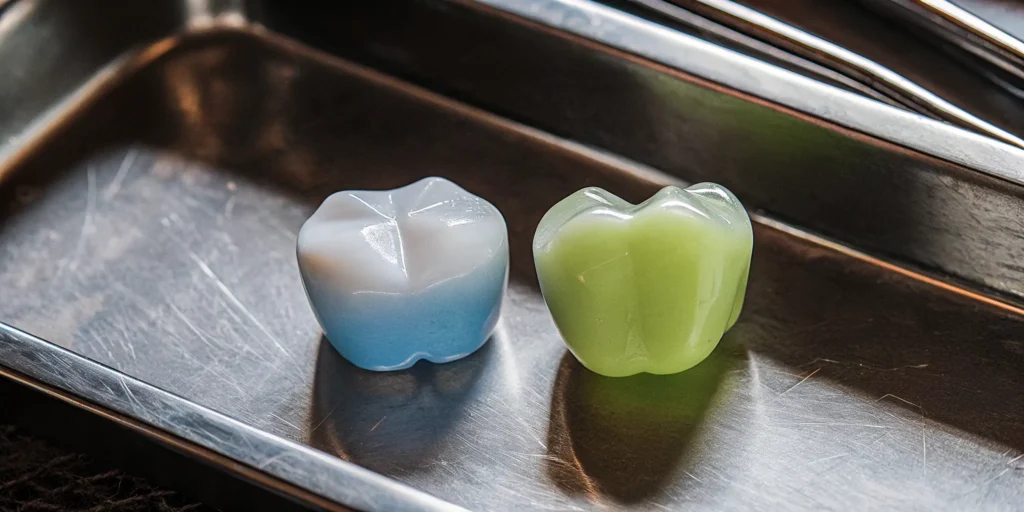
Think of a damaged tooth like a puzzle with a missing piece. A traditional filling is like using putty to fill the gap; it works, but it might not be a perfect, lasting fit. A dental inlay or onlay, however, is like having a master craftsman create a custom puzzle piece just for you. It’s fabricated from a single, solid block of porcelain to fit the missing space with flawless precision. This approach not only restores the tooth’s appearance but also reinforces its strength from within. The ‘inlay vs onlay procedure’ simply determines the shape and size of that custom piece, ensuring it’s exactly what your tooth needs to be whole and healthy again. Let’s explore how this beautiful, durable solution works.
Key Takeaways
- Preserve Your Natural Tooth: Inlays and onlays are a conservative treatment, repairing moderate damage while saving healthy tooth structure that would be removed for a full crown. They are the ideal choice when a simple filling is not enough.
- Superior Strength and Aesthetics: Because they are custom-made in a lab from a solid piece of porcelain, these restorations offer incredible durability and a precise fit. They are also color-matched to your teeth for a seamless, natural look.
- A Durable, Long-Term Solution: The two-visit process ensures a perfect fit and strong bond, creating a restoration that can last for decades with proper care. This makes them a valuable, cost-effective investment in your oral health.
What Are Dental Inlays and Onlays?
When you have a cavity or a damaged tooth, you might think your only options are a simple filling or a full dental crown. But there’s a fantastic middle-ground solution that often gets overlooked: dental inlays and onlays. Think of them as custom-made puzzle pieces designed to perfectly repair a tooth that has moderate damage. They are a key part of restorative dentistry, helping to bring back the tooth’s strength and shape while looking completely natural. Because they are crafted with precision in a lab, they offer a durable and beautiful alternative when a standard filling isn’t quite enough.
More Than a Filling, Less Than a Crown
So, what makes an inlay or onlay different? Unlike a regular filling that’s molded directly into your tooth in one visit, inlays and onlays are known as “indirect restorations.” This means they are created outside of your mouth from a detailed impression of your tooth. This process allows for a stronger, more precise fit. They are the perfect choice for back teeth (your molars and premolars) that have experienced decay or damage too extensive for a filling but not severe enough to require a full crown. This approach is all about preserving your natural teeth by saving as much healthy tooth structure as possible.
What Are They Made Of?
Inlays and onlays can be crafted from several high-quality materials, including gold, composite resin, and porcelain. While gold is incredibly durable, most people today choose porcelain or ceramic. Why? Because these materials are champions of natural aesthetics. They can be color-matched to your surrounding teeth so perfectly that the restoration becomes virtually invisible. Here at our practice, we create these custom pieces with meticulous care in our in-house dental lab, ensuring your inlay or onlay not only fits flawlessly but also blends beautifully with your smile for a result that is both strong and seamless.
Inlay vs. Onlay: What’s the Difference?
So, you know you need something more than a filling, but what’s the real difference between an inlay and an onlay? It all comes down to coverage. Think of them as two different solutions for the same goal: restoring a damaged tooth with a strong, custom-fit piece. Both are part of a conservative approach to dentistry that focuses on saving your natural teeth whenever possible. The choice between an inlay and an onlay simply depends on how much of the tooth needs to be repaired. Let’s break down exactly how they differ in fit and function.
How They Fit on Your Tooth
The main distinction between an inlay and an onlay is where they sit on your tooth. An inlay is designed to repair damage within the chewing surface, nestled neatly between the bumps, or cusps. It’s like a custom-made puzzle piece that fits perfectly into the space left by decay. An onlay, on the other hand, handles more extensive damage. It not only covers the area between the cusps but also extends to cover one or more of the cusps themselves. This is why you might hear an onlay referred to as a “partial crown”; it rebuilds a larger portion of the tooth’s surface.
When Is Each Restoration Recommended?
Your dentist will recommend an inlay or onlay based on the specific needs of your tooth. An inlay is the go-to choice when a cavity is too large for a simple filling, but the tooth’s cusps are still healthy and strong. It addresses decay that is contained within the central part of the tooth. An onlay is recommended when the damage is more widespread and has weakened one or more of the cusps. By covering these vulnerable points, an onlay protects the tooth from fracturing under chewing pressure. It’s an excellent way to restore function without having to remove as much healthy tooth structure as you would for a full dental crown.
What to Expect During the Inlay and Onlay Procedure
Knowing what happens during a dental procedure can make the entire experience feel more comfortable and predictable. Getting an inlay or onlay is a straightforward process that we typically complete over two appointments. We’ll walk you through every step, ensuring you feel informed and at ease from your first visit to the final placement of your beautiful, custom-fit restoration. Our goal is to make the process as smooth and seamless as the final result.
Step 1: The Initial Consultation
Your journey begins with a conversation. During your first visit, we’ll examine the tooth in question, take any necessary X-rays, and discuss your options. We often recommend inlays and onlays for teeth with moderate decay or damage, situations where a simple filling isn’t quite enough, but a full crown would be excessive. This approach aligns with our philosophy of saving natural teeth whenever possible. If an inlay or onlay is the right fit for you, we’ll schedule your first of two appointments to prepare the tooth.
Step 2: Preparing the Tooth and Taking Impressions
At your next appointment, we’ll start by making sure you’re completely comfortable and the area is numb. Dr. Clark will then carefully remove the decayed or damaged portion of the tooth, creating a clean, stable surface for the restoration. Once the tooth is prepared, we take a precise impression or digital scan. Because inlays and onlays are indirect restorations, they are crafted outside of your mouth. We use this detailed model to create your permanent piece in our in-house dental lab, ensuring a perfect fit and a flawless match to your natural tooth color.
Step 3: Wearing a Temporary Restoration
While our lab technicians are meticulously crafting your permanent inlay or onlay, we won’t leave your tooth exposed. We will place a temporary restoration over the prepared area. This temporary piece serves a few important purposes: it protects the underlying tooth structure from damage, prevents sensitivity to hot or cold, and keeps your bite feeling normal. It’s a simple, comfortable placeholder that does its job until your final, custom-made restoration is ready for placement at your next visit.
Step 4: Placing Your Permanent Restoration
This is the final step where everything comes together. When you return for your second appointment, we’ll gently remove the temporary restoration and clean the tooth. Dr. Clark will then place your new, permanent inlay or onlay to check its fit, shape, and color. After making any tiny adjustments to ensure perfection, he will permanently bond the restoration to your tooth. Once it’s securely in place, we’ll give it a final polish. We just ask that you avoid very hard or sticky foods for the first 24 hours to give the cement time to fully cure and create a strong, lasting bond.
How Do Inlays and Onlays Compare?
When you need to repair a tooth, it can be hard to know which option is best. Inlays and onlays are often called “partial crowns” because they fall somewhere between a simple filling and a full-coverage crown. Understanding how they stack up against these more common restorations can help you feel confident in your treatment plan. Let’s look at the key differences.
Inlay vs. Filling
You might wonder why you’d choose an inlay over a traditional filling. While both treat decay inside the tooth, their approach and results differ significantly. A filling is made of a composite material that is packed directly into the cavity and hardened in place. Over time, this material can shrink slightly and may even put pressure on the remaining tooth structure, sometimes leading to fractures.
An inlay, on the other hand, is a single, solid piece of porcelain or gold custom-milled to fit the cavity perfectly. Here at our practice, we use our in-house dental lab to create restorations that are incredibly precise. Because it’s crafted as one piece and bonded into place, an inlay provides superior strength, won’t shrink, and can last for many years longer than a standard filling.
Onlay vs. Crown
If your tooth damage is more extensive and involves one or more of the chewing cusps, the choice often comes down to an onlay versus a full dental crown. A crown covers the entire visible surface of your tooth, which requires removing a significant amount of its natural structure. While effective, it’s a more aggressive restoration.
An onlay offers a more conservative solution. It’s designed to cover only the damaged portion of the tooth, including the cusps, while leaving healthy enamel untouched. This approach aligns with our commitment to saving your natural teeth whenever possible. Think of an onlay as the “just right” option when a tooth is too damaged for a filling but doesn’t need the full coverage of a crown. It restores function and strength while preserving more of what nature gave you.
The Benefits of Inlays and Onlays
When a tooth has damage that’s too much for a filling but not enough to need a full crown, inlays and onlays offer a fantastic solution. They represent a sweet spot in restorative dentistry, combining strength, beauty, and a conservative approach to treatment. If you’re looking for a repair that not only fixes the problem but also enhances your tooth’s health and appearance for years to come, it’s worth getting to know the advantages of these custom restorations.
They’re Strong and Durable
One of the biggest advantages of inlays and onlays is their incredible strength. Unlike a standard filling that is packed into a tooth, these restorations are crafted from a single, solid piece of high-strength porcelain in a dental lab. This solid construction can increase a tooth’s strength by up to 75 percent, reinforcing it against the pressures of biting and chewing. Because they are bonded directly to your tooth, they become an integral part of its structure. Our in-house dental lab gives us complete control over the quality and fit, ensuring your restoration is exceptionally strong and built to last.
They Blend In Beautifully
If you want a dental repair that no one will notice, inlays and onlays are an excellent choice. They can be made from tooth-colored porcelain or ceramic, which allows them to blend seamlessly with your natural tooth. We meticulously match the shade of the porcelain to your surrounding teeth, making the restoration virtually invisible. This commitment to natural aesthetics means your smile looks just like your smile, only healthier. Plus, the high-quality ceramic material is resistant to staining, so it will keep its natural look for many years, unlike some filling materials that can discolor over time.
They Preserve Healthy Tooth Structure
Our primary goal is always to preserve as much of your natural tooth as possible. Inlays and onlays are a perfect example of this conservative approach. They are recommended for moderate decay or damage that is too extensive for a filling but not severe enough to require a crown. While a crown covers the entire tooth, an inlay or onlay only replaces the damaged portion, allowing us to keep more of your healthy tooth structure intact. This philosophy of saving natural teeth is at the core of what we do, as it leads to better long-term outcomes for your oral health.
Understanding the Investment
While an inlay or onlay may have a higher initial cost than a traditional filling, it’s important to see it as a long-term investment in your smile. These restorations are incredibly durable, often lasting for 15 to 30 years or more with proper care. Because they are so resilient, you save money over time by avoiding the need for frequent repairs or replacements that are common with larger fillings. The superior fit and material also help protect the tooth from further decay. The longevity and reliability of inlays and onlays make them a cost-effective choice for maintaining a healthy, functional smile for decades.
Busting Myths About Inlays and Onlays
It’s completely normal to feel a little uncertain when you hear new dental terms. Misinformation can spread easily, making it hard to know what to believe about certain procedures. When it comes to restorative dentistry, inlays and onlays are two of the most effective and frequently misunderstood solutions. They are a fantastic middle-ground option for teeth that have damage too extensive for a simple filling but don’t yet require a full crown. Think of them as a custom-fit piece of a puzzle designed to make your tooth whole again.
Let’s clear up some of the common confusion surrounding these restorations so you can feel confident about your care. Our goal is always to find the most conservative treatment that will restore your tooth’s health and appearance for the long term. Understanding your options is the first step toward making a confident decision about your smile. A core part of our practice philosophy is saving natural teeth whenever possible, and inlays and onlays are a perfect example of that principle in action. They allow us to repair damage while preserving the healthy parts of your tooth, which is always the best-case scenario for its future strength and longevity.
Myth: “They’re just fancy fillings.”
This is a common misconception, but it misses the key difference in how they are made. A traditional filling is made of a composite material that is packed directly into your tooth and cured in a single visit. In contrast, an inlay or onlay is a single, solid piece of porcelain or gold that is custom-fabricated outside of your mouth. It’s designed from a precise digital scan or impression of your tooth, ensuring a perfect fit.
This custom creation process is what makes them so durable. Because they are crafted under controlled conditions, they are significantly stronger than a direct filling. At our practice, we use our in-house dental lab to create these restorations, giving us complete control over the quality, fit, and aesthetics for a truly seamless result.
Myth: “They aren’t as strong as crowns.”
While a crown covers the entire tooth and offers maximum protection, that doesn’t mean an onlay is weak. The “strength” of a restoration isn’t just about total coverage; it’s about providing the right amount of support where it’s needed. An onlay is an incredibly strong and durable solution designed specifically for teeth with moderate damage, often involving one or more of the chewing cusps.
The real advantage of an onlay is that it’s a less aggressive treatment than a crown. We only need to remove the damaged or decayed portion of the tooth, leaving more of your healthy, natural tooth structure intact. This conservative approach helps restore function to your bite without the need for more extensive work, which is a huge win for the long-term health of your tooth.
Myth: “They remove too much of the natural tooth.”
This myth is the exact opposite of the truth. In fact, the primary reason we recommend an inlay or onlay is to preserve as much of your natural tooth as possible. These restorations are the treatment of choice when a filling isn’t enough, but a full crown would be too aggressive. They are designed to fit into or onto the tooth like a puzzle piece, reinforcing its structure from within.
By only removing the decayed or damaged areas, we keep the healthy parts of your tooth untouched. This is a cornerstone of modern restorative dentistry. Our commitment to saving natural teeth means we will always recommend the most conservative option that will provide a strong, beautiful, and lasting result. An inlay or onlay often allows us to do just that.
Is an Inlay or Onlay Right for You?
Deciding on the right dental restoration can feel overwhelming, but it really comes down to a conversation between you and your dentist. Inlays and onlays are fantastic, conservative options, but they aren’t a one-size-fits-all solution. Understanding if you’re a potential candidate and what questions to ask can help you feel confident and prepared for your appointment. The goal is always to find the best possible solution for your unique smile, one that restores function and looks beautiful for years to come.
Signs You Might Be a Good Candidate
So, how do you know if an inlay or onlay is on the table for you? Think of it as a “just right” solution. These restorations are typically recommended when a tooth has damage that’s too significant for a simple filling but not quite severe enough to need a full dental crown. This might include moderate decay, a small fracture, or an old, failing filling. If you have a cavity that has weakened a cusp (one of the pointed parts of your molar), an onlay might be the perfect fit. The main goal is always saving your natural tooth structure, and inlays and onlays excel at this by only covering the damaged portion of the tooth.
Worried About the Procedure? You’re Not Alone
It’s completely normal to feel a little anxious about any dental procedure. Let’s talk about what you can realistically expect. After your permanent inlay or onlay is placed, it’s common to experience some mild sensitivity or tenderness in the area for a day or two. Your gums just went through a process, and they need a moment to settle down. For the first 24 hours, it’s a good idea to stick to softer foods and avoid anything particularly hard or crunchy. This gives the dental cement time to fully set and protects your new restoration. We focus on restoring not just looks but also comfortable, long-term function, and a smooth recovery is part of that process.
Questions to Ask Your Dentist
The single most important step is talking with a qualified dentist to determine the best path forward for your specific situation. To make that conversation as productive as possible, it helps to come prepared with a few questions.
Consider asking:
- Why is an inlay or onlay a better option for me than a filling or a crown?
- What material do you recommend for my restoration, and why?
- What does the process look like, and how many appointments will it take?
- How does having an in-house dental lab affect the creation of my inlay or onlay?
Asking questions shows you’re an active participant in your health, and a good dentist will be happy to walk you through every detail.
Caring for Your New Inlay or Onlay
You’ve just made a wonderful investment in your smile, and your new inlay or onlay looks and feels fantastic. Now, let’s talk about how to keep it that way. Taking care of your restoration is surprisingly simple and mostly involves the same great habits you already practice for your natural teeth. Because Dr. Clark’s restorations are custom-crafted with incredible precision in our in-house lab, they are designed for durability. Following a few key steps, especially right after your appointment, will ensure your inlay or onlay serves you well for years to come.
Immediately After Your Procedure
The first 24 hours are the most important for letting your new restoration settle in properly. Your mouth will likely be numb for a few hours, so please wait to eat or drink anything until the feeling returns to avoid accidentally biting your cheek or tongue. For the rest of the day, try to chew on the opposite side of your mouth. It’s also best to stick to a soft food diet, so think smoothies, yogurt, or soup. Avoid anything hard, crunchy, or sticky for at least a day. A little temporary sensitivity to hot or cold is normal, but it should fade quickly.
Long-Term Care for a Lasting Smile
The best part about inlays and onlays is that you care for them just like your natural teeth. There are no complicated new routines to learn. Just continue with your excellent oral hygiene: brush twice a day with a soft-bristled toothbrush and floss daily to clean the spaces between your teeth. While your restoration is very strong, it’s still wise to avoid biting down on extremely hard things like ice, popcorn kernels, or hard candy. Maintaining these simple habits is the best way to protect your investment and support our shared goal of saving your natural teeth for a lifetime of confident smiles.
Frequently Asked Questions
How long can I expect my inlay or onlay to last? Think of an inlay or onlay as a long-term investment in your tooth’s health. Because they are custom-milled from a single piece of high-strength porcelain and bonded securely to your tooth, they are incredibly durable. With proper care, which is just regular brushing, flossing, and dental check-ups, your restoration can easily last for 15 to 20 years, and often much longer.
Does the procedure for an inlay or onlay hurt? Your comfort is the top priority, so the tooth and surrounding area will be completely numb before any work begins. You shouldn’t feel any pain during the appointment. It is normal to experience some mild sensitivity to temperature or a little tenderness for a day or two after the procedure, but this feeling is temporary and fades quickly as your tooth and gums adjust.
Why does getting an inlay or onlay take two visits? The two-visit process is what makes these restorations so strong and precise. During the first appointment, we prepare the tooth and take a detailed impression. That impression is then sent to our lab, where a technician custom-crafts your permanent restoration for a perfect fit. At your second visit, we bond that final, beautiful piece into place. This method ensures a much stronger and more durable result than a restoration made directly in your mouth in one sitting.
Can an inlay or onlay be used to replace an old, large metal filling? Yes, this is a fantastic and very common use for them. Over time, old metal fillings can cause problems like cracks in the tooth or leakage around the edges. Replacing a large, failing filling with a tooth-colored inlay or onlay is an excellent way to restore the tooth’s strength and integrity. It also creates a much more natural look, blending seamlessly with your smile.
How do I know if I need an inlay, an onlay, or a crown? The best choice always depends on how much healthy tooth structure you have left. An inlay is perfect for repairing damage contained between the points, or cusps, of a tooth. An onlay is used when the damage extends to cover one or more of those cusps. A crown is typically recommended only when the tooth is significantly damaged and needs full coverage for protection. Dr. Clark will help you make the right decision by recommending the most conservative option that will give you a strong, lasting result.