


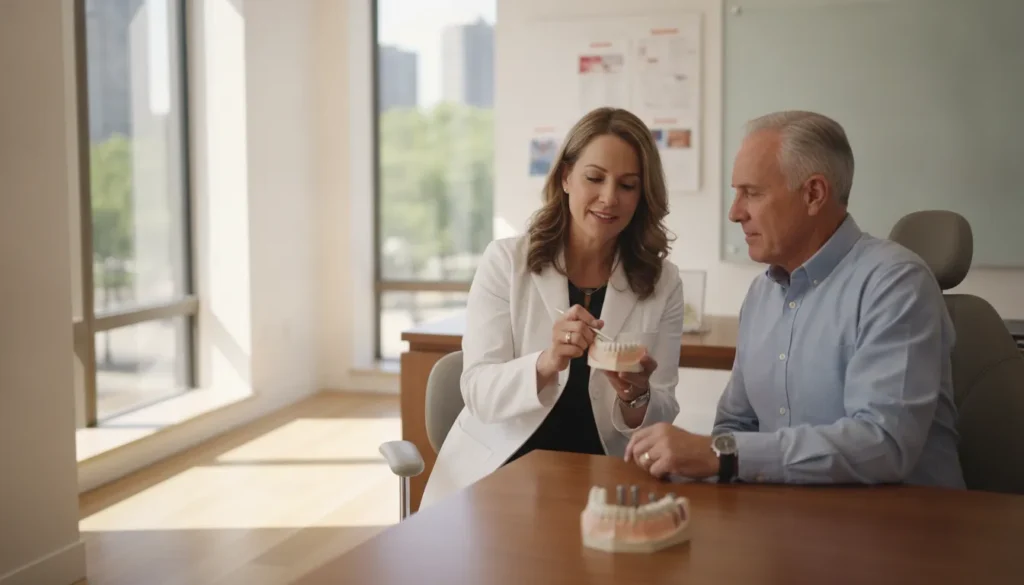
When patients ask how much do dental implants cost in California, the answer is rarely a single number. Treatment may include diagnostics, surgery, an abutment, a custom crown, and preliminary procedures. The right estimate depends on your oral health, the number of teeth being replaced, the condition of your jawbone, and the type of restoration planned.
For context, how much do dental implants cost in california often falls in the range of $3,000 to $5,000 per tooth for a single implant, while complex full-mouth reconstruction may exceed $40,000. These are market ranges, not a quote from Dr. Clark, and additional grafting or restorative complexity can change the total.
A private-care consultation is designed to clarify what your treatment requires and why. Dr. Clark’s multi-visit planning process considers health, function, materials, and long-term restorative goals rather than reducing care to an online price. You can also review this dental implant treatment guide before exploring the cost factors that shape an individualized plan.
Before you compare estimates, review the practice’s complete guide to restoring lost teeth for context on implant-supported options.
How Much Do Dental Implants Cost in California? Understanding the Variables
An implant estimate is not a single line item. It reflects the complete sequence of care needed to replace a missing tooth, from diagnosis through the final restoration. In California, published market context commonly places a single dental implant in the range of $3,000 to $5,000 per tooth. But that range is not a quote from Dr. Clark and should not be treated as a universal price. Your anatomy, treatment goals, and the materials selected all affect the total.
The examination, imaging, and treatment plan
Before surgery, the clinician must evaluate your oral health, jawbone, bite, and the condition of neighboring teeth. The estimate may include consultation time, diagnostic imaging, and detailed case planning. These steps help determine whether an implant can be placed as planned or whether other treatment should come first. Implant care is a multi-stage process involving planning, surgery, healing, and a custom restoration, so an online estimate often cannot account for the full clinical picture.
The implant, abutment, and crown
A single-tooth restoration generally includes several distinct components. The implant post functions as an artificial root. The abutment connects that post to the visible replacement tooth, and the crown restores the portion you see and use when speaking and chewing. Each component has its own design and material considerations. The crown must also be planned in relation to your bite, gum contours, facial proportions, and adjacent teeth. The goal is not simply to fill a space, but to restore health, function, and comfort.
Surgical complexity and additional procedures
The condition and volume of the jawbone can change both the sequence and cost of treatment. If there is not enough bone for predictable implant placement, bone grafting may be recommended. In some upper-jaw cases, a sinus lift may also be part of the plan. Bone grafting typically requires a healing period of about three to six months before implant placement, while the bone integration process after placement can take several months. These additional stages add surgical, diagnostic, and follow-up care to the estimate. Mayo Clinic describes dental implants as posts that replace tooth roots and notes that bone healing requires time: learn more about dental implant surgery and healing.
Materials, laboratory work, and case planning
Restorative materials, the design of the crown, and the laboratory process also influence cost. More complex cases require more planning and coordination between surgery and restoration. A private-care model may allocate longer appointments, high-quality materials, and personalized laboratory time rather than compressing care into an insurance-network template. The most useful estimate is therefore an itemized range that explains what is included, what may be staged later, and which factors could change the plan.

Single Implant vs. Full-Arch Restoration: Understanding the Price Difference
The number of teeth being replaced is only the starting point for comparing implant costs. A single-tooth restoration usually involves one implant post, an abutment, and a custom crown. Replacing several teeth may require multiple implants and a bridge or other connected restoration. Full-arch treatment involves a broader plan for function, bite, appearance, and long-term maintenance.
| Treatment scope | What may be included | Why the investment changes |
|---|---|---|
| One missing tooth | One implant, abutment, and custom crown, plus planning and imaging. | Care is limited to one site, but bone quality and tooth location still affect the plan. |
| Several missing teeth | Multiple implants supporting individual crowns or a connected restoration. | More surgical sites, materials, design decisions, and coordination can increase the total. |
| Full arch | Strategically placed implants, temporary teeth when appropriate, and a final full-arch restoration. | The plan addresses bite, tooth arrangement, materials, temporary teeth, final prosthesis, and surgical needs. |
As market context, one California source places a single dental implant at approximately $3,000 to $5,000 per tooth. That figure is not a quote from Dr. Clark, and it may not include every diagnostic, surgical, or restorative component. At the other end of the range, full-mouth reconstruction with implants can exceed $40,000 depending on complexity. Full-mouth figures vary widely, so an online market range should be treated as context rather than a prediction of an individual patient’s fees.
Timing can also affect the scope of care. If the jaw does not have enough bone, grafting may be needed before implant placement, followed by a healing period of approximately 3 to 6 months. Osseointegration, the process in which bone forms around an implant, may require another 3 to 6 months before final restoration. Some All-on-4 implant procedures use same-day temporary teeth, but those temporary teeth are not the final prosthesis. The final restoration is typically planned after healing and evaluation.
A consultation should therefore identify what is included, which stages are necessary, and whether grafting or other preparatory treatment is indicated. Comparing only a per-implant number can obscure the actual treatment plan, especially when restoring an entire arch.
Why Private-Care Implants Cost More Than Insurance-Network Alternatives
When patients ask how much do dental implants cost in california, the fee is only one part of the comparison. Insurance participation and clinical value are separate questions. A network fee may appear lower because the practice is working within a negotiated benefit structure. A private-care fee reflects the time, planning, materials, and laboratory work required for a highly customized treatment plan. Neither label, by itself, tells you whether an implant plan is appropriate for your oral health.
More time for diagnosis and treatment planning
Implant treatment is not a single appointment or a standard replacement part. It can involve detailed diagnosis, restorative planning, surgery, healing, and a final custom restoration. The condition of the teeth, gums, jawbone, bite, and facial proportions all affect the plan. A private-care model allows longer, in-depth appointments and a multi-visit consultation process, so the discussion can address the underlying causes of tooth loss. A realistic plan accounts for the treatment stages and how the restoration should function within the larger oral environment.
That planning is particularly important when treatment is complex or when several teeth need to be restored. A board-certified prosthodontist brings specialist training to the aesthetic and functional aspects of reconstruction. The fee therefore reflects not only the implant procedure, but also the clinical judgment involved in coordinating the surgical and restorative phases.
Materials and laboratory control matter
The restoration attached to an implant must be designed for the patient’s anatomy, bite, appearance, and daily use. Private care makes room for high-quality materials and personalized laboratory time rather than treating the restoration as an interchangeable product. These choices are part of the clinical value being evaluated, even when they are not visible in a headline price.
Dr. Clark’s same-building laboratory adds another layer of control. The team uses digital CAD/CAM workflows, 3D printing, and 5-axis milling to create custom restorations and manage the technical details closely. You can learn more about the in-house dental laboratory and how it supports restorative care. Keeping this work nearby can make communication between the clinical and laboratory sides more direct, especially when a restoration requires careful refinement.
For that reason, comparing only the lowest advertised number can leave out important components of care. A meaningful comparison should ask what is included in the plan and who is coordinating it. Ask which materials and laboratory services are being used and how much time is devoted to diagnosis and customization. Private care is not a promise of a particular outcome. It is a model built around thorough planning and specialist-level restorative attention.
Are Dental Implants Worth the Investment?
Whether dental implants are worth the investment depends on your oral health, treatment goals, timeline, and the condition of the surrounding teeth and jawbone. The value is not limited to replacing a visible tooth. A carefully planned implant restoration is intended to support everyday function, comfort, speech, and a stable bite while fitting into a broader restorative plan.
Unlike a removable denture, an implant is designed to replace the root portion of a missing tooth. The implant can integrate with the jawbone and support an abutment and crown, reducing the movement that some people experience with removable prosthetics. This may make eating and speaking feel more predictable. It can also help preserve a planned restorative result when a missing tooth would otherwise place extra demands on neighboring teeth. The biology of integration varies by patient, however, and treatment must be evaluated individually. Mayo Clinic explains the implant surgery and healing process.
Initial cost versus ongoing maintenance
The initial investment is often higher than the cost of a conventional denture. Particularly when treatment includes advanced imaging, extraction, bone grafting, multiple implants, or a custom final restoration. A lower starting price does not necessarily represent the full treatment or maintenance picture. Dentures may require adjustments, relining, replacement, or adhesive use as the mouth changes. Implants also require professional maintenance and daily home care, including attention to the gums and the restoration. They are not a substitute for regular examinations.
For some patients, the functional stability and reduced reliance on removable appliances justify the higher upfront expense. For others, a conventional denture, bridge, or staged treatment may better fit their anatomy, health needs, budget, or priorities. A systematic review indexed in PubMed found that implant treatment can be cost-effective over time compared with traditional fixed prostheses. But cost-effectiveness is not the same as a guarantee of lifespan or a specific personal outcome.
Comparing the long-term value of dental implants with dentures should include comfort, maintenance, function, and the health of the remaining teeth, not only the quoted fee. A prosthodontic evaluation can clarify which option supports your priorities and whether the proposed restoration is appropriately designed for your individual circumstances.
Financing Options and Payment Planning in California
Planning for implant treatment involves more than asking how much do dental implants cost in California. It also means understanding what the proposed fee includes, which stages may be separate, and how treatment can fit your broader health and financial priorities.
Traditional dental insurance often provides limited or no coverage for implants, although benefits vary by plan and some related services may be treated differently. The office does not participate in insurance networks. Instead, its private-care model is designed around detailed planning, longer appointments, appropriate materials, and customized restorative care. Ask the office to review your benefits, but do not assume that an insurer’s estimate represents your complete treatment cost.
Ask what the estimate includes
A useful estimate should identify the individual components of care rather than present an unexplained total. Depending on your needs, ask whether it includes diagnostic imaging, extraction, bone grafting, implant surgery, the implant abutment, temporary teeth, and the final crown or other restoration. For more extensive treatment, clarify whether the estimate covers each arch and each planned stage. These questions can make comparisons more meaningful and reduce surprises when treatment progresses.
It is also reasonable to ask how the practice handles payments and whether costs are due at separate treatment milestones. Do not commit to a plan based on a generic online quote. The appropriate sequence depends on your examination, imaging, oral health, bone support, and restorative goals.
Consider phased treatment when clinically appropriate
Some patients may be able to complete care in clinically appropriate phases. For example, a plan might first address infection, failing teeth, or bone support before implant placement and the final restoration. Phasing does not mean delaying necessary care without guidance. It means coordinating treatment stages with your clinical needs and discussing the financial implications before each commitment.
A thorough consultation gives you a written plan, realistic expectations, and time to ask about available payment arrangements without pressure. The goal is informed decision-making, not a one-size-fits-all financing promise.
Get an Accurate Estimate: Why You Need a Consultation First
Online articles can provide useful context for how much do dental implants cost in California, but they cannot calculate the needs of an individual patient. A meaningful estimate must account for your anatomy, oral health, bite, the number of teeth being replaced, the materials selected, and the visits required to complete treatment. It also must distinguish between the surgical implant, the connecting abutment, and the final custom restoration.
A consultation is not simply a visit to assign a price. It is a structured process for determining whether implant treatment fits your health, goals, timeline, and budget. At a specialist practice, that process may include several visits so the plan is based on complete information rather than a quick visual impression.
- Review your medical and dental history. Your provider should discuss previous dental treatment, current symptoms, medications, tobacco use, medical conditions, and your goals. These details can affect healing, candidacy, timing, and the type of treatment that is appropriate.
- Complete a thorough examination and diagnostic imaging. The examination evaluates your teeth, gums, bite, jaw relationships, and available bone. Imaging helps identify conditions that may not be visible during a routine examination. If bone volume is insufficient, bone grafting may be needed before implant placement, adding another stage and a typical three-to-six-month healing period.
- Discuss alternatives and realistic expectations. You should understand how an implant-supported tooth, bridge, denture, or full-arch approach differs in function, maintenance, appointments, and cost. Implant treatment involves planning, surgery, healing, and final restoration. Osseointegration, the process in which bone heals around the implant, can take several months, so the timeline cannot be reduced to a single procedure date.
- Build a detailed, customized treatment plan. The plan should identify the proposed procedures, restoration design, materials, number of visits, sequencing, and factors that could change the scope. Custom restorations may require careful coordination between the clinical team and laboratory. You can review the practice’s high-quality dental implant services to understand this broader treatment approach.
- Review scheduling and financial considerations. Once the clinical plan is clear, the office can explain the expected stages, scheduling, payment responsibilities, and any available planning options. Ask which services are included, which circumstances could add cost, and when each payment is due. Then take the time you need to compare the information and decide whether to proceed. The office can explain the next step without treating the consultation as a commitment to treatment.
The goal is informed decision-making. A careful consultation should leave you with a clearer understanding of your options and the reasons behind the recommended plan, not pressure to accept a one-size-fits-all estimate.
Frequently Asked Questions
What is the average cost of a single dental implant in California?
A single implant commonly falls in the range of $3,000 to $5,000 per tooth, based on published California market context. The total may change when diagnostic imaging, extraction, bone grafting, the abutment, or the final crown is included. A personalized estimate should identify each stage rather than present one unexplained number. California cost context.
Does dental insurance cover dental implants?
Many traditional dental insurance plans provide limited or no coverage for implants, although benefits vary by plan and some may contribute toward related procedures or the restoration. Ask your insurer for a written explanation of benefits, including annual maximums, exclusions, waiting periods, and coverage for the crown, before making a treatment decision. Insurance coverage context.
How much does full-mouth reconstruction with implants cost?
Full-mouth reconstruction can exceed $40,000 when implants are used, depending on the number of teeth involved, bone and gum conditions, restorative design, materials, and treatment stages. This is market context, not a fee quote. Complex care requires an examination and detailed plan before a meaningful range can be provided. Full-mouth cost context.
Why do dental implant costs vary so much?
Cost reflects more than the implant itself. Bone grafting may be needed before placement and typically requires three to six months of healing, while osseointegration can require another three to six months before final restoration. Materials, imaging, surgical complexity, laboratory work, and the provider’s training also influence the range. Source: Mayo Clinic.
How do specialist fees affect implant costs?
A prosthodontist’s advanced training and experience with complex restorative planning can influence professional fees. In a private-care setting, the fee may also reflect longer appointments, high-quality materials, and dedicated laboratory time. The relevant question is what the proposed fee includes, how the plan addresses your oral health, and whether the treatment is designed around your anatomy and functional needs.
An individualized conversation can help clarify which treatment stages may apply to your situation and what questions to consider when planning for implant care. Dr. Clark’s specialist-led approach is designed to support thoughtful evaluation rather than a generic estimate. To discuss your goals and receive a personalized treatment plan, schedule a consultation.