



Dental implants vs dentures is a comparison between fixed or implant-retained tooth replacement and a removable prosthesis supported by the gums. Implants may offer more stability, while traditional dentures avoid implant surgery. The right choice depends on your oral and general health, anatomy, goals, budget, and ability to maintain treatment over time.
Quick answer: Dental implants are anchored in the jaw and can support fixed or removable replacement teeth. Conventional dentures rest on the gums and are removed for cleaning. Implant-supported dentures provide a removable option with additional retention. No option is universally best, so a prosthodontic evaluation should guide the decision.
Comparing these treatments is not just a matter of choosing the most advanced technology. A thoughtful plan considers how tooth loss affects chewing, speech, facial support, hygiene, and long-term oral health. It also considers whether preserving remaining natural teeth is possible. For a broader overview of replacement choices, see this guide to full-arch tooth replacement options.
How Do Dental Implants vs Dentures Compare?
The central difference is how each restoration is supported. A conventional denture replaces visible teeth and rests on the gums. Dental implants use small posts in the jaw to replace the support normally provided by tooth roots. A crown, bridge, fixed full-arch prosthesis, or removable overdenture can then be attached to the implants.
| Factor | Conventional dentures | Dental implants |
|---|---|---|
| Support | Rests on gums and may use remaining teeth for retention. | Uses implant posts in the jaw to support a restoration. |
| Removal | Patient removes the prosthesis for cleaning and as directed. | May be fixed or removable, depending on the treatment design. |
| Surgery | Does not require implant placement. | Requires surgery, healing, and clinical follow-up. |
| Maintenance | Clean the denture, gums, tongue, and remaining teeth daily. | Clean around the restoration and implants, with professional maintenance. |
Implant surgery is more involved than receiving a conventional denture. It may require treatment planning, imaging, bone grafting, periodontal care, or changes to smoking habits before placement. Implant integration and bone-graft healing commonly take about 3 to 6 months, although the timeline varies. Some full-arch plans provide same-day temporary teeth, with a final prosthesis after healing and refinement.
Conventional dentures can restore facial support and useful chewing function without implant surgery. Their stability depends on the fit, the shape of the supporting tissues, saliva, muscle control, and adaptation. Changes in bone and gum tissues may affect the fit over time. Neither a removable appliance nor an implant restoration is maintenance-free.
What Are the Pros and Cons of Traditional Dentures?
Traditional dentures can be an appropriate solution for replacing several or all missing teeth when a patient wants a removable restoration or does not want implant surgery. A prosthodontist designs the appliance around facial proportions, speech, bite, comfort, and the condition of any remaining teeth. Learn more about traditional denture options before comparing specific designs.
Potential advantages
- Removable care: The prosthesis can be removed for cleaning, sleeping, and professional adjustment as directed.
- No implant surgery: Treatment avoids implant placement and the associated healing phase.
- Broad replacement: One prosthesis can replace many missing teeth or a complete arch.
- Flexible management: Dentures may be relined, repaired, or adjusted when clinically appropriate.
Potential limitations
- Movement: A gum-supported appliance may shift during chewing or speaking, especially when anatomy or fit is challenging.
- Adaptation: Speech, chewing, and muscle control can feel different during the adjustment period.
- Changing fit: Supporting tissues and jaw shape can change, affecting comfort and retention.
- Ongoing care: Daily cleaning and regular examinations remain necessary.
New wearers often adapt gradually. Smaller bites, softer foods, and deliberate chewing can help during the transition. Persistent soreness, clicking, gagging, or difficulty eating should prompt an examination rather than being accepted as normal. The denture may need adjustment, or another treatment design may better fit the patient’s needs.
Daily care includes cleaning the prosthesis as directed and cleaning the gums, tongue, and remaining natural teeth. Continuous wear, poor hygiene, and an unstable fit can contribute to irritation and denture stomatitis. One review has reported that up to 70% of denture wearers may experience denture stomatitis at some point, but that population finding is not an individual prediction. Regular care helps identify pressure areas and tissue changes early.
What Are the Pros and Cons of Dental Implants?
Dental implants can provide a stable foundation for one or more replacement teeth, an implant-retained overdenture, or a fixed full-arch restoration. Implant posts replace some of the support provided by tooth roots. The restoration may feel more secure than a conventional denture, but the treatment requires surgery, healing, planning, and continuing maintenance.
| Potential benefits | Responsibilities and limitations |
|---|---|
| Greater stability for appropriately selected patients. | Surgery and a healing period are required. |
| Fixed or removable restoration designs are possible. | Anatomy, health, smoking, and hygiene affect candidacy. |
| Custom planning can address appearance, bite, speech, and chewing. | Implants do not eliminate the need for daily cleaning or professional care. |
| May help when conventional dentures or bridgework fit poorly. | Longevity and aesthetic results cannot be guaranteed. |
Dr. Clark’s in-house dental lab supports digital workflows, 3D printing, 5-axis milling, and close coordination when custom restorations are designed. 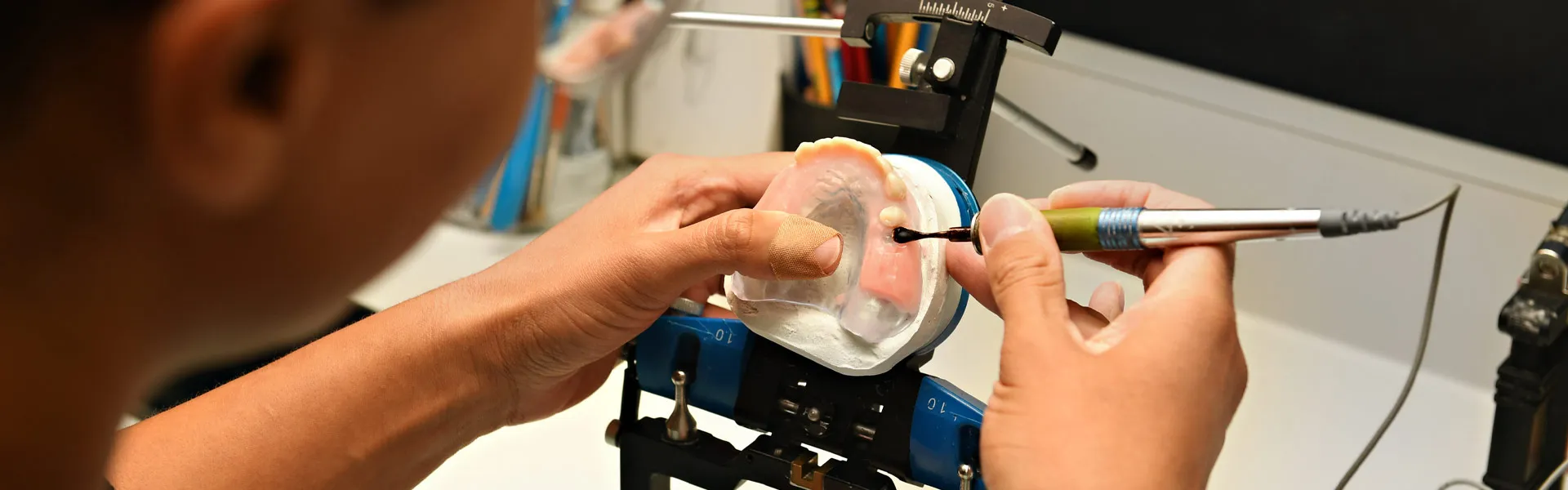
The clinical plan may include periodontal treatment, bone grafting, or other preparation. Bone grafting commonly requires 3 to 6 months of healing before implant placement. Smoking can delay tissue healing, and heavy smoking may make implant placement inappropriate in some circumstances. These factors do not decide candidacy by themselves. A health history, examination, and imaging are needed.
The Mayo Clinic explains that dental implants replace missing tooth roots with metal, screw-like posts and can support artificial teeth when dentures or bridgework fit poorly. Learn more about dental implant surgery. The goal is not to choose technology for its own sake. It is to match the restoration to the patient’s health, anatomy, expectations, and maintenance capacity.
When Are Dentures the Better Choice?
Conventional dentures may be the better choice when a patient wants to avoid implant surgery. Needs a removable restoration, or has health and healing considerations that make elective implant treatment less advisable. They may also suit someone who can accept a removable appliance and commit to daily cleaning, periodic adjustments, and examinations.
The decision should account for the whole situation. Medications, smoking, gum health, remaining teeth, bone anatomy, dexterity, schedule, and personal preferences all matter. A denture can restore a degree of chewing function and facial support, but its comfort depends on design and fit. A carefully made appliance is still a prosthesis that needs maintenance.
Cost and timing should be discussed in terms of the complete treatment pathway. Dentures may require a lower initial investment than implant-based replacement, but examinations, relines, repairs, adjustments, and future replacement are part of the long-term picture. Patients who want removable teeth with additional retention can also ask about implant-supported dentures, which are a separate treatment option rather than an automatic upgrade.
When Are Implants the Better Choice?
Implants may be a better fit when stable function is a high priority and a patient is prepared for surgery, healing, and long-term follow-up. They can be especially relevant when a conventional denture repeatedly moves, causes sore areas, or makes eating and speaking difficult. An implant restoration may be fixed or removable, depending on the anatomy and treatment goals.
Questions to consider
- Is your oral and general health compatible with the proposed surgery and healing?
- Do you have enough bone, or would grafting and additional healing be needed?
- Can you maintain daily hygiene around the implants and attend follow-up visits?
- Would a fixed restoration or a removable overdenture fit your preferences?
- Are you prepared for a longer treatment sequence than conventional dentures?
Implants are not automatically the right answer for every person. A patient may prefer removable teeth, may need to defer surgery, or may have medical and behavioral factors that require preparation first. An individualized recommendation is safer and more useful than treating one factor as decisive.
For patients comparing several replacement approaches, the practice’s page on restoring lost teeth provides additional context. Dr. Clark’s focus is comprehensive planning that supports function, appearance, and the preservation of natural teeth whenever possible.
Are Implant-Supported Dentures the Best of Both Worlds?
Implant-supported dentures can provide a middle path between a conventional denture and a fully fixed full-arch restoration. An overdenture attaches to implants for additional retention but remains removable for cleaning. A fixed full-arch prosthesis attaches to implants and is not intended for the patient to remove. The better design depends on anatomy, hygiene, dexterity, restorative goals, and maintenance preferences.
A removable overdenture can be easier to clean outside the mouth, but the patient remains responsible for removing, cleaning, and storing it as instructed. Attachments and denture components may need adjustment or replacement. A fixed restoration stays in place during ordinary daily activities, but cleaning around the prosthesis and implants requires specialized techniques and professional maintenance.
An umbrella review found that implant-retained overdentures were associated with better patient satisfaction and oral-health-related quality of life than conventional complete dentures. That evidence supports overdentures as a meaningful option for appropriately selected patients. It does not establish that every patient should receive an overdenture or that one attachment design is best for everyone. Research averages must be interpreted alongside an individual’s examination and priorities.
How Does a Prosthodontist Help You Decide?
A prosthodontist evaluates tooth replacement as a coordinated problem involving function, appearance, oral health, and long-term maintenance. Dr. Jefferson Clark is a board-certified prosthodontist and FACP in Roseville, California. His multi-visit consultation process is designed to understand the patient’s goals and build a customized plan rather than rush a complex decision. Learn more about why seeing a prosthodontist can help.
- Review health and goals. Discuss medical history, medications, smoking, previous dental experiences, budget priorities, comfort goals, and the level of maintenance that fits your life.
- Examine the mouth. Evaluate remaining teeth, gums, bite, infection, jaw relationships, available space, tissue condition, and the effects of tooth loss on chewing and speech.
- Study anatomy. Imaging can help assess bone, roots, sinus or nerve anatomy, and whether grafting or staged treatment may be relevant.
- Compare designs. Discuss conventional dentures, fixed implants, implant-retained overdentures, and other restorations in the context of your findings.
- Plan the restoration. Coordinate the surgical and restorative phases, including custom design and fabrication through an in-house dental lab when appropriate.
Bring questions about removal, cleaning, treatment timing, expected visits, preparation, and future maintenance. A consultation should explain benefits and limitations without promising a specific outcome. The purpose is to identify a realistic plan that supports your health and priorities.
Frequently Asked Questions
Are dental implants better than dentures?
Neither option is universally better. Implants may provide greater stability for appropriately selected patients, especially when conventional dentures fit poorly. Dentures may be appropriate when surgery is not advisable, when removable teeth better suit your priorities, or when you prefer a simpler treatment pathway. An evaluation should guide the recommendation.
Are dentures cheaper than dental implants?
Conventional dentures usually involve less initial treatment than implant-based replacement. Implants require surgery, planning, healing, and follow-up, so the initial investment is often higher. Compare the full pathway, including maintenance, relines, repairs, replacement, and whether an implant-supported overdenture may be appropriate.
How long does dental implant treatment take?
Timing varies by anatomy and restoration design. Implant integration and bone-graft healing commonly take about 3 to 6 months. Some full-arch plans include same-day temporary teeth, followed by a final prosthesis after healing and refinement. Your clinician can explain the sequence after examination and imaging.
What are snap-in dentures compared with fixed implants?
Snap-in dentures are removable implant-retained overdentures. They attach to implants for additional retention and can be removed for cleaning. Fixed implant restorations remain in place and are removed only by a dental professional. The choice depends on anatomy, hygiene, dexterity, restorative goals, and personal preference.
Can smoking affect eligibility for dental implants?
Yes. Smoking can delay tissue healing, and heavy smoking may affect whether implant placement is appropriate. Smoking is only one part of the evaluation. Discuss it openly so your prosthodontist can assess health, anatomy, healing considerations, and safer available options.
Schedule a consultation to compare your options with a board-certified prosthodontist in Roseville.
Schedule a Specialist Consultation
Choosing between dental implants, conventional dentures, and implant-supported restorations depends on your oral health, anatomy, goals, and preferences. A careful evaluation can clarify stability, maintenance, timing, and the treatment sequence that fits your situation. To discuss your options with Dr. Clark, schedule a consultation.