


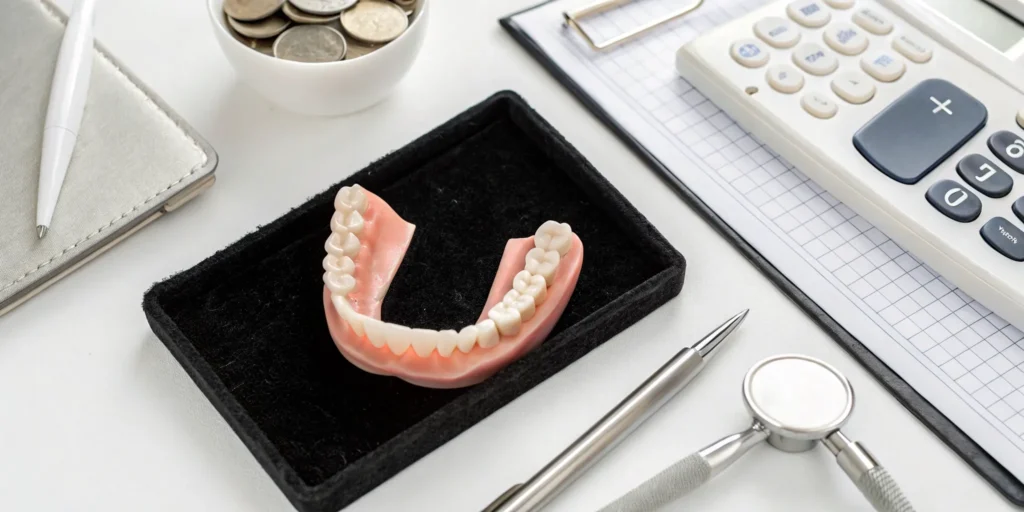
It’s easy to think of dentures as a simple purchase, but they are truly an investment in your daily quality of life. A poorly made denture can lead to discomfort, difficulty eating, and a constant need for adjustments, turning a lower upfront cost into a long-term hassle. In contrast, a custom-fit denture from a specialist is designed for lasting comfort and function. This is where understanding the cost of dentures from a prosthodontist becomes so important. You’re not just buying a replacement for teeth; you’re investing in the ability to speak clearly, enjoy your favorite foods, and smile with complete confidence.
Key Takeaways
- Look beyond the sticker price: Your total investment reflects the complete process, including the quality of materials, the complexity of your dental needs, and essential services like exams and adjustments that ensure a successful outcome.
- Invest in a specialist for a better result: A prosthodontist has years of advanced training focused on creating a superior fit and natural look, providing long-term value by getting your smile right the first time and helping you avoid future problems.
- Flexible payment options make treatment manageable: You can cover the cost of your new smile by using in-office payment plans, third-party financing (like CareCredit), or by applying pre-tax funds from your HSA or FSA.
Why See a Prosthodontist for Your Dentures?
When you’re considering dentures, you want to know you’re in the best hands. While a general dentist can make dentures, a prosthodontist is a specialist who has completed years of advanced training focused specifically on restoring and replacing teeth. Think of them as the architects of your smile, with the expertise to handle everything from a single crown to a complete set of dentures. This specialized training is particularly important if your dental situation is more complex. If you have significant tooth loss, issues with your bite, or have had dental work in the past that didn’t meet your expectations, a prosthodontist is uniquely qualified to help.
Beyond the technical skills, prosthodontists are also masters of dental aesthetics. They have a deep understanding of the art and science behind a beautiful, natural-looking smile. They don’t just fill a space; they meticulously design dentures that complement your facial features, skin tone, and personality. The goal is to create a smile that is not only fully functional for comfortable eating and clear speech but also has a completely natural appearance. This focus on both form and function ensures your final result looks and feels right.
Choosing a prosthodontist means you are investing in a higher level of personalized care. They take the time to thoroughly assess your needs and create a truly custom solution. This detailed approach is key to restoring lost teeth in a way that provides lasting comfort and confidence. Practices with an in-house dental lab offer an even greater advantage, allowing for seamless collaboration and precise adjustments to create the perfect fit. This commitment to a specialized, tailored process can make all the difference in your long-term satisfaction with your new smile.
A Breakdown of Denture Types and Their Costs
When you hear the word “dentures,” you might picture a single, specific thing. But in reality, there are several types, each designed to solve different dental challenges. The right option for you depends on how many teeth are missing, your overall oral health, and your personal goals for function and appearance. Understanding these different types is the first step in figuring out the potential cost. Let’s walk through the most common options so you can get a clearer picture of what to expect.
Complete (Full) Dentures
Complete dentures are what most people think of first. They are designed to replace all the teeth in an entire upper or lower arch. These are removable and rest on your gums. The cost can vary quite a bit based on the materials and craftsmanship. According to data from CareCredit, a standard set of full dentures averages around $1,968. However, for a more customized fit and lifelike appearance using top-tier materials, premium dentures can average closer to $6,514. A prosthodontist specializes in creating a comfortable, secure fit that helps you eat, speak, and smile with confidence, making them an ideal expert for restoring lost teeth.
Partial Dentures
If you’re missing just a few teeth here and there, a partial denture is likely the solution you need. These appliances fill in the gaps while anchoring to your remaining natural teeth, which helps prevent them from shifting. Partial dentures can be made with a metal framework for durability or a more flexible, resin-based material. On average, you can expect a metal partial denture to cost around $2,229, while a resin-based one is slightly less, averaging about $1,738. The goal is to create a seamless look that blends perfectly with your existing smile, preserving the health and alignment of your natural teeth.
Immediate Dentures
The idea of being without teeth for weeks while your gums heal after extractions can be daunting. That’s where immediate dentures come in. These are temporary dentures that a prosthodontist places on the same day your teeth are removed. They allow you to walk out of the office with a full smile and help protect your healing gums. Because they are a temporary solution that will need to be replaced or relined later, their cost is a separate consideration. The average price for a set of full immediate dentures is about $2,178. They are a fantastic bridge to your final, permanent dentures.
Implant-Supported Dentures
For those looking for the ultimate in stability, implant-supported dentures are a game-changer. Instead of resting on the gums, these dentures are securely anchored to dental implants placed in your jawbone. This prevents slipping and provides a much stronger bite. You can get removable “snap-on” dentures, which average around $2,480, or permanent, fixed dentures that average about $3,976 (these costs are for the denture itself, not including the implants). This approach is a key part of modern solutions for replacing missing teeth and offers a feel that is incredibly close to natural teeth.
Premium Dentures
Premium dentures represent the highest standard in tooth replacement, focusing on superior materials, a precise custom fit, and exceptional aesthetics. These aren’t your average dentures; they are crafted to look and feel as natural as possible. The process involves detailed measurements and artistry to recreate a smile that complements your facial features. Because of the advanced materials and specialized labor involved, they come at a higher price point, averaging around $6,514. Working with a prosthodontist who has an in-house dental lab can be a huge advantage here, as it allows for meticulous customization and quality control from start to finish.
What Determines the Final Cost of Your Dentures?
When you start looking into dentures, you’ll quickly find that there’s no single, fixed price. The final cost is a sum of several parts, and understanding these factors can help you see exactly what you’re paying for. Think of it less like buying a product off the shelf and more like commissioning a custom piece of functional art for your smile. The investment reflects the level of customization, the quality of the materials, and the expertise required to get the fit and function just right.
From the specific materials used to create your new teeth to the complexity of your personal dental situation, each element plays a role. Even your dentist’s location and their specific process for creating dentures can influence the final number. We’ll break down the four main components that determine what you can expect to invest in a high-quality, comfortable set of dentures.
The Quality of Materials
The materials used to make your dentures are a primary factor in their cost, durability, and appearance. The base of the denture, which mimics your gums, is typically made from a durable acrylic resin that can be colored to look incredibly natural. The teeth themselves can be made from either acrylic or porcelain. While acrylic is a common and cost-effective choice, higher-end materials often provide a more lifelike translucency and superior wear resistance. The goal is to create a smile that not only functions well but also has a completely natural aesthetic. Investing in premium materials often means a longer-lasting and more beautiful result.
The Complexity of Your Dental Needs
Your unique oral health situation is one of the biggest variables in the cost equation. A straightforward case of replacing a full set of teeth is very different from a situation involving significant bone loss, severe bite issues, or the need to work around existing dental implants. A prosthodontist will conduct a thorough evaluation to create a personalized treatment plan. This plan might include preliminary work like tooth extractions or bone grafting to ensure the best possible foundation for your new dentures. A more complex case requires a higher level of skill and more time, which is reflected in the overall cost of your full mouth reconstruction.
Your Dentist’s Location
It’s a simple fact of business: where your dental practice is located affects its pricing. The cost of dentures can vary based on the geographical area, much like the cost of housing or other services. A practice in a major metropolitan area with a higher cost of living will naturally have different overhead expenses than one in a small, rural town. This isn’t about paying more for the same thing; it’s a reflection of the local economy and the costs associated with running a state-of-the-art practice with highly trained specialists in that specific community.
The Advantage of an In-House Lab
Many dental offices outsource the creation of dentures to a separate, third-party laboratory. This can add time and cost to the process. A major advantage of working with a prosthodontist like Dr. Clark is the presence of an in-house dental lab. This setup streamlines the entire process, from initial impressions to final fitting. It allows for direct collaboration between the prosthodontist and the lab technician, ensuring meticulous quality control and a truly customized result. This synergy not only can manage costs by removing the middleman but also significantly improves the final fit, function, and appearance of your dentures.
Beyond the Dentures: What Other Costs to Expect
When you think about the cost of dentures, it’s easy to focus on the final price of the appliance itself. However, getting new dentures is a process, not a single purchase. The total investment covers a comprehensive treatment plan designed to give you a comfortable, functional, and beautiful smile. Think of it less like buying a product off the shelf and more like a personalized health service.
From your first conversation with the dentist to the final adjustments, each step is crucial for a successful outcome. These additional services aren’t hidden fees; they are essential parts of the journey to restoring lost teeth. Understanding the full scope of treatment helps you plan financially and appreciate the level of care involved in creating a smile that truly fits you. Let’s walk through the different services that contribute to the final cost.
Your Initial Consultation
Your journey begins with an initial consultation. This first appointment is a critical conversation where you and your dentist discuss your goals, concerns, and medical history. It’s our chance to understand what you’re looking for in a new smile and for you to understand your options. We’ll perform an initial assessment of your oral health and outline a potential treatment path. This is the foundation for your entire treatment plan, ensuring every subsequent step is tailored specifically to you. The entire process, from this first visit to your final fitting, is a partnership aimed at achieving your ideal result.
Dental Exams and X-Rays
Before any work begins, a comprehensive dental exam and detailed X-rays are necessary. This isn’t just a quick look; it’s a deep dive into the health of your jawbone, gums, and any remaining teeth. X-rays give us a clear picture of the underlying structures that will support your new dentures, allowing us to plan with incredible precision. This diagnostic step is vital for identifying potential issues before they become problems and is the key to designing a denture that is stable, comfortable, and built to last. It’s a foundational investment in the long-term success of your treatment.
Necessary Tooth Extractions
In some cases, especially when preparing for a complete denture, one or more teeth may need to be removed. This is usually because the remaining teeth are not healthy enough to support a partial denture or are compromised by decay or gum disease. While the goal is always saving natural teeth whenever possible, sometimes removing them is the best path toward a healthier and more stable mouth. A prosthodontist will carefully evaluate your situation to determine if extractions are a necessary step in your overall treatment plan to achieve optimal oral health.
Follow-Up Visits and Adjustments
Getting your dentures isn’t a one-and-done appointment. Your mouth will naturally change as it heals and adapts to the new appliance, so follow-up visits are a standard and important part of the process. During these appointments, we will check the fit, make minor adjustments to eliminate any sore spots, and ensure your bite is comfortable and correct. This fine-tuning is what transforms a good denture into a great one. These adjustments are key to ensuring you can eat, speak, and smile with complete confidence for years to come.
Ongoing Care and Supplies
Your new smile requires a little upkeep to stay in top shape. Ongoing costs typically include cleaning solutions and brushes designed specifically for dentures. Some people may also use a dental adhesive for extra security, though a well-fitting denture often requires none. Over time, your jawbone and gums will continue to change, which is a natural process. To maintain a snug fit, your dentures will need to be professionally relined or rebased every few years. These maintenance steps are essential for preserving the comfort, fit, and function of your dentures long-term.
Will Dental Insurance Cover Your Dentures?
Figuring out dental insurance can feel like a puzzle, especially when it comes to major treatments like dentures. The short answer is yes, many insurance plans do offer some coverage for dentures. However, the amount of coverage can vary quite a bit. Insurance is designed to help with the cost, but it rarely covers the entire expense, particularly for high-quality, custom-fit dentures from a specialist like a prosthodontist.
Think of your insurance as a partner in this investment, not the sole funder. Understanding the specifics of your plan is the first step toward creating a clear financial picture for your treatment. Our team is experienced in working with insurance providers and can help you get an estimate of your costs before we begin. This way, you can move forward with confidence and no surprises.
Understanding Private Insurance Coverage
Most private dental insurance plans provide some level of coverage for dentures, as they are considered a necessary restorative procedure. The key word here is “some.” Every plan is different, with its own rules, deductibles, and coverage percentages. It’s essential to look at the details of your specific policy to understand what to expect. For example, some plans may cover a higher percentage for dentures than others or have different rules for full versus partial dentures. Before you commit to treatment, it’s always best to check your plan’s benefits booklet or call your provider directly. Our office can also submit a pre-treatment estimate to get a clearer picture of what your insurance will contribute.
The Reality of Annual Maximums and 50% Coverage
When you look at your insurance plan, you’ll likely see two important numbers: a coverage percentage and an annual maximum. Many plans cover dentures at around 50%, meaning you are responsible for the other half of the cost. On top of that, almost every plan has a yearly limit on what it will pay out, often around $1,500 or $2,000. Once your insurance has paid that maximum amount for the year, any further costs are entirely your responsibility. For a significant investment like premium, custom-made dentures, it’s common for the total cost to exceed this annual maximum. This means you should plan for a significant out-of-pocket portion.
What to Know About Insurance Waiting Periods
A waiting period is a set amount of time you must be enrolled in a dental plan before certain benefits become active. Unfortunately, major procedures like dentures often have the longest waiting periods, which can range from a few months to a full year. If you’ve recently signed up for a new insurance plan, this is a critical detail to check. Attempting to get dentures before the waiting period is over will likely result in your claim being denied, leaving you to cover the full cost. Always confirm the waiting period for major restorative work with your insurance provider before scheduling your treatment.
How Medicare and Medicare Advantage Can Help
This is a common point of confusion for many patients. It’s important to know that Original Medicare (Part A and Part B) does not cover routine dental care, and this includes dentures. However, there is an exception. Some private insurance companies offer Medicare Advantage Plans (Part C), which bundle your Medicare benefits and often include extra coverage for things like dental, vision, and hearing. If you have a Medicare Advantage plan, you’ll need to check its specific summary of benefits to see if dentures are included and what the limitations are.
Understanding Medicaid Coverage
Medicaid’s dental coverage for adults varies significantly from state to state. In California, Medi-Cal Dental generally provides coverage for “medically necessary” dentures. However, there can be specific criteria you must meet, and there may be limitations on the types of dentures covered or how often they can be replaced. Because the rules are state-specific and can change, it’s best to check directly with the Medi-Cal Dental program to get the most accurate and up-to-date information on your eligibility and coverage for dentures. Our office can help you find the right resources to get the answers you need.
Key Questions to Ask Your Insurance Provider
To get the clearest possible picture of your coverage, it’s a great idea to call your insurance provider and ask a few direct questions. Being prepared can make the conversation much more productive.
Here are a few key questions to ask:
- Are dentures (full and partial) a covered benefit under my plan?
- What percentage of the cost do you cover for dentures?
- Is there a waiting period for this procedure, and have I met it?
- What is my annual maximum, and how much of it have I used this year?
- Do I have a deductible that I need to pay before my coverage starts?
- Do you require a pre-authorization or pre-treatment estimate for dentures?
How to Pay for Your Dentures: Your Financing Options
Thinking about the investment for your new smile can feel like a big step, but you don’t have to handle it all at once. There are several straightforward financing and payment options available to make getting your custom dentures more manageable. Understanding these choices can help you move forward with confidence. At our practice, we believe that financial concerns shouldn’t stand in the way of your health and happiness. Let’s walk through some of the most common and effective ways to pay for your treatment.
In-Office Payment Plans
One of the most direct ways to manage the cost of dentures is through an in-office payment plan. Many dental practices, including ours, offer plans that let you break down the total cost into a series of smaller, more manageable monthly payments. This avoids the need for a large, single payment upfront and allows you to budget for your care over several months. It’s always a good idea to ask our team about the specific payment plans and any discount programs we have available. We’re here to work with you to find a solution that fits your financial situation.
Third-Party Financing like CareCredit
Another popular option is using a third-party financing company that specializes in healthcare expenses. The CareCredit credit card, for example, is designed specifically for health and wellness costs, including dental procedures. This works like a regular credit card but for your medical needs, allowing you to pay for your dentures over time. Many patients appreciate this route because it often comes with promotional financing options, such as interest-free periods if you pay the balance within a certain timeframe. It provides a structured and predictable way to cover the costs of your treatment without delaying the care you need.
Using Your HSA or FSA
If you have a Health Savings Account (HSA) or a Flexible Spending Account (FSA) through your employer, you can absolutely use these funds for your dentures. These accounts are a fantastic resource because you contribute to them with pre-tax dollars. This means you’re paying for your dental care with money that hasn’t been taxed, which can result in significant savings. Using your HSA or FSA is a smart way to make your money go further when paying for necessary denture costs and insurance gaps. Be sure to check your account balance and any rules for withdrawal.
Supplemental Dental Insurance
While most dental insurance plans offer some coverage for dentures, it’s often not 100%. Plans typically cover a percentage of the cost, leaving you with an out-of-pocket expense. This is where supplemental dental insurance can be a huge help. A supplemental plan is secondary insurance that you purchase to help cover the costs that your primary dental insurance doesn’t. It can assist with deductibles, coinsurance, and other expenses, reducing your final bill. We recommend reviewing your primary policy carefully and considering whether a supplemental plan could be a worthwhile investment for you.
Debunking Common Myths About Denture Costs
When you start researching dentures, you’ll run into a lot of opinions and “common knowledge” about the cost. Unfortunately, much of this information is outdated or just plain wrong. Let’s clear up a few of the most common myths so you can approach your decision with confidence and clarity. Understanding the truth behind the price tag is the first step toward investing in a solution that truly restores your smile and your quality of life.
Myth: “Cheaper dentures are just as good.”
It’s tempting to go for the lowest price, but with dentures, you truly get what you pay for. Cheaper options are typically made from lower-quality acrylic that can wear down quickly, stain easily, and fit poorly. This often leads to discomfort, difficulty chewing, and an unnatural appearance. In contrast, premium dentures use advanced, durable materials that resist chipping and staining. A prosthodontist focuses on creating a result that not only lasts but also looks incredibly natural. Our in-house dental lab gives us complete control over the materials and craftsmanship, ensuring your new teeth are both beautiful and built for the long haul.
Myth: “The price you’re quoted is the only cost.”
The price of the denture itself is just one piece of the puzzle. A successful outcome depends on a comprehensive treatment process, which can include other necessary services. Your total investment will likely involve costs for your initial exam, diagnostic X-rays, and any tooth extractions needed to prepare your mouth for the denture. After you receive your new teeth, you will also need follow-up appointments for adjustments to ensure a perfect fit as your gums heal and change. A trustworthy provider will always give you a detailed treatment plan upfront that outlines all expected costs, so there are no surprises along the way.
Myth: “A prosthodontist will always cost more.”
This is one of the most persistent misconceptions. While a prosthodontist is a specialist, their fees are often comparable to a general dentist’s for similar procedures. The difference in cost usually comes from the complexity of the case, not the title of the doctor. A prosthodontist has three additional years of advanced training focused specifically on complex tooth replacement and restoration. This expertise means they are uniquely equipped to handle challenging cases, ensuring a better fit, superior function, and more natural aesthetics. Investing in a specialist from the start can prevent costly remakes and adjustments down the road.
Myth: “My insurance will cover most of it.”
While many dental insurance plans do offer some coverage for dentures, the amount can vary dramatically. Most plans will pay for a percentage of the cost, often around 50%, but only after you’ve met your deductible. It’s also crucial to be aware of your plan’s annual maximum, which is the total amount your insurance will pay for all dental care in a year. For a significant procedure like dentures, it’s easy to reach this limit. The best course of action is to speak directly with your insurance provider and have our office run a benefits check to give you a clear estimate of your out-of-pocket costs.
Are Dentures from a Prosthodontist Worth It?
When you’re considering dentures, one of the biggest questions is where to get them. You might wonder if seeing a specialist like a prosthodontist is truly worth the investment. The short answer is a resounding yes, and the reasons go far beyond the initial price tag. Think of it as the difference between buying a suit off the rack and having one custom-tailored; both serve the same basic purpose, but one is crafted specifically for your comfort, function, and appearance.
A prosthodontist completes several years of advanced training after dental school, focusing exclusively on the complex art and science of restoring lost teeth. This specialized expertise means they have a deeper understanding of the dynamics of your smile, jaw, and facial structure. They create dentures that not only look incredibly natural but also function like your own teeth, allowing you to eat, speak, and smile with confidence. While pricing can be comparable to a general dentist, the level of skill and attention to detail is simply on another level.
Ultimately, choosing a prosthodontist is an investment in your long-term health and quality of life. A meticulously crafted denture fits better, feels more comfortable, and requires fewer costly adjustments over time. You’re not just paying for a dental appliance; you’re paying for the peace of mind that comes from knowing your new smile is in the hands of an expert dedicated to achieving the best possible outcome for you.
Frequently Asked Questions
Why is there such a wide price range for dentures? The price for dentures varies because you are paying for a custom medical device, not a one-size-fits-all product. The final cost depends on the quality of the materials used for the teeth and gums, the complexity of your specific dental situation, and the level of expertise involved. A simple, standard denture will cost less than a premium, custom-designed one that requires more intricate work and artistry to look and feel completely natural.
Is it really worth seeing a specialist like a prosthodontist for dentures? While a general dentist can make dentures, a prosthodontist has years of extra training focused entirely on complex tooth replacement. This expertise is invaluable, especially if you have significant tooth loss or a complicated bite. They have a deeper understanding of facial aesthetics and jaw function, which results in a more comfortable, durable, and natural-looking smile. Choosing a specialist is an investment in getting the job done right the first time.
My insurance says it covers 50% of dentures, so is that what I can expect to pay? Not exactly. While many plans cover about 50%, that percentage is applied only up to your plan’s annual maximum benefit, which is often around $1,500 to $2,000 per year. For a procedure like premium dentures, the total cost can easily exceed this limit. This means that after your insurance pays its maximum amount, you are responsible for the remaining balance. It’s always best to get a pre-treatment estimate to understand your out-of-pocket costs.
What if I can’t pay for my dentures all at once? Financial concerns shouldn’t prevent you from getting the care you need. Most practices, including ours, understand this and offer several ways to make the cost more manageable. You can often set up an in-office payment plan to spread the cost over several months. Other great options include using third-party financing like CareCredit or paying with pre-tax funds from a Health Savings Account (HSA) or Flexible Spending Account (FSA).
How can I make sure my new dentures don’t look fake? The key to a natural-looking smile is custom craftsmanship. Avoiding a “fake” look comes down to the skill of the provider and the quality of the materials. A prosthodontist is trained in the art of dental aesthetics, carefully selecting the right tooth shape, size, and color to match your facial features. Practices with an in-house lab have an even greater advantage, as the doctor and technician can work together to create a truly personalized and lifelike result.