


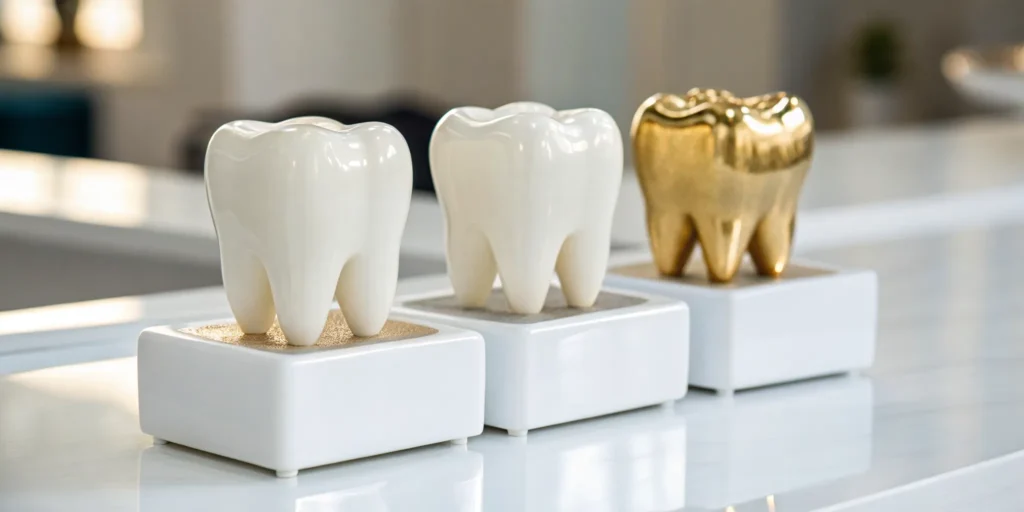
When it comes to dental work, the big question is often looks versus longevity. Do you want a restoration that’s completely invisible, or one that’s built to last a lifetime? With dental inlays, you don’t always have to choose one over the other, but you do need to understand the trade-offs. A beautiful ceramic inlay might be perfect for a visible tooth, while a gold inlay offers unmatched strength for a back molar. This guide is designed to help you find the right balance for your smile, exploring how location, budget, and your personal priorities come together to determine the best material for dental inlays for you.
Key Takeaways
- Inlays are the perfect middle ground: They are custom-made pieces that repair teeth with too much damage for a filling but not enough to need a full crown, giving you a strong, long-lasting fix while saving healthy tooth structure.
- Match the material to your needs: The best material for you depends on the tooth’s location and your priorities. Gold is the strongest choice for back teeth, ceramic offers a seamless natural look for visible teeth, and composite provides a budget-friendly, tooth-colored alternative.
- Protect your inlay with simple habits: How long your inlay lasts is up to you. You can extend its life for years with consistent daily care like brushing and flossing, avoiding extremely hard foods, and keeping up with regular dental check-ups.
What Is a Dental Inlay and When Do You Need One?
When you have a cavity or a damaged tooth, a standard filling isn’t always the best solution. If the damage is too extensive for a filling but not severe enough to need a full dental crown, an inlay might be the perfect fit. Think of a dental inlay as a custom-made puzzle piece for your tooth. Unlike a filling that’s molded directly in your mouth, dental inlays are special restorations crafted outside your mouth from a solid, durable material and then securely bonded into place. This approach offers superior strength and a more precise fit than a traditional filling.
They are used to fix teeth that have moderate damage or decay, especially when a regular filling just isn’t strong enough to handle the daily forces of chewing. Because they are fabricated based on an exact impression of your tooth, they restore not only its function but also its natural shape and contours. This precision is key to a comfortable bite and a seamless look. At our practice, having an in-house dental lab gives us complete control over this process. We can oversee every step of creation, from material selection to final polishing, ensuring every inlay is a perfect, long-lasting match for your smile. This integration allows us to deliver exceptional results without the delays of an outside lab.
How Inlays Differ from Fillings and Crowns
It’s helpful to understand where inlays fit in with other restorative treatments. Inlays and onlays are dental fixes for damaged teeth that can’t be helped by regular fillings or crowns. They are an excellent middle-ground option that helps save teeth from problems like decay or sensitivity.
A standard filling is made of a soft material that your dentist places directly into the cavity and hardens. An inlay, however, is a single, solid piece made in a lab. This makes it much stronger and more resistant to chewing forces. On the other hand, a dental crown covers the entire visible portion of a tooth. An inlay is more conservative because it only fits within the cusps (the top points) of your tooth, allowing you to preserve as much of your natural tooth as possible.
Signs You Might Need an Inlay
So, how do you know if an inlay is the right choice for you? Your dentist will make the final recommendation, but there are a few common signs that point toward needing an inlay. They are often recommended for medium to large cavities that need more structural support than a regular filling can provide. If a cavity is too large, a simple filling can act like a wedge and actually increase the risk of the tooth fracturing over time.
Inlays are also ideal for repairing fractured or broken teeth that don’t require a full crown. Finally, they are a fantastic option to replace old, worn-out, or failing metal amalgam fillings. An inlay can restore the tooth’s integrity and improve its appearance at the same time.
Your Dental Inlay Material Options
Once you and your dentist decide an inlay is the right move, the next step is choosing the material. There isn’t one single “best” option for everyone; the right choice depends on the tooth’s location, your budget, and your personal preferences. We primarily work with three excellent materials, each with its own set of benefits. Having our in-house lab gives us complete control over the creation process, ensuring your inlay is crafted with precision, no matter which material you choose. Let’s walk through the options so you can feel confident in your decision.
Ceramic Inlays
If you want your dental work to be virtually invisible, ceramic is an amazing choice. Made from a high-quality porcelain material, ceramic inlays can be perfectly color-matched to your surrounding teeth, creating a seamless, natural look. They are also quite durable and resist staining from coffee, tea, or wine. With proper care, a ceramic inlay can last for 10 to 15 years. The main things to consider are that they can be more brittle than gold under intense chewing pressure and typically come at a higher price point than composite resin. They are a top-tier choice for achieving beautiful aesthetics.
Composite Resin Inlays
Composite resin offers a tooth-colored restoration at a more accessible price point. This material is a type of durable plastic that bonds well to the tooth and can be matched to your natural tooth shade, making it a good option for visible teeth. Because it’s less expensive than ceramic or gold, it can be a practical solution for many people. The trade-off is in its strength and longevity. Composite resin isn’t as wear-resistant as other materials, especially on molars that handle a lot of chewing force. You can generally expect a composite inlay to last between 5 and 10 years before it may need a replacement.
Gold Alloy Inlays
When it comes to strength and longevity, nothing beats gold. A gold alloy inlay is the most durable option available, often lasting for 20 years or even a lifetime. It’s incredibly strong, wears down at a rate similar to natural enamel, and is very gentle on the opposing teeth. This makes it an ideal choice for back molars where chewing forces are greatest. We can also preserve more of your natural tooth structure when placing a gold inlay, which is always our goal. The two main considerations are its distinct metallic appearance and its cost, as it is the most premium material option.
Comparing Inlay Materials: Pros and Cons
Choosing the right material for your dental inlay is a key part of the process. Each option comes with its own set of benefits and considerations, and the best choice for you will depend on your specific needs, budget, and aesthetic preferences. We’ll walk through the three main types of materials: ceramic, composite resin, and gold, so you can feel confident in your decision. Understanding the pros and cons of each will help you and your dentist select an inlay that restores your tooth’s function and fits your smile perfectly.
Ceramic: Natural Looks with a Few Trade-Offs
If you want a restoration that blends in seamlessly with your smile, ceramic is an excellent choice. Materials like porcelain can be perfectly color-matched to your natural teeth, making the inlay virtually invisible. Ceramic is also quite durable and resists stains well, so you can expect it to look great for a long time, often 10 to 15 years with proper care. The main trade-offs are that it can be more brittle than gold and may fracture under extreme biting forces, which is something to consider for a molar. It also typically costs more than composite resin. Still, for those who prioritize natural aesthetics, ceramic is a top contender.
Composite Resin: An Affordable, Tooth-Colored Choice
Composite resin offers a budget-friendly way to get a tooth-colored inlay. Like ceramic, it can be matched to the shade of your surrounding teeth, making it a good cosmetic option for both front and back teeth. One of the practical benefits of composite is that it can be easily repaired if it gets chipped or damaged. However, this material isn’t as strong or wear-resistant as ceramic or gold. This means it might not be the ideal choice for teeth that handle heavy chewing. With a typical lifespan of 5 to 10 years, it may need to be replaced sooner than other materials, but it remains a solid choice for saving natural teeth without a major investment.
Gold Alloy: The Gold Standard for Durability
When it comes to strength and longevity, nothing beats gold. Gold alloy inlays are incredibly durable, resist wear and corrosion, and can easily last for 20 years or more. Because gold is so strong, less of your natural tooth structure needs to be removed to place the inlay. It’s also very gentle on the opposing teeth it bites against. The obvious downside is the metallic color, which doesn’t look natural. Gold is also usually the most expensive option upfront. However, if your priority is long-term function and you don’t mind the visibility, a gold inlay is often considered the best clinical choice for restoring a back tooth.
How to Choose the Best Inlay Material for You
Deciding on the right inlay material isn’t a one-size-fits-all situation. The best choice for you depends on a handful of personal factors, from the tooth’s location to your personal preferences. Think of it as a collaboration between you and your dentist. By considering the following points, you can go into your consultation feeling confident and ready to make an informed decision that works for your smile and your life.
The Tooth’s Location and Your Chewing Force
Where the inlay will be placed in your mouth plays a huge role in which material is the best fit. Your back molars handle the immense force of chewing and grinding, so they require a material that prioritizes strength and durability. For these teeth, a robust option like gold or zirconia is often an excellent choice. On the other hand, teeth that are more visible when you smile don’t take on as much pressure. For these, you might focus more on aesthetics, making ceramic a leading contender. It’s all about balancing the function of the tooth with the final look.
Your Aesthetic Goals
How you want your smile to look is one of the most important factors. If your goal is a seamless, natural appearance, you’ll likely lean toward ceramic or composite resin inlays. These materials are specifically designed to mimic the color and translucency of your natural teeth, making the restoration virtually invisible. Our in-house lab specializes in custom-shading these materials to create a perfect match. While gold is incredibly durable, its metallic color is a bold statement that doesn’t blend in. Your personal aesthetics are key, and we are here to help you achieve the look you want.
Your Budget and Insurance Plan
Cost is a practical consideration for any dental procedure. The price of an inlay can vary quite a bit depending on the material you choose. Generally, gold is a premium material and comes with a higher price tag, reflecting its durability and the cost of the alloy. Ceramic inlays are also a significant investment, while composite resin is often the most budget-friendly option. It’s a good idea to talk to your dental insurance provider to understand your coverage. We can also discuss all the costs and payment options with you upfront so there are no surprises.
Potential Allergies and Sensitivities
Your overall health and any known sensitivities are always a top priority. While material allergies are rare in dentistry, they are possible. Gold alloys are highly biocompatible and have an excellent track record for being well-tolerated by the body. Ceramic materials are also considered very safe and inert. If you have known metal allergies or sensitivities, be sure to discuss them with us. A thorough review of your medical history helps us select a material that is not only effective but also completely safe for you. Your well-being is the foundation of everything we do.
Your Bite and Any Grinding Habits
Your bite and any habits like clenching or grinding your teeth (a condition known as bruxism) are critical factors in choosing a durable inlay. These habits place extreme stress on your teeth and any restorations. If you’re a grinder, a stronger material is essential to prevent fractures. Gold and zirconia are champions of durability and can withstand incredible forces, making them ideal choices to protect your tooth long-term. During your exam, we will assess your bite and look for signs of wear from grinding to help guide you toward a material that will stand the test of time.
Common Myths About Dental Inlay Materials
When you’re exploring dental restorations, it’s easy to come across conflicting information. Let’s clear up a few common myths about inlay materials so you can feel more confident in your treatment decisions. Understanding the facts will help you and your dentist choose the best path forward for your smile.
Myth #1: “Porcelain is always the most durable.”
While porcelain (or ceramic) is an incredibly strong and long-lasting material, it shares the top spot for durability with another classic: gold. Both gold and high-quality ceramic inlays can last for 20 years or even longer with proper care. The idea that porcelain is always the most durable option isn’t quite right. Gold alloys often have a slight edge in longevity, especially on back molars that endure immense chewing pressure. Because gold is a metal, it wears down at a rate similar to natural tooth enamel and is less likely to crack or chip over time. The best choice often depends on balancing durability with your aesthetic goals and the specific function of the tooth being restored.
Myth #2: “Metal inlays look unnatural.”
This one is technically true, but it lacks important context. A gold inlay will not blend in with the color of your natural teeth. However, whether this matters depends entirely on the tooth’s location and your personal preference. For a molar in the very back of your mouth, a gold inlay may be barely visible, if at all. In these cases, many people prioritize gold’s unmatched durability over its appearance. For some, the glint of gold is even a classic and desirable look. When your primary goal is a seamless smile, especially for more visible teeth, we focus on creating beautifully matched restorations that support your aesthetic vision.
Myth #3: “All inlays have the same lifespan.”
This is a definite myth. The material used for your inlay has the single biggest impact on how long you can expect it to last. As we’ve covered, gold and ceramic inlays are the long-distance runners, often lasting for decades. Composite resin, on the other hand, has a shorter lifespan, typically needing replacement within 5 to 15 years. While composite is a great, affordable option for smaller restorations, it’s important to weigh the initial savings against the potential cost and time of future replacements. Choosing a more durable material from the start is a key part of saving your natural teeth for the long haul.
Myth #4: “Composite resin is just as strong as gold.”
While modern composite resins are impressive, they simply don’t have the same strength and wear resistance as gold or ceramic. Think of it this way: composite is like a heavy-duty patch, while gold and ceramic are more like structural reinforcements. On teeth that handle a lot of chewing force, like your molars, composite material may wear down more quickly or be more prone to fracture under pressure. This is why your dentist will consider the location of the inlay so carefully. At our practice, we use the highest quality materials, crafted to perfection in our in-house dental lab, to ensure your restoration is strong enough for the job it needs to do.
How to Make Your Dental Inlay Last
Getting a dental inlay is an investment in your smile’s health and longevity. While the lifespan of your restoration starts with the quality of the material and the precision of its fit, how you care for it day-to-day is just as important. A well-made inlay, like those we craft in our in-house dental lab, is designed to last for many years, sometimes even decades. But it needs your help to reach its full potential.
Think of it as a partnership. We create a beautiful, durable restoration that seamlessly repairs your tooth, and you protect it with simple, consistent habits. By following a few key practices, you can safeguard your inlay from damage, prevent new decay from forming around it, and keep your entire smile healthy. The good news is that caring for a tooth with an inlay isn’t complicated; it’s just an extension of the great oral hygiene habits that protect all of your teeth. Let’s walk through the simple steps you can take to ensure your inlay serves you well for years to come.
Daily Care to Protect Your Inlay
Your daily routine is the first line of defense for your dental inlay. The most vulnerable area is the margin, which is the tiny seam where the inlay meets your natural tooth. Plaque and bacteria can accumulate here, potentially leading to new decay that compromises the restoration.
To prevent this, it is essential to brush your teeth twice a day with fluoride toothpaste and floss at least once daily. When you floss, be sure to gently curve the floss around the tooth with the inlay, sliding it carefully up and down along the side of the tooth and just under the gumline. This simple habit removes plaque from the critical margin area, keeping both your tooth and your inlay secure and healthy.
Foods and Habits to Avoid
While modern inlays are incredibly strong, they aren’t indestructible. Just like a natural tooth, an inlay can be damaged by extreme forces. It is advisable to avoid biting down on very hard foods that could cause a fracture in either the restoration or the surrounding tooth structure. Be mindful of things like ice cubes, hard candies, and un-popped popcorn kernels.
It’s also important to break any habits of using your teeth as tools. Tearing open packages, chewing on pens, or biting your nails can place unnatural stress on your teeth and restorations, leading to chips or dislodgment. Treating your inlay with the same care you give your natural teeth will go a long way in preserving it.
The Role of a Night Guard for Teeth Grinders
Do you ever wake up with a sore jaw, headaches, or sensitive teeth? You might be grinding or clenching your teeth at night, a condition known as bruxism. This habit places immense, repetitive pressure on your teeth and can be especially damaging to restorations like inlays and crowns. Over time, the force from grinding can wear down, chip, or even break your inlay.
If you grind your teeth, a custom-fit night guard is one of the best ways to protect your investment. A night guard is a comfortable, removable appliance that you wear while you sleep. It acts as a protective cushion, absorbing the force of grinding and preventing your upper and lower teeth from making contact. This not only protects your inlay but also your natural teeth from excessive wear and tear. We can discuss if this is a good option for you as part of your overall functional dental health.
When It’s Time to See Your Dentist
Regular dental check-ups are crucial for maximizing the lifespan of your inlay. During these appointments, we can professionally clean your teeth and perform a thorough examination of your restoration. We’ll check the margins for any signs of leakage, assess the inlay for wear or tiny fractures, and ensure the surrounding tooth is healthy. We also check your bite to make sure the forces are distributed evenly and not putting too much stress on the inlay.
Catching a small issue early, like a minor chip or a slight opening at the margin, allows for a simple repair. If left unaddressed, these small problems can grow, potentially leading to decay under the inlay or a fracture that requires a more extensive restoration. Think of your six-month visits as proactive maintenance to keep your smile in optimal condition.
The Dr. Clark Advantage: A Perfect Fit with Our In-House Lab
Choosing the right material for your dental inlay is a big decision, but it’s only half of the story. The other half is about craftsmanship. Where and how your inlay is made has a huge impact on its fit, appearance, and longevity. This is where having a dedicated, on-site dental laboratory makes all the difference. Instead of outsourcing this critical step to a separate facility, we create your custom restorations right here in our office.
Our in-house lab is the heart of our practice, allowing for a seamless connection between Dr. Clark’s clinical expertise and the technical artistry required to make your inlay. This integration means we have complete control over the final product, from the choice of materials to the final polish, ensuring it meets our exacting standards and your unique needs. It’s a level of personalized care that’s hard to find, and it allows us to deliver results that are not only beautiful and functional but also created with maximum efficiency and precision. Think of it as a bespoke experience for your smile, where every detail is managed under one roof to give you the best possible outcome.
Unmatched Precision and Quality Control
When your dentist can walk down the hall and speak directly with the technician creating your inlay, something special happens. This close collaboration eliminates the guesswork that can occur with off-site labs. Dr. Clark can personally oversee every stage of the process, ensuring the fit is perfect down to the micron. This direct oversight means we can make real-time adjustments, guaranteeing your inlay fits perfectly against your natural tooth. This meticulous approach helps us achieve our goal of saving natural teeth by creating a seal that protects against future decay and preserves as much healthy tooth structure as possible.
A Faster, More Convenient Process
One of the most practical benefits of our in-house lab is speed. Traditional dental offices have to ship impressions to an outside lab and wait for the final restoration to be shipped back, a process that can add weeks to your treatment time. We skip the shipping delays entirely. This streamlined workflow often means fewer appointments and a much shorter wait for your final inlay. We can get you back to smiling, speaking, and chewing with confidence much faster, all while respecting your valuable time. It’s a simpler, more efficient path to a healthier smile.
Artistry Meets Function for a Natural Look
Your smile is unique, and your dental work should be too. Our in-house lab allows our skilled technicians to create restorations that are true works of art. They can perfectly match the color, shade, and translucency of your surrounding teeth for a result that blends in flawlessly. This focus on natural aesthetics ensures your inlay looks and feels like a part of you, not a repair. This synergy between the dentist and the lab technician is key to creating a restoration that not only restores function but also enhances the beauty of your smile.
Frequently Asked Questions
Why do I need an inlay instead of just a large filling? Think of a large filling as a patch. While it can work for smaller cavities, a big patch can actually weaken the tooth over time, making it more likely to crack under chewing pressure. An inlay, however, is a single, solid piece that is custom-molded to fit the cavity perfectly. It reinforces the tooth from the inside out, restoring its strength and making it much more durable for the long run. It’s a more structural solution for a more significant problem.
How long does the entire process for getting an inlay take? Typically, getting an inlay involves two appointments. The first is for preparing the tooth and taking a precise impression, and the second is for bonding the final inlay into place. Because we have our own in-house dental lab, we can dramatically shorten the time between these visits. Instead of waiting weeks for an outside lab, we can craft your custom inlay right here, which means you get your final, beautiful restoration much faster.
Will the procedure for getting an inlay be painful? Your comfort is our priority, so you can rest assured that the procedure itself is not painful. We will make sure the tooth and surrounding area are completely numb before we begin any work. You may feel some pressure, but you should not feel any pain. After your first appointment, your tooth might be a little sensitive while the temporary inlay is in place, but this is normal and usually fades quickly once your permanent inlay is bonded.
Can I replace my old, dark metal fillings with a new inlay? Yes, absolutely. Replacing old, failing, or unsightly metal amalgam fillings is one of the most common reasons people choose to get an inlay. It’s a fantastic way to not only improve the appearance of your tooth with a natural-looking ceramic or composite restoration but also to restore its structural integrity. An inlay provides a stronger, more modern, and more aesthetic solution than the old metal filling did.
How do I know which inlay material is the right one for me? Choosing the right material is a decision we’ll make together. The best option depends on a few key factors: the location of the tooth, your personal aesthetic goals, and your budget. For a back molar that does a lot of heavy lifting, the durability of gold might be the top priority. For a more visible tooth, a perfectly color-matched ceramic inlay might be the ideal choice. We will discuss all the pros and cons with you to find the material that best fits your smile and your life.