


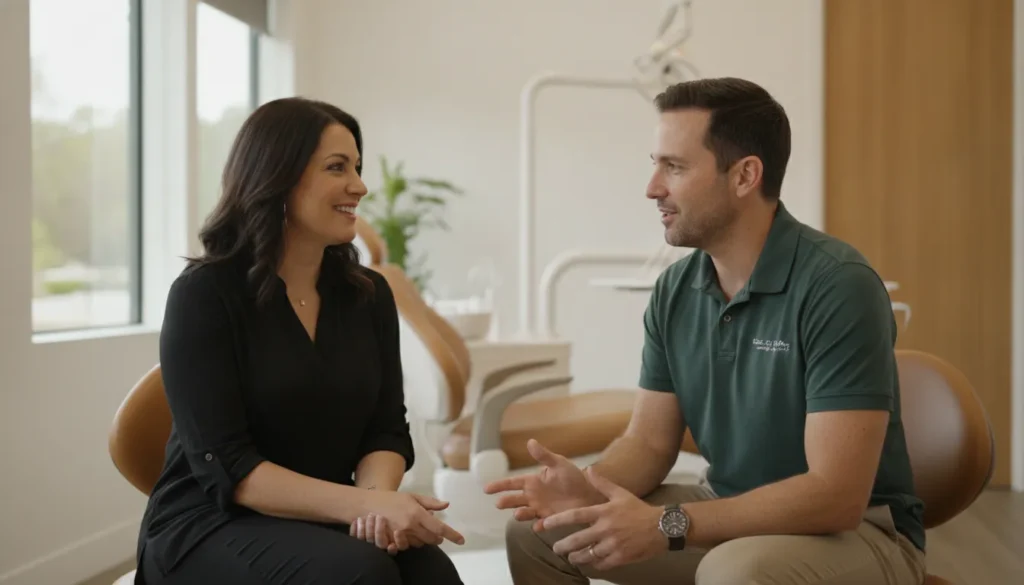
A brighter smile is not always a matter of choosing the strongest product. Existing restorations, the cause of discoloration, gum health, and sensitivity can all affect which approach is appropriate and how natural the result looks.
For patients considering teeth whitening roseville ca, professional care may lighten natural teeth by several shades in one visit, but the result is not guaranteed. A dental professional can tailor the regimen, protect the gums, and account for sensitivity and existing dental work.
That individualized planning matters when you want improvement without losing sight of oral health, facial balance, or longer-term cosmetic goals. Here is what a specialist-led visit can involve, from the initial evaluation through choosing an in-office or dentist-supervised take-home option.
Professional Whitening at a Roseville Prosthodontist: What to Expect
Answer: A specialist-led whitening visit can begin with an oral-health review, an assessment of existing discoloration and restorations, followed by a discussion of the shade change you consider attractive and realistic. The plan may then include in-office whitening, dentist-supervised take-home trays, or a recommendation to address another concern first.
At a Roseville prosthodontist’s office, the appointment should be more than selecting a stronger whitening product. Dr. Clark can evaluate your teeth, gums, current dental work, sensitivity history, and overall treatment goals before recommending an approach. Dental professionals can tailor a whitening regimen to the individual while considering potential risks, rather than treating every smile the same way. Clinical evidence supports individualized professional planning when whitening is used properly.
Screening and shade planning come first
Before treatment, the team may discuss coffee, tea, tobacco, aging, and other factors that contribute to staining. The evaluation also helps distinguish surface discoloration from deeper changes that may respond differently. A shade discussion is important because the goal is not an arbitrary level of brightness. It is a result that fits your natural teeth, facial features, and existing restorations. Whitening can change natural tooth color, but it does not automatically change the shade of crowns, veneers, fillings, or other restorations.
For patients in Roseville, Rocklin, Granite Bay, Folsom, and the greater Sacramento area, this planning takes place within a private-care prosthodontic and implant dentistry practice. The private-care model emphasizes longer appointments and individualized planning, giving you time to understand the recommendation instead of rushing toward a one-size-fits-all treatment.
Why specialist credentials matter
Dr. Clark is board-certified by the American Board of Prosthodontics, and he is one of fewer than 500 board-certified prosthodontists in California. Prosthodontics includes three additional years of advanced training beyond dental school. That background is relevant when whitening is part of a larger aesthetic or restorative plan. You can learn more about Dr. Clark’s prosthodontic qualifications and explore Porcelain Veneers and Cosmetic Dentistry: The Specialist Advantage if your goals extend beyond whitening. For the practice’s treatment options, see professional teeth whitening.
In-Office vs Dentist-Supervised Take-Home Whitening
The right approach depends less on choosing the most powerful product and more on matching the treatment to your timeline, sensitivity, existing dental work, and cosmetic goals. In-office whitening concentrates the process into a closely monitored appointment. Dentist-supervised take-home whitening uses custom trays and a prescribed gel, giving you more control over when treatment occurs while keeping the plan clinically guided.
| Consideration | In-office whitening | Dentist-supervised take-home trays |
|---|---|---|
| Speed | Designed for a concentrated appointment. In-office treatment may brighten teeth by up to eight shades in one visit, but that is not a guaranteed individual result. ADA guidance emphasizes setting realistic expectations. | Progresses over repeated applications. Mayo Clinic reports that many people see a significant difference after about two weeks of dentist-provided night-tray use. |
| Supervision and customization | A clinician controls the application, protects the gums, and can adjust the process during the visit. | Custom trays fit your teeth and may contain carbamide peroxide or hydrogen peroxide gel. Your dentist can prescribe instructions and monitor how your teeth and gums respond. |
| Convenience | Efficient when you want treatment completed in a single planned visit. An appointment may take about 1.5 hours. | More flexible for patients who prefer to whiten at home, but consistency with the prescribed schedule matters. |
| Sensitivity and limitations | Sensitivity may be more intense and persist for several days. Careful gum protection is essential. | The gradual process may be easier to pace, but sensitivity can still occur. Neither option changes the color of existing crowns, veneers, or other restorations. |
Over-the-counter toothpaste and strips are generally less effective than in-office treatment. Mayo Clinic notes that whitening toothpaste may take two to six weeks to make teeth appear whiter and usually cannot change deeper discoloration. For patients considering teeth whitening in Roseville, CA, a specialist evaluation can clarify whether speed, flexibility, or more comprehensive cosmetic planning should guide the decision.
What Can Teeth Whitening Roseville CA Patients Expect From Treatment?
Short answer: Professional whitening may lighten natural teeth by several shades in one visit, but the change varies with the starting shade, the type of discoloration, and individual response. That is a realistic possibility, not a promised outcome. A careful plan aims for a brighter, natural-looking smile while respecting tooth sensitivity and oral health.
How much brighter might your teeth become?
In-office whitening can produce a visible change during an appointment of about 1.5 hours. The speed is useful for patients preparing for an event or who prefer a concentrated treatment. However, a published discussion of whitening expectations notes that sensitivity may be more noticeable after in-office treatment and can persist for several days. The goal is not to pursue the lightest possible shade at any cost. Dental professionals balance treatment speed with the safety and comfort of the teeth.
Take-home whitening progresses more gradually. Dentist-supervised trays allow the regimen to be adjusted around your teeth and your response to treatment. This approach can be useful when you prefer to spread treatment over time or want a way to maintain a brighter shade. Neither approach can promise a particular result, and deeper discoloration may respond differently from surface staining.
Whitening is also temporary. Food, drinks, and the natural aging process can darken teeth again over time. With adequate care, professional results may last more than a year, but longevity depends on habits, oral hygiene, and the nature of the original staining. These expectations are consistent with guidance from the American Dental Association.
Maintaining a brighter smile
Good maintenance starts with regular brushing, cleaning between the teeth, and recommended dental visits. Limiting frequent exposure to staining beverages such as coffee, tea, and red wine may also help. If you drink a staining beverage, using a straw can reduce contact with the front teeth. Your dentist can recommend whether periodic touch-up treatment is appropriate rather than having you repeatedly use whitening products without supervision.
During a consultation, the shade you want can be considered alongside the condition of your teeth, existing dental work, and your broader cosmetic goals. That individualized assessment helps keep the result realistic and clinically responsible.
Is Whitening Safe for Sensitive Teeth?
For many patients, properly used peroxide-based whitening is considered safe and effective. Safety depends on more than choosing a product. A dental professional should first consider the condition of the teeth and gums, the likely source of discoloration, previous sensitivity, and the patient’s goals. That evaluation helps determine whether whitening is appropriate and how the regimen should be tailored. A review indexed in PubMed describes individualized planning as a way to achieve the benefits of whitening while minimizing potential risks.
How sensitivity is managed
Tooth sensitivity and gum irritation are among the most common effects of whitening. They are usually mild to moderate and temporary, although the intensity and duration can vary. In-office treatment can produce more noticeable sensitivity that persists for several days. So the treatment plan should account for how your teeth have responded to dental care in the past.
During professional treatment, protecting the gums and other soft tissues is an important part of the process. A clinician may adjust the peroxide concentration, application time, frequency, or spacing between treatments rather than assuming that a stronger or longer application is better. Research discussed by the American Dental Association also notes that monitoring adverse effects and protecting oral soft tissues can reduce avoidable problems. In some cases, spacing whitening cycles and using remineralization support may help limit sensitivity.
When to pause and seek an evaluation
Do not continue whitening through severe, persistent, or worsening pain. Stop and contact a dental professional if gel repeatedly irritates the gums, if sensitivity does not settle as expected, or if a tooth develops localized pain rather than general, short-lived sensitivity. Those symptoms may warrant evaluation before more whitening is attempted. Whitening should also not be treated as harmless simply because it is sold without a prescription. Excessive use, inappropriate application, or an unsuitable product can cause adverse effects, particularly when whitening material contacts gum tissue.
A careful plan is not meant to make whitening unnecessarily complicated. It is how a clinician balances the desired cosmetic change with the health of your teeth, gums, and existing dental work.
When Is Whitening a Starting Point for More?
Whitening can be an appropriate first step when the concern is primarily surface staining or a gradual darkening of otherwise healthy natural teeth. It may brighten the smile without changing its shape, alignment, or existing restorations. That makes it useful for patients who want a conservative improvement before deciding whether they need a broader cosmetic plan.
It is also important to understand what whitening cannot do. Bleaching products do not change the color of porcelain veneers, crowns, bridges, or fillings. If a restoration is darker than the teeth around it, whitening may make the difference more noticeable rather than correcting the mismatch. Deeper discoloration may also respond incompletely, depending on its cause and the condition of the tooth.
When whitening may not be enough
A patient may want a more individualized discussion when the goal involves more than brightness. Uneven tooth shape, worn edges, gaps, discoloration that does not respond as expected, or visible restorations may require a different approach. Depending on the findings, options could include bonding, veneers, or restorative treatment. The appropriate choice depends on the teeth, gums, bite, existing dental work, and the result the patient is trying to achieve.
That does not mean whitening automatically leads to another procedure. A careful evaluation may confirm that whitening alone is reasonable, or it may clarify why another option would better address the underlying concern. In a specialist setting, the conversation can include how the shade of any planned restoration should relate to the natural teeth, rather than selecting a color in isolation. Patients considering a broader aesthetic plan can learn more through Porcelain Veneers and Cosmetic Dentistry: The Specialist Advantage and review custom veneer shade planning.
The goal is a plan that respects oral health, appearance, and function. For some people seeking teeth whitening in Roseville, CA, that plan begins and ends with professional whitening. For others, whitening is useful as one part of a carefully sequenced cosmetic treatment discussion.
Frequently Asked Questions
How long does professional whitening usually last?
Whitening is not permanent. Food, drinks, tobacco exposure, and natural aging can gradually darken teeth again. Your dentist can recommend maintenance based on your habits, tooth color, and the type of whitening used.
Can professional whitening help if I have sensitive teeth?
Often, yes, but sensitivity should be discussed before treatment. A dentist can evaluate possible causes, protect the gums, and adjust the whitening concentration or schedule. Mild sensitivity and gum irritation can occur, but persistent or severe discomfort warrants an oral-health evaluation.
Will whitening change the color of crowns, veneers, or fillings?
No. Whitening affects natural tooth structure, not the color of existing restorations. If your natural teeth and restorations no longer match, your dentist can discuss replacement timing or other cosmetic options after evaluating your smile.
Is professional whitening appropriate for every type of discoloration?
No. Whitening is most useful for some forms of surface and age-related discoloration, but deeper staining, enamel changes, and existing dental disease may require a different approach. A professional evaluation helps identify the cause before treatment is selected.
Schedule Your Whitening Consultation
A personalized consultation can help clarify whether professional whitening fits your goals and how to approach sensitivity or existing dental work. To discuss professional teeth whitening and cosmetic treatment planning, schedule a consultation with Dr. Clark’s team.