



A click when you chew, tightness near your temple, or teeth that seem more worn than they used to be can raise questions about the jaw joint and surrounding muscles. This tmj symptoms checklist organizes common signs to notice and record, but it cannot tell you whether you have a temporomandibular disorder (TMD) or identify its cause. Many symptoms overlap with other conditions. For a broader explanation of how jaw function fits into comprehensive care, see our guide to TMJ treatment and functional dentistry.
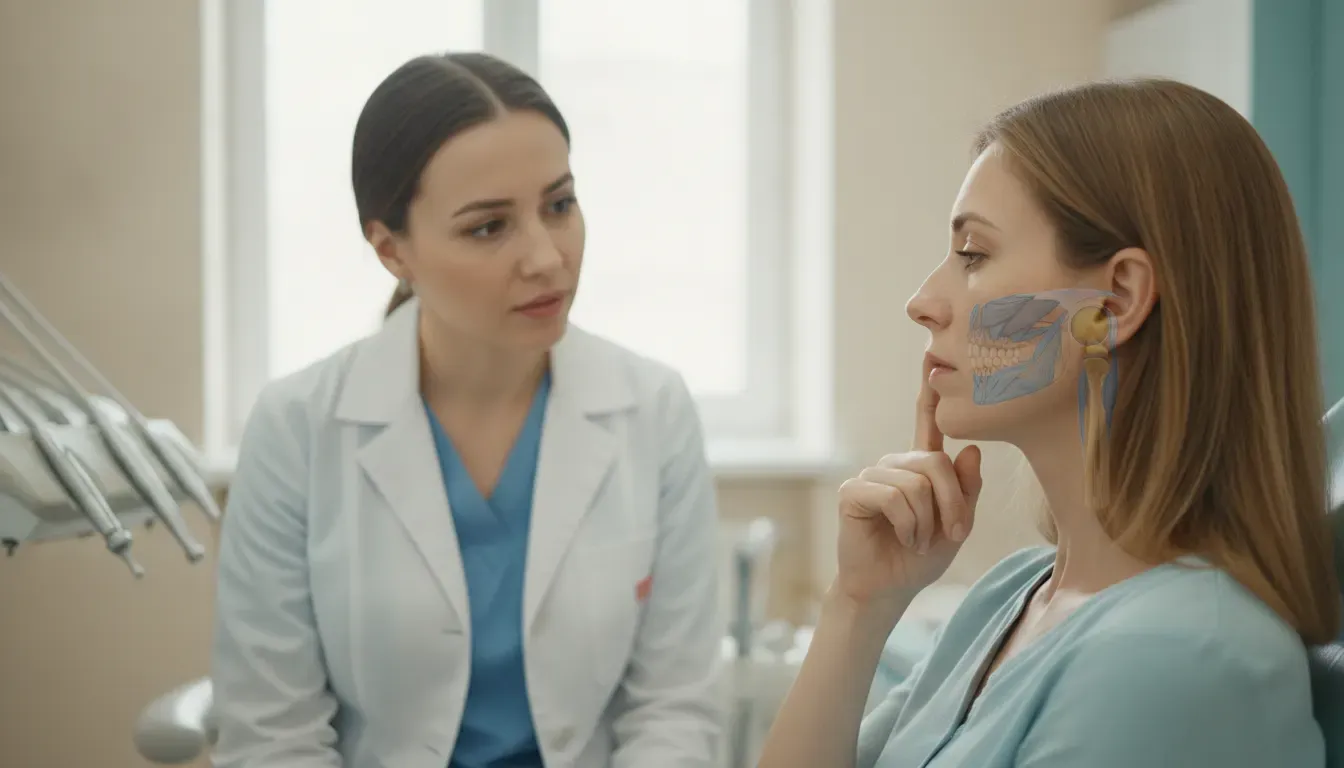
The temporomandibular joints connect the lower jaw to the skull, just in front of each ear. Jaw movement also depends on muscles, teeth, and the way the upper and lower teeth meet. A symptom may involve one part of this system, or several. A careful evaluation looks at the full picture rather than treating one sound or sensation as a diagnosis.
TMJ Symptoms Checklist: Primary Jaw Symptoms
Jaw symptoms are often what first prompt someone to wonder about TMD. Note when they happen, how long they last, and whether they affect ordinary activities such as eating or speaking. These details can be more useful in an appointment than a general description like “my jaw hurts.”
- Pain or tenderness near the joint: Discomfort may be felt just in front of one or both ears, along the side of the face, or near the jaw angle. It may be present at rest or noticed mainly during movement.
- Muscle soreness or tightness: The cheeks, temples, or area along the jaw may feel tired, tense, or tender. Some people notice this after waking; others notice it after a long day of talking or chewing.
- Clicking, popping, or other joint sounds: A sound may occur when opening or closing the mouth. A sound by itself does not establish a disorder. Its context matters, including whether it is new, painful, or accompanied by limited movement.
- Difficulty opening comfortably: The mouth may not open as widely as usual, or opening may feel stiff or uncomfortable. Describe what has changed rather than forcing the jaw to test its range.
- Jaw catching or locking: Some people describe a brief catch during movement or difficulty moving the jaw freely. Be specific about whether it resolves, how often it occurs, and whether it prevents normal opening or closing.
- Changes in how the jaw moves: The lower jaw may seem to shift to one side when opening, or the movement may feel uneven. A clinician can assess movement; mirror checks are not a substitute for an examination.
- Discomfort during chewing: Pain or fatigue may build while eating, particularly with tougher or chewy foods. Record whether it occurs on one side, both sides, or with most chewing.
Not every item means a joint problem. Joint sounds without pain or limitation, for example, can occur without requiring treatment. Conversely, persistent pain or restricted movement deserves context and evaluation. A checklist helps organize observations; it should not be used to label a condition or decide on a treatment.
What details make a jaw symptom easier to describe?
Write down the location, timing, duration, and pattern. Does the discomfort appear on waking or later in the day? Does it come and go, or remain present? Is it associated with chewing, speaking, yawning, or another activity? Has the jaw movement changed? These are observations, not conclusions about the cause.
Also note whether the symptom began after a known event, such as a blow to the face or a dental procedure, and whether it has changed over time. You do not need to arrive with a theory. Clear examples allow the clinician to ask more focused questions.
TMJ Symptoms Checklist: Head, Neck, and Ear Signs
Symptoms near the temples, ears, or neck may occur alongside jaw concerns. Their presence does not prove that the jaw joint is responsible. Headaches, ear discomfort, and neck tension have many possible causes, so the pattern and a full health history matter.
- Temple-area headache or pressure: Some people report an ache near one or both temples, sometimes in conjunction with jaw muscle soreness. Record where it starts, how long it lasts, and whether jaw movement coincides with it.
- Facial aching: Discomfort may spread across the cheek or side of the face. Note if it is tender to touch, linked to jaw movement, or present independently of chewing.
- Ear-area discomfort or a sense of fullness: Since the jaw joints sit close to the ears, symptoms may be noticed in that region. Ear symptoms can also arise from ear-related or other causes, so they should not automatically be attributed to TMD.
- Neck or shoulder tension: Tightness can accompany facial or jaw discomfort, but it can also have separate explanations, including posture and other musculoskeletal factors.
- Symptoms that vary with activity: Some people notice that discomfort changes after extended talking, chewing, or other jaw use. A pattern is worth reporting, but it does not identify the underlying issue on its own.
A practical record can show whether symptoms tend to appear together. For instance, you might note jaw tenderness and a temple ache on the same evenings, or ear-area discomfort without any change in jaw movement. Avoid assuming that one symptom causes another simply because they occur at the same time.
For more on the practice’s approach to jaw function, the TMJ/TMD treatment overview describes the role of a comprehensive assessment. Dr. Jefferson Clark is a board-certified prosthodontist (FACP); prosthodontic training includes advanced study of the restoration and function of the teeth and related oral structures. That expertise can be relevant when jaw concerns appear alongside changes in the bite or teeth.
Dental Symptoms: Worn Teeth, Sensitivity, and Cracking
Teeth can show changes that belong in the conversation, especially when they occur with jaw discomfort or muscle fatigue. However, tooth wear, sensitivity, and cracks have different possible explanations. They are not proof of TMD and should be assessed in context.
- Flattened or uneven biting surfaces: Teeth may look flatter or show wear facets. A dental exam can distinguish wear patterns from a patient’s impression that teeth have changed.
- Chipped, cracked, or repeatedly damaged restorations: Report when a chip or crack appeared and whether similar problems have happened before. The cause cannot be determined from the symptom alone.
- Tooth sensitivity: Sensitivity to temperature, sweets, or pressure may reflect a tooth-specific issue or another factor. Identify the tooth or area and what triggers the sensation, if you can.
- A changing bite sensation: The teeth may seem to meet differently, or one area may feel like it contacts first. This feeling merits a careful examination; it does not necessarily mean the jaw joint is out of position.
- Chewing fatigue: A tired feeling in the jaw or teeth during a meal is useful to describe, particularly if it is new or differs from one side to the other.
Tooth wear can develop over time for a range of reasons. Clenching or grinding may be one factor, but a worn appearance alone does not confirm that someone grinds their teeth. Dental history, the condition of the teeth and restorations, jaw movement, and other findings all help shape an evaluation.
When restorative work is part of a patient’s needs, function and tooth preservation matter alongside appearance. Dr. Clark’s practice has an in-house dental laboratory with digital design, 3D printing, and 5-axis milling for restorations. Learn more about the in-house dental lab and its role in custom restorative work. The lab is one part of a larger process; it does not replace diagnosis or individualized planning.
When Symptoms Are an Emergency vs. When to Schedule
A symptom checklist is not a triage tool, and online information cannot determine how urgent an individual situation is. Sudden severe symptoms, a significant injury, or a rapidly changing problem should not be evaluated by a blog checklist. Difficulty breathing or swallowing, chest pain, or major facial trauma warrants immediate emergency attention. For other new, persistent, worsening, or function-limiting jaw or dental symptoms, contact an appropriate health professional for guidance.
For a non-emergency concern, it can help to request an evaluation when jaw discomfort persists, movement is limited, chewing becomes difficult, or dental changes recur. The timing depends on the nature of the symptom and individual circumstances. If you are uncertain about urgency, speak with a qualified health professional rather than relying on a list of signs.
| What you notice | What to record | How to think about next steps |
|---|---|---|
| Occasional joint sound without pain | When it occurs and whether movement feels restricted | A sound alone does not diagnose TMD; mention changes or other symptoms during routine dental care. |
| Recurring jaw pain or muscle tenderness | Location, frequency, duration, and activities occurring at the same time | Arrange an evaluation if it persists, worsens, or interferes with function. |
| Limited opening, catching, or locking | What movement is difficult and whether the limitation is new or ongoing | Contact a health professional for assessment, especially when normal function is affected. |
| Cracked tooth, sudden severe pain, or facial injury | What happened and when symptoms began | Seek prompt professional guidance; a significant injury or emergency symptoms require urgent attention. |
| Difficulty breathing or swallowing, chest pain, or major facial trauma | Do not delay to complete a checklist | Seek immediate emergency attention. |
This table is a way to organize observations, not a diagnosis or a substitute for professional advice. When symptoms overlap or change, a clinician can determine what examination or additional evaluation is appropriate.
Taking the Checklist to Your Dentist: What to Say
Bring a concise description rather than trying to decide which diagnosis fits. A few dated notes are often enough to explain the pattern. You can mention the symptoms that matter most to your daily function and what has changed since they began.
- Describe the main concern in plain language. For example: “The area in front of my left ear gets sore when I chew,” or “My jaw has started catching when I open.” These statements communicate an experience without assuming its cause.
- Give a timeline. Say when you first noticed it, whether it is constant or intermittent, and whether it has improved, stayed the same, or changed.
- Identify what happens at the same time. Include any related headache, facial or ear-area discomfort, neck tension, sensitivity, tooth wear, or restoration damage. Do not leave out symptoms that seem unrelated; the clinician can decide what is relevant.
- Explain the effect on function. Note whether the issue affects eating, speaking, opening, or other ordinary activities. Avoid pushing your jaw through pain to demonstrate a movement.
- Share relevant dental history and previous evaluations. Mention prior dental work, changes in your bite, earlier jaw symptoms, or what another clinician has already assessed. Bring records if they are available and useful.
- Ask how the evaluation will proceed. You can ask what findings the clinician is considering, what additional information may be needed, and how options would be discussed if a concern is identified.
A specialist evaluation may include discussion of your concerns, review of relevant history, and an examination of the teeth, jaw movement, and related structures. Additional diagnostic steps depend on what is found. A multi-visit consultation process can allow time to understand the situation, discuss findings, and plan around the individual case rather than jumping from one symptom to a procedure.
Dr. Clark’s private-care practice is out of network with all insurance and does not participate with insurance companies. The practice emphasizes thorough appointments and individualized restorative planning. New patients can review new-patient resources before reaching out, and the private-care dentistry overview explains the practice model.
Before seeking an evaluation, consider writing down the three changes that concern you most. Clear, specific observations can make a conversation more productive without requiring you to diagnose yourself.
Schedule a consultation to discuss your concerns with Dr. Clark’s office.
Frequently Asked Questions
Does jaw clicking always mean I have TMJ?
No. A clicking or popping sound by itself does not establish a TMD diagnosis. Its significance depends on the full picture, including pain, movement, and other findings. A qualified clinician can assess symptoms in context.
Can a headache or earache be caused by a jaw problem?
Jaw-related conditions can occur alongside discomfort near the temples or ears, but these symptoms also have other possible causes. Their presence alone cannot show whether the jaw is responsible. Share the pattern with a health professional for appropriate evaluation.
Do worn teeth prove that I grind my teeth?
No. Wear can have more than one explanation, and appearance alone cannot confirm grinding or clenching. A dental examination and relevant history help a clinician interpret tooth changes.
What should I track before an appointment?
Note where a symptom occurs, when it began, how often it appears, how long it lasts, and whether it affects jaw movement, chewing, speaking, or other daily function. Include related symptoms and previous dental or jaw evaluations. Avoid trying to provoke pain or force movement to test it.
What happens at a TMJ evaluation?
The clinician will consider the concern and relevant history, then decide what examination or diagnostic steps are appropriate. The process varies by person. Dr. Clark’s multi-visit consultation model allows discussion of findings and planning in stages when that is appropriate.
Discuss Your Symptoms in Context
A checklist can help you notice and communicate patterns, but it cannot identify the source of jaw pain or determine a treatment plan. If jaw, head, ear, or dental symptoms are affecting you, a personalized evaluation can put those observations in context. Learn more about why patients see a prosthodontist, or contact the office to ask about a consultation.
Contact Dr. Clark’s office to discuss a consultation.
Bring your observations and questions; the goal is to understand the whole picture before discussing next steps.