


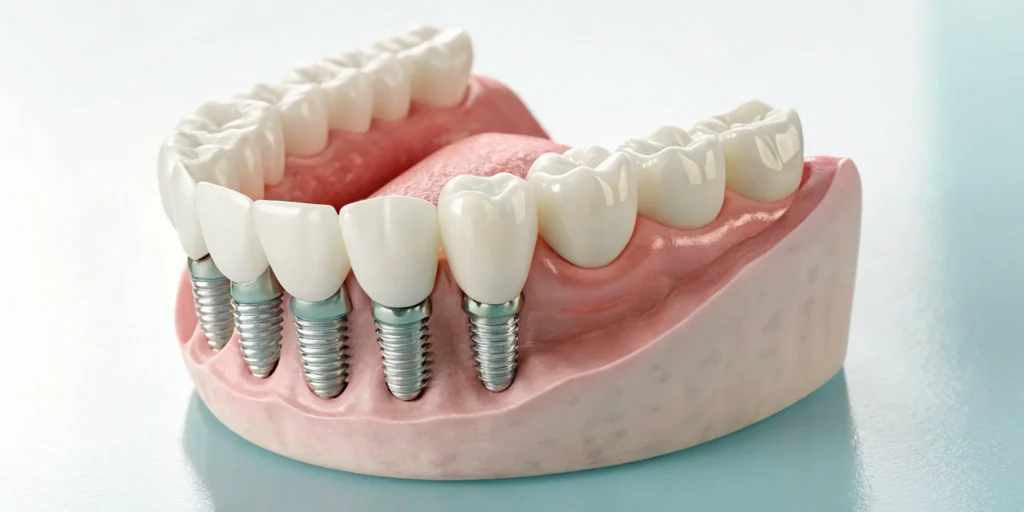
The idea of replacing all your teeth can feel overwhelming, and technical terms like “bone grafting” can add another layer of uncertainty. We want to clear up any confusion. A bone graft isn’t a sign of a problem; it’s a proactive step toward a successful, long-term outcome. Think of it as preparing the perfect groundwork before building your dream home. For many patients, the most predictable and durable solution is all on 4 dental implants with bone grafting. This guide will walk you through what that really means, explaining why rebuilding your jawbone is sometimes the most important step toward a smile that looks, feels, and functions naturally.
Key Takeaways
- Restore a Full Smile with Fewer Implants: The All-on-4 treatment concept uses just four implants to support an entire arch of teeth. This modern approach is less invasive than traditional methods and often provides you with a beautiful, functional smile on the same day as your procedure.
- Bone Loss Doesn’t Automatically Disqualify You: While the All-on-4 technique is designed to work around areas of low bone, a graft is sometimes needed to create a solid base. Think of it as a necessary investment to ensure your new smile is stable and lasts a lifetime.
- A Personalized Plan Is Key to Success: Your journey starts with a thorough consultation, including 3D imaging, to map out your unique anatomy. This detailed planning is what allows for a predictable outcome, ensuring your new teeth fit perfectly and function beautifully.
What Are All-on-4 Dental Implants?
If you’re facing the loss of most or all of your teeth, the idea of restoring your smile can feel overwhelming. That’s where the All-on-4 treatment concept comes in. It’s a remarkable and efficient way to replace an entire arch of teeth, either upper or lower, using just four strategically placed dental implants. Instead of replacing each missing tooth individually, these four implants act as strong anchors for a full, permanent bridge of new teeth. This approach is a modern solution for restoring lost teeth that looks, feels, and functions just like a natural smile.
Unlike traditional dentures that rest on your gums and can sometimes slip or feel uncomfortable, All-on-4 implants are securely fixed into your jawbone. This creates a stable foundation that allows you to eat the foods you love and speak with confidence. The goal isn’t just to give you a beautiful new smile; it’s to restore the full function of your mouth. The entire process is designed to be as streamlined as possible, often allowing you to leave with a beautiful, functional set of teeth on the same day as your procedure.
How All-on-4 Compares to Traditional Implants
When you think of dental implants, you might picture a one-to-one replacement for every missing tooth. For a full arch, that could mean eight or more implants, requiring extensive surgery. The All-on-4 method is different. By using just four implants to support an entire row of teeth, the procedure is less invasive. This often translates to a shorter recovery period and can make the treatment more affordable than a full set of individual implants. It’s a powerful solution that simplifies the process of a full mouth reconstruction without compromising on a stable, long-lasting result.
How Angled Implants Reduce the Need for Bone Grafts
One of the most innovative parts of the All-on-4 technique is the placement of the implants. The two back implants are inserted at a precise angle. This isn’t a random detail; it’s a clever design that allows us to use the densest parts of your existing jawbone for support. By maximizing contact with your available bone, this angled placement often eliminates the need for a separate bone grafting procedure, even for patients who have experienced some bone loss. This smart design is key to making the treatment more efficient and accessible for more people.
Will I Need a Bone Graft for All-on-4 Implants?
This is one of the most common questions we hear, and the answer really depends on your unique oral health. The All-on-4 technique was specifically designed to work around areas of low bone density, which is great news for many patients. However, sometimes a bone graft is a necessary step to ensure your new smile has the strongest possible foundation for long-term success. Think of it this way: your jawbone is the bedrock for your new teeth. If that bedrock isn’t solid, the final result won’t be as stable or durable as it should be.
Your jawbone health is the single most important factor in the success of any dental implant. That’s why we start with a comprehensive evaluation, including detailed 3D imaging of your jaw. This gives us a crystal-clear picture of your bone volume and density. From there, we can determine if the All-on-4 implants can be placed directly or if a bone graft would be beneficial. Our goal is always to create a plan that gives you a stable, beautiful, and lasting result, and sometimes that plan includes rebuilding the bone first.
Common Myths About Bone Grafts and All-on-4
There’s a common misconception that getting All-on-4 implants is a massive surgical undertaking that always involves bone grafting. The good news is, that’s usually not the case. The All-on-4 treatment was ingeniously developed to work around areas of low bone volume. By placing the rear implants at a precise angle, we can make the most of the healthy jawbone you already have. This technique has been used successfully for decades and is supported by extensive research showing it’s a reliable way to restore lost teeth while minimizing the need for additional procedures.
Signs You Might Need a Bone Graft
Even with the advanced All-on-4 technique, a bone graft is sometimes unavoidable. This is most common for patients who have been missing teeth for many years. Without tooth roots to stimulate it, the jawbone naturally begins to shrink and lose density over time. If your front jawbone isn’t thick or strong enough to securely hold the implants, a graft may be recommended. Think of it like building a house; you need a solid foundation before you can put up the walls. A bone graft rebuilds that essential foundation, creating the right conditions for your implants to be stable and secure for the long haul.
How Jawbone Health Affects Implant Success
The success of your All-on-4 implants hinges on a process called osseointegration, where the implant posts fuse directly with your jawbone. For this to happen, you need sufficient, healthy bone. Without it, the implants can’t anchor properly, which compromises the stability and function of your new teeth. Bone grafting is a cornerstone of modern implant dentistry because it allows us to rebuild the jaw, creating the ideal environment for this fusion to occur. By ensuring your jaw has adequate volume and density, we are setting you up for a final result that is not only beautiful but also incredibly strong and functional for years to come.
What to Expect During a Bone Grafting Procedure
If you’ve been told you need a bone graft, you might be picturing a complex, intense surgery. The reality is often much more straightforward. A bone graft is a routine procedure we use to add volume and density to your jaw in the exact spot where an implant will be placed. Think of it as preparing a solid foundation to ensure your new teeth are stable and secure for years to come. The process is predictable, and understanding the steps can help you feel more confident as you prepare for your All-on-4 treatment.
A Look at Different Bone Graft Materials
When we perform a bone graft, we need a material that can act as a scaffold, encouraging your body to build new bone. There are several common options for bone grafting, and the one we choose depends entirely on your unique situation. These materials can come from different sources: an autograft uses your own bone, an allograft uses sterile bone from a human donor, a xenograft uses bone from an animal source, and an alloplast is a synthetic, man-made material. Each type has specific properties, and we select the one that will give you the most successful and predictable outcome for your smile.
How Your Graft Material Affects the Outcome
The goal of a bone graft is to stimulate your body to grow its own new, healthy bone. The material we place simply gives your body a framework to build upon. Some materials, like an autograft, are particularly effective because they contain your own cells that can produce bone and signal your body to start the healing process. By carefully selecting the right material for your specific needs, we can create the ideal conditions for a strong, stable foundation. This thoughtful approach is key to ensuring your All-on-4 implants have the support they need to function beautifully and last a lifetime, which optimizes your final results.
How Bone Grafting Impacts Your Treatment Timeline
Adding a bone graft to your All-on-4 plan means we’re adding a healing phase before your final implants can be placed. This step is essential for long-term success. While you’ll feel back to normal within a week or two, the real work is happening beneath the surface. It takes time for your body to integrate the graft and build new bone. This period of complete bone fusion typically takes between three and six months. Rushing this process isn’t an option, as the strength of this new bone is what will ultimately support your beautiful new smile. We’ll monitor your healing closely to ensure everything is progressing perfectly before moving on to the next step.
Am I a Candidate for All-on-4 with Bone Grafting?
Figuring out if you’re a good candidate for All-on-4 implants, especially with bone grafting, is a question we explore together. The answer isn’t a simple yes or no; it’s found through a careful and personalized evaluation. Many people worry that significant bone loss automatically disqualifies them, but that’s often not the case. The All-on-4 technique was specifically developed to help people who have experienced jawbone deterioration.
Our goal is to understand your unique situation completely. We look at your oral health, the structure of your jaw, and your overall health to create a plan that gives you a stable, beautiful, and long-lasting smile. This process is a partnership, and it starts with a thorough conversation and a detailed look at your specific needs.
What We Look for During Your Evaluation
During your consultation, our primary focus is on your jawbone. The good news is that most patients who have lost their teeth are potential candidates for All-on-4. Even if you’ve lost a lot of jawbone, you might still be a candidate. The technique cleverly uses angled implants to connect with the stronger parts of your jaw, often reducing the need for extensive grafting. We will carefully assess the density and volume of your bone to determine if a graft is necessary to provide the solid foundation your new teeth need to last a lifetime. This evaluation helps us map out the best path for restoring lost teeth with a functional, confident smile.
The Importance of 3D Imaging
To get the clearest possible picture of your jaw, we rely on advanced 3D imaging. Think of it as creating a detailed, three-dimensional map of your unique anatomy. Your dentist will take X-rays and scans to check your jawbone’s strength and plan exactly where to place the implants. This technology allows us to see much more than a traditional X-ray can. We can view nerve pathways, sinus locations, and the precise quality of your bone from every angle. This level of detail is critical for planning your surgery with incredible precision, ensuring your implants are secure and avoiding any potential complications. Our ability to perform this advanced diagnostics and planning is enhanced by our in-house lab.
How Your Health and Lifestyle Affect Your Candidacy
Your overall health plays a significant role in the success of your dental implants. You need to have good mouth health and be committed to keeping it that way. This means addressing any existing gum disease and being ready to maintain excellent oral hygiene after your procedure. Certain lifestyle habits and health conditions can also affect healing. For example, uncontrolled diabetes can slow down recovery, and smoking can restrict blood flow to the gums, which may compromise the implant’s ability to integrate with the bone. Being open about your health history and habits allows us to create a plan that supports a smooth and successful outcome.
The Benefits and Risks of All-on-4 with Bone Grafting
Deciding on a full mouth reconstruction is a significant step, and it’s completely normal to want a clear picture of the entire process. When bone grafting is part of your All-on-4 treatment plan, it’s because we’re aiming for the best possible long-term outcome. This approach combines the immediate, life-changing results of a new smile with the foundational strength needed to ensure it lasts for years to come. Understanding both the incredible benefits and the potential risks is key to moving forward with confidence. Our goal is to give you all the information you need to feel empowered and excited about your journey. By carefully planning every detail, from implant placement to the final restoration, we can manage risks and focus on achieving a beautiful, functional, and lasting result.
The Upside: A Stable, Same-Day Smile
One of the most exciting aspects of the All-on-4 treatment is the immediate transformation. Instead of replacing every tooth with an individual implant, this technique uses just four strategically placed implants to support an entire arch of new teeth. For many patients, this means you can walk out of the office with a beautiful, functional set of teeth on the same day as your procedure. This eliminates the long waiting periods often associated with traditional implants and allows you to get back to smiling, speaking, and eating with confidence right away. It’s a powerful solution for restoring lost teeth that provides stability and a renewed sense of self.
How Bone Grafting Strengthens Your Final Result
If your treatment plan includes a bone graft, think of it as building a strong foundation for your new smile. For dental implants to be successful, they need to fuse with a sufficient amount of healthy jawbone. If you’ve experienced bone loss, a bone grafting procedure adds bone material to the area, creating a scaffold that encourages your body to grow new, dense bone. This step is crucial for ensuring your implants have the solid support they need to last a lifetime. While it adds a step to the process, bone grafting is what secures the long-term stability and function of your All-on-4 implants, making it a vital investment in your final result.
Understanding and Managing Potential Risks
Like any surgical procedure, bone grafting has potential risks, though they are uncommon when managed by an experienced specialist. These can include infection, minor bleeding, or nerve damage. We manage these possibilities with careful planning using 3D imaging and a sterile surgical environment. The healing process is also an important factor. While you’ll feel much better within a couple of weeks, it takes several months for the graft to fully integrate with your jawbone. Following post-operative instructions carefully is the best way to ensure a smooth recovery. By choosing a prosthodontist with extensive experience in complex cases, you can significantly minimize potential complications and feel secure in your care.
Your All-on-4 Journey: What to Expect
Deciding to get All-on-4 dental implants is a big step toward reclaiming your smile and confidence. Understanding the process from start to finish can make the entire experience feel more comfortable and predictable. From your first conversation with us to the day you walk out with your new smile, we’ve mapped out the key stages of your treatment. Our goal is to ensure you feel informed and supported every step of the way as we work together to restore your lost teeth. Here’s a look at what you can expect on your path to a beautiful, functional smile.
Your First Visit: Consultation and Planning
Your journey begins with a one-on-one consultation. This initial meeting is more than just an appointment; it’s a conversation where we get to know you, understand your goals, and assess your oral health. We’ll take a close look at your jawbone density and overall structure to determine if All-on-4 is the right solution for you. This is the best time to find out if a bone graft might be necessary to create a stable foundation for your implants. We’ll discuss every aspect of the treatment plan, answer all your questions, and make sure you feel completely confident before moving forward.
Getting Ready for Your Procedure
Once we’ve created your personalized treatment plan, we move into the preparation phase. To ensure precision and success, we use advanced 3D imaging and X-rays to map out your jawbone. This technology allows us to check your bone’s strength and pinpoint the exact locations for implant placement. This careful planning is what makes the All-on-4 procedure so effective, as it allows us to maximize the use of your existing bone. Our meticulous approach to restoring function ensures your final smile is not only beautiful but also built to last.
After Your Procedure: Healing, Diet, and Follow-Up
After your implants are placed, your body begins the healing process. Most people feel ready to return to their normal daily activities within one to two weeks. You’ll follow a soft-food diet for about three months while your jawbone fuses with the implants in a process called osseointegration. This is a critical period that creates the strong, permanent bond needed for your new teeth. We’ll schedule follow-up visits to monitor your progress and ensure everything is healing perfectly. Complete integration typically takes four to six months, after which you’ll be able to enjoy all your favorite foods again.
The Dr. Clark Difference: Our In-House Lab
One of the most significant advantages of receiving your care with us is our in-house dental lab. Having our own lab on-site gives us complete control over the creation of your new teeth. It means your temporary and final restorations are crafted with an exceptional level of artistry and precision, tailored specifically for you. This integration allows for real-time adjustments, ensuring a perfect fit, natural appearance, and comfortable function. It eliminates the delays common with outside labs and ensures your final smile is a seamless, beautiful reflection of you.
Related Articles
- Restoring Lost Teeth: Your Options Explained
- How Dental Implants Restore Function
- Our In-House Dental Lab: What It Means for Your Smile
- Bone Grafting Materials for Ridge Preservation
- Dental Implant Recovery Timeline
Frequently Asked Questions
The post mentions a “same-day smile.” What does that really mean? This is a great question because it’s one of the most exciting parts of the All-on-4 process. On the day of your procedure, you will leave our office with a full set of beautiful, fixed teeth. This initial set is a high-quality temporary bridge that allows you to eat, speak, and smile with confidence right away. While your jaw heals and fuses with the implants over the next few months, we use the time to craft your final, permanent teeth in our in-house lab, ensuring a perfect, customized fit.
How do you ensure the All-on-4 teeth look natural and not like dentures? Achieving a natural look is our highest priority. This is where artistry meets science. Because we have an in-house lab, we have complete control over the creation of your new smile. We don’t use a one-size-fits-all approach; instead, we meticulously design your teeth to complement your facial features, skin tone, and personality. We consider details like tooth shape, color variations, and gum contouring to create a result that is uniquely yours and looks completely authentic.
What is the recovery actually like after the All-on-4 procedure? Most people are pleasantly surprised by the recovery. You can expect to feel some soreness and swelling for a few days, but you should be able to return to your normal, non-strenuous activities within a week or two. The most important part of your recovery is sticking to a soft-food diet for about three months. This isn’t to be difficult; it’s to give your jawbone the undisturbed time it needs to securely fuse with the implants, which is the key to a successful, lifelong result.
Do most people need a bone graft for All-on-4 implants? Actually, no. The All-on-4 technique was specifically designed to minimize the need for bone grafting. By angling the back implants, we can use the stronger, denser bone that is often still present, even if you’ve experienced bone loss elsewhere. A bone graft is only recommended when a comprehensive 3D scan shows it is absolutely necessary to create the solid foundation your new smile needs to be stable and secure for the long term.
How long do All-on-4 implants last, and how do I care for them? With proper care, the four dental implants in your jaw can last a lifetime. The bridge of teeth attached to them is very durable but, like any dental work, may need maintenance or replacement after many years of use. Caring for your new smile is straightforward: you’ll treat your All-on-4 bridge much like natural teeth, with regular brushing, cleaning underneath the bridge with special tools, and attending routine dental check-ups to ensure everything stays healthy.