


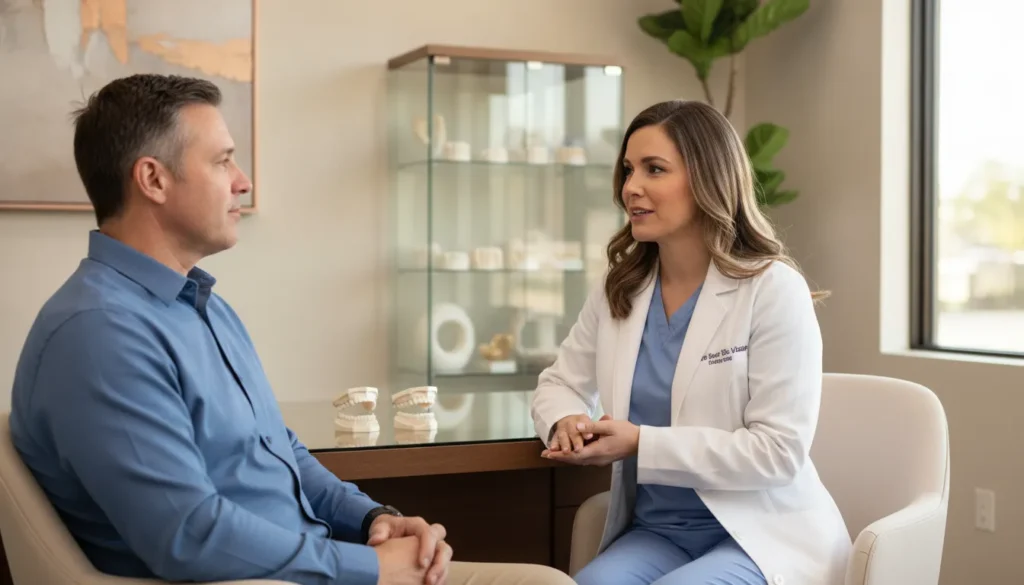
A veneer consultation should begin with more than a discussion about tooth color. The shape, proportion, bite, gum health, existing restorations, and overall condition of your teeth all influence whether porcelain is an appropriate choice. For patients in Roseville and nearby communities, specialist-led planning can help distinguish a focused cosmetic concern from a problem that requires broader restorative care.
Schedule a consultation to discuss your concerns and receive a personalized assessment.
Porcelain veneers Roseville CA patients can consider are custom-made shells designed to improve selected visible teeth. But candidacy depends on a clinical evaluation of oral health, tooth structure, bite, and personal goals. A prosthodontist can help determine whether veneers, composite bonding, or another treatment better fits your needs.
At Dr. Jefferson Clark Personalized Oral Health, the process is deliberately thorough. Dr. Clark is a board-certified prosthodontist and Fellow of the American College of Prosthodontists, and his Roseville practice combines specialty evaluation with an in-house dental lab. Digital imaging, intra-oral scanning, and direct laboratory coordination support thoughtful design and communication while keeping the focus on your health, function, and realistic expectations. You can review the practice’s porcelain veneer details before deciding whether to explore treatment.
The next step is understanding why prosthodontic expertise matters when veneers are being planned for a complete smile rather than a single isolated feature.
Why Choose a Prosthodontist for Porcelain Veneers in Roseville, CA?
Choosing porcelain veneers is not only a decision about color or tooth shape. Veneers become part of a functional bite, a facially visible smile, and an overall restorative plan. A specialist evaluation helps determine whether veneers are appropriate for your teeth and whether the proposed design respects your oral health. The assessment considers tooth structure and how your teeth meet when you chew.
Prosthodontics is the dental specialty focused on restoring oral health, function, and appearance. That broader perspective matters when a cosmetic concern may also involve worn enamel, an uneven bite, old dental work, or another underlying issue. A prosthodontist can assess the smile as a connected system rather than treating a single visible tooth in isolation. Learn more about prosthodontic expertise and how it applies to complex restorative and cosmetic decisions.
Specialist training supports more complete planning
Dr. Jefferson Clark is a board-certified prosthodontist and Fellow of the American College of Prosthodontists. He holds a DDS, MS, and prosthodontic certificate from Loma Linda University. He is also one of fewer than 500 board-certified prosthodontists in California. Those credentials do not promise a particular cosmetic result, but they identify a focused level of training for patients seeking carefully planned restorative care. Dr. Clark’s education and specialty credentials provide more detail about that background.
For patients researching porcelain veneers in Roseville, the specialist question is especially relevant when the concern involves several front teeth or a smile that has changed over time. The evaluation should consider oral health, function, aesthetics, and possible root causes before elective treatment is recommended. This may include discussing whether tooth proportions, existing restorations, wear patterns, or the bite affect the design. The purpose is not to make treatment more complicated than necessary. It is to make sure the proposed cosmetic change fits the conditions that support it.
Veneers can be conservative, but they are not one-size-fits-all
Academic literature describes ceramic veneers as a conservative option for improving the shape, color, or position of anterior teeth. They may mask intrinsic staining, give the appearance of straighter teeth, and address minor malformations without removing substantial amounts of sound tooth substance. Read the supporting review on ceramic veneers and conservative anterior-tooth treatment.
That description still does not make veneers suitable for every patient. The amount of preparation, the material selection, the design of the visible teeth, and the relationship with the opposing teeth all require clinical judgment. In Roseville, a prosthodontic consultation gives you an opportunity to understand those considerations. Compare appropriate alternatives, and proceed only when the plan aligns with your oral health and expectations.
What Makes Dr. Clark’s Veneers Different: The In-House Lab
When you are considering porcelain veneers in Roseville, CA, the material is only one part of the treatment. The planning, communication, and craftsmanship behind each veneer also shape how well the restoration fits your smile, bite, and natural facial features. Dr. Clark’s in-house dental lab brings those parts of the process into closer coordination.
Veneers are designed using digital imaging and intra-oral scans, then fabricated in-house for customization and quality control. Digital records give the prosthodontist and laboratory team a detailed view of the teeth and surrounding structures. That information can support decisions about proportions, contours, shade, and how the proposed veneers should relate to the rest of the smile. It does not replace clinical judgment, but it gives the team a more complete starting point for planning.
Digital planning connected to hands-on craftsmanship
The lab includes CAD/CAM systems, digital imaging, intra-oral scanning, digital wax-ups, 3D printing, and 5-axis CNC milling. Each technology has a specific role. A digital wax-up can help visualize a proposed change in tooth shape before treatment advances. Scanning can capture the dental surfaces without relying only on conventional impressions. CAD/CAM tools help translate the approved design into a restoration, while milling and 3D printing support the production of custom components and models.
These tools are most valuable when they remain connected to an experienced clinical team. A veneer is not simply a manufactured shell placed on a tooth. Its contours must be considered alongside tooth structure, gum display, speech, occlusion, facial proportions, and the patient’s priorities. A digital image may show a possible design, but an in-person evaluation is needed to determine whether that design is appropriate and what changes are clinically responsible.
Direct communication throughout the process
An in-house lab also allows direct coordination between the treating prosthodontist and the laboratory team. Questions about a design, shade, contour, or adjustment can be discussed within the same practice rather than passed between separate offices. That communication supports a more integrated approach to custom restorative work and keeps the clinical goals connected to the technical details.
For patients, the benefit is not a promise of a perfect or guaranteed result. Technology cannot eliminate the need for careful diagnosis, realistic expectations, or thoughtful maintenance. Instead, the combination of digital planning and direct lab coordination creates a structured way to refine the design around the individual. You can learn more about the in-house dental lab and how its capabilities support custom prosthodontic care.
Dr. Clark’s approach is intended for patients who value specialist oversight, precise craftsmanship, and a treatment plan developed around their own oral health and smile goals. The lab is one part of that process, working alongside clinical examination and collaborative planning rather than serving as a substitute for either.
Schedule a consultation if you want to review your veneer goals with a prosthodontist before choosing a treatment path.
The Porcelain Veneer Process from Consultation to Final Placement
Porcelain veneer treatment is planned as a sequence of clinical decisions, not simply a cosmetic surface change. Each visit confirms that veneers are appropriate for your teeth, bite, oral health, and smile goals. The plan is then translated into a restoration that can function comfortably and look natural. At Dr. Clark’s Roseville practice, the process is deliberately paced so you can understand the options before committing to elective treatment.
- History, examination, and diagnostic imaging. The first stage includes a review of your dental and medical history, a clinical examination, and diagnostic imaging when indicated. Dr. Clark evaluates tooth structure, existing restorations, gum health, bite relationships, wear patterns, and the concerns you want addressed. This whole-smile assessment helps distinguish a veneer case from one that may require treatment for an underlying oral-health or functional issue first. The practice describes this multi-visit approach as including history review, examination, imaging, education, expectation-setting, treatment planning, and final care-plan discussions. Learn more about the consultation process.
- Education, smile planning, and informed decisions. You will discuss what veneers can and cannot change, how many teeth may be involved, and whether alternatives deserve consideration. The planning conversation should address color, shape, proportions, tooth display, and the relationship between your smile and bite. Digital imaging, photographs, scans, and other planning records may help organize this discussion. The objective is not to promise a predetermined appearance, but to establish realistic expectations and a treatment plan that fits your oral health and priorities.
- Preparation and impressions or digital records. If veneers are appropriate, the teeth are prepared according to the approved design. The amount and location of preparation depend on the anatomy, material, alignment, and functional requirements of the individual case. The veneer literature emphasizes preparation design, maintaining boundaries within enamel when possible, impression procedures, provisional restorations, material selection, and surface treatment. Review the clinical literature on porcelain veneer planning. Impressions or intraoral scans then capture the information needed to fabricate the restorations accurately.
- Temporary restorations when indicated. Depending on the treatment plan, temporary veneers or other provisional restorations may be placed while the final ceramics are being fabricated. They can protect prepared teeth and provide an opportunity to assess comfort, speech, tooth display, and the planned contours. A Roseville veneer process commonly described in the research includes consultation, preparation, impressions, temporaries when needed, and a later appointment for final bonding. See an example of this general sequence. The number of visits and timing vary with the case, laboratory requirements, and any related treatment.
- Fabrication, try-in, and final bonding. The custom veneers are fabricated from the approved records and design. At the try-in or placement visit, the restorations are evaluated for fit, contacts, contour, shade, speech, and how they relate to the surrounding teeth. Adjustments or additional discussion may be appropriate before final placement. Once the fit and plan are accepted, the porcelain surfaces and teeth are prepared according to the material and bonding protocol, and the veneers are bonded with resin-based cement. Final checks assess the bite and comfort rather than treating placement as the end of the clinical evaluation.
After placement, care includes routine brushing, interdental cleaning, professional examinations, and attention to bite or habits that could place excessive force on the restorations. Avoid using veneers to open packages or bite unusually hard objects. If you notice sensitivity, a change in your bite, a rough edge, or movement, contact the practice for evaluation rather than trying to correct it yourself. A thoughtful process continues beyond bonding because the health of the supporting teeth and gums remains part of the long-term result.
What Can Porcelain Veneers Fix for Roseville Patients?
Porcelain veneers are most often considered when the visible front teeth have cosmetic concerns that affect the balance of the smile. They may be appropriate for discoloration, small chips or cracks, gaps, mild misalignment, and worn or uneven edges. These concerns can arise from tooth development, injury, aging, habits, or changes in the bite. A veneer can address the visible surface, but it should not be used to conceal untreated disease or a structural problem.
Veneers are custom-made ceramic shells that cover the front surfaces of selected teeth. Academic literature describes ceramic veneers as a conservative option for improving the shape, color, or position of anterior teeth. They may mask intrinsic staining and create the appearance of straighter teeth. The relevant question is not simply whether a tooth looks different. It is whether the tooth has enough healthy structure and whether the bite can support the restoration. The evaluation must also consider whether a veneer is the most appropriate way to meet the patient’s goals.
Common concerns veneers may address
- Discoloration: Veneers may be considered when intrinsic staining is not adequately addressed by whitening or when a more comprehensive change in shape and color is being planned.
- Chips, cracks, and worn edges: A veneer may restore the visible contour of an anterior tooth when the remaining structure and bite are suitable.
- Small gaps or mild misalignment: Carefully planned restorations can change the apparent proportions and spacing of front teeth. They are not a substitute for orthodontic treatment in every case.
- Uneven shape or development: Custom ceramic restorations may help coordinate teeth that differ in size, contour, or visible form.
Veneers are generally associated with the teeth that show when a patient smiles. They are not a universal solution for every tooth. A heavily damaged tooth may need a crown or another restorative approach, and molars often require a design focused more heavily on function. The decision should follow an examination rather than a photograph or a requested number of veneers.
| Option | Often considered for | Planning considerations |
|---|---|---|
| Porcelain veneers | Visible front-tooth discoloration, chips, gaps, mild alignment concerns, and worn or uneven edges. | Requires evaluation of tooth structure, oral health, bite, shade, proportions, and the desired extent of treatment. |
| Composite bonding | Selected minor shape, chip, or spacing concerns when a conservative direct restoration may be suitable. | Material selection, location, bite forces, and the patient’s maintenance expectations influence whether it is appropriate. |
| Crowns | Teeth with more extensive structural damage or functional demands that a veneer may not adequately address. | More of the tooth may require coverage, and the design must protect and restore function as well as appearance. |
Cosmetic bonding is a conservative alternative to porcelain veneers for some patients. It may be preferable when the change needed is limited or when preserving existing tooth structure is the primary consideration. Conversely, porcelain is described as stain-resistant and durable, but those general material characteristics do not guarantee a particular result or make it right for every bite.
At Dr. Clark’s Roseville practice, the fee for porcelain veneers is provided as a range and depends on treatment planning. Factors include the number of teeth, the condition of the smile, and the restorative approach selected. A consultation can clarify whether veneers, bonding, crowns, whitening, orthodontic care, or a combination would best address the underlying concern. Review the porcelain veneer details before discussing a plan tailored to your teeth and overall oral health.
How to Know If Porcelain Veneers Are Right for You
Choosing porcelain veneers begins with a clinical question, not only an aesthetic one: can the teeth, bite, and surrounding oral structures support the planned restoration? For patients considering porcelain veneers in Roseville, CA, candidacy depends on an individualized examination of oral health, available tooth structure, bite relationships, and the changes you want to make. A consultation can clarify whether veneers fit those needs, or whether another sequence of care would be more appropriate.
Oral health comes before cosmetic treatment
Active decay, gum inflammation, untreated infection, or other unresolved conditions may need attention before elective cosmetic treatment is considered. Veneers cover the visible front surface of a tooth, but they do not replace the need for a healthy foundation. The assessment should also consider existing restorations, enamel, cracks, wear, and any symptoms that could point to an underlying functional problem. This is why a veneer discussion should include more than photographs or a preferred shade.
The amount and condition of available tooth structure also matter. Porcelain veneers are designed for specific front-tooth concerns, but the preparation and bonding approach must be matched to the individual tooth. A clinical evaluation determines whether the tooth can be treated conservatively and whether a veneer is the right type of restoration. The practice explains candidacy, materials, and limitations on its porcelain veneer details page.
Bite, function, and goals need to align
A veneer plan should account for how the teeth meet and how you use your front teeth. Habits such as clenching or grinding may also affect the treatment strategy. The objective is not simply to alter visible tooth surfaces. It is to plan a smile that works within the patient’s broader oral health and functional context. Tooth position, proportion, speech, lip support, and the relationship between individual teeth can all influence what is realistic.
Your goals are equally important. Some patients want to address discoloration or small chips, while others are concerned about shape, spacing, or mild irregularity. Clear communication helps distinguish a change that veneers can reasonably address from a concern that may call for orthodontic, periodontal, restorative, or other care. Veneers are elective cosmetic treatment, so education and realistic expectations should come before a commitment, as outlined in the practice’s consultation process.
Local care for patients who value careful planning
Dr. Jefferson Clark provides specialty-level porcelain veneer care for patients in Roseville and nearby communities, including Rocklin, Granite Bay, Folsom, the greater Sacramento area, and Northern California. For a patient seeking custom treatment, the relevant question is not whether every smile can receive veneers. It is whether this treatment is clinically appropriate for that smile, and whether the proposed plan respects both appearance and function.
A thorough consultation allows time to review your history, examine your teeth and bite, discuss expectations, and explain available options. That process is especially useful when you are comparing porcelain with a more conservative alternative or considering whether cosmetic treatment should follow other restorative care. The result is a treatment decision grounded in your circumstances rather than a generic template.
Schedule a consultation before treatment to discuss candidacy, alternatives, and a plan tailored to your smile.
Frequently Asked Questions
How long does the porcelain veneer process take?
The timeline depends on your examination, diagnostic planning, laboratory design, and any treatment needed first. The process commonly includes consultation, preparation when indicated, impressions or digital scans, provisional restorations when appropriate, and a final try-in and bonding visit. A multi-visit approach allows time to review expectations and confirm that the proposed design fits your oral health, bite, and goals.
Are porcelain veneers permanent?
Porcelain veneers are a long-term restoration, not a permanent treatment. The practice describes a typical service range of 10 to 15 years, subject to individual conditions and care; this is not a guarantee. Because preparation may alter enamel, veneer treatment should follow a careful evaluation and a discussion of alternatives.
How should I maintain porcelain veneers?
Care for veneers with consistent brushing, flossing, routine professional examinations, and attention to your bite. Avoid using restored teeth to open packages or bite hard objects. If you clench or grind, Dr. Clark may discuss protective measures such as a night guard when clinically appropriate. Maintaining the surrounding teeth and gums is part of protecting the overall result.
Can porcelain veneers be placed on any tooth?
Veneers are most often used for visible anterior teeth with concerns such as discoloration, chips, gaps, mild misalignment, or worn edges. They are not appropriate for every tooth or every condition. The amount of remaining tooth structure, oral health, bite, and severity of damage determine whether veneers, bonding, a crown, or another approach is more suitable.
Do you provide porcelain veneers for patients outside Roseville?
Dr. Clark’s prosthodontic practice is in Roseville and serves patients from Rocklin, Granite Bay, Folsom, the greater Sacramento area, and Northern California. If you are considering treatment from one of these communities, a consultation can clarify whether the practice, treatment process, and follow-up needs fit your situation.
Schedule a Consultation for Porcelain Veneers in Roseville
A thoughtful consultation can help clarify whether porcelain veneers fit your oral health, smile goals, and expectations. Dr. Clark can review your concerns, discuss appropriate options, and explain the planning process before you decide on treatment. To talk through your goals and next steps, schedule a consultation with the practice.