


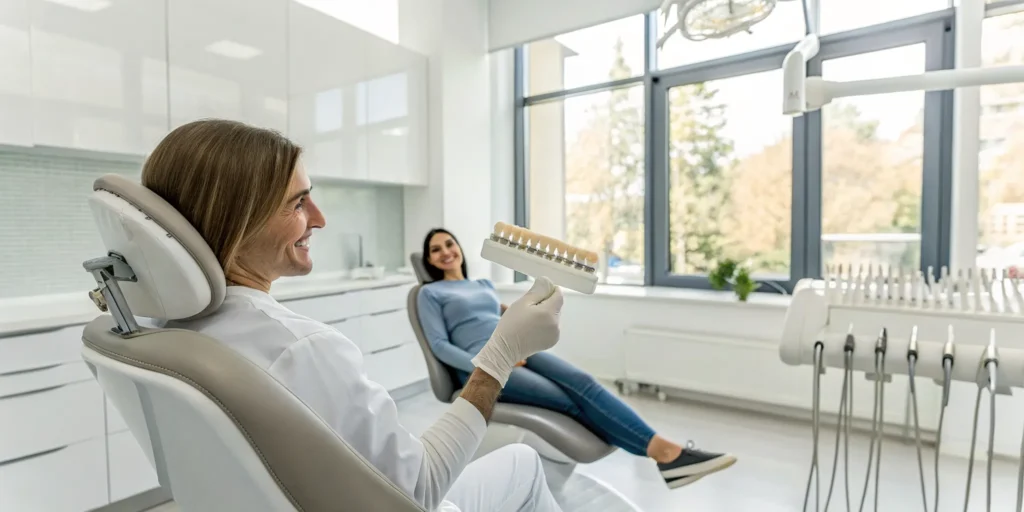
Let’s be honest: the biggest fear for many people considering veneers is ending up with a smile that looks fake. We’ve all seen teeth that are too white, too bulky, or too uniform, and it’s a valid concern. However, that unnatural look is a sign of poor-quality work, not a flaw in the procedure itself. A truly beautiful, natural-looking result is absolutely achievable, but it depends entirely on the artistry and expertise of your provider. This guide will show you how to find the best cosmetic dentist for veneers by teaching you how to spot the difference between a technician and a true artist, someone who customizes every detail to create a smile that looks authentically yours.
Key Takeaways
- Seek Out a Specialist for the Best Results: The quality of your veneers is tied to the provider’s skill, so look for a prosthodontist who has years of advanced training in cosmetic and restorative dentistry.
- An In-House Lab Is a Major Advantage: A practice that creates veneers on-site offers superior quality control and customization, allowing the dentist and technician to collaborate directly on the perfect fit and appearance.
- A Natural Look Is a Custom Job: The best results come from a detailed smile design process where the material, shape, and shade are all chosen to complement your unique facial features, not create a one-size-fits-all look.
What Makes a Dentist the Best Choice for Veneers?
Getting veneers is a significant decision, and the skill of the dentist you choose is the single most important factor in your results. While many dentists offer veneers, the quality of the outcome can vary dramatically. The best dentists view this process as a blend of art and science, requiring a deep understanding of facial aesthetics, tooth function, and advanced materials. They don’t just place a veneer on a tooth; they design a smile that complements your features and functions harmoniously with your bite.
Finding a provider with this level of expertise means looking beyond a simple “cosmetic dentist” label. You’ll want to find someone with specialized training, a proven track record, and the right resources to create a truly custom result. Think of it like commissioning a piece of art. You wouldn’t just hire any artist; you’d seek out a specialist whose style and skill align with your vision. The same principle applies when you are restoring lost teeth or enhancing your smile. Understanding a few key distinctions will help you identify a true expert who can deliver a beautiful, natural-looking smile that lasts.
Prosthodontist vs. Cosmetic Dentist: Know the Difference
You’ll see the term “cosmetic dentist” used a lot, but it’s important to know that it isn’t a formal dental specialty. Any general dentist can call themselves a cosmetic dentist. A prosthodontist, on the other hand, is a recognized specialist who completes three additional years of advanced training focused on restoring and replacing teeth. This specialization gives them an exceptional level of expertise in complex procedures like veneers, crowns, and implants.
While a talented general dentist can certainly place veneers, a prosthodontist has dedicated their career to mastering the art and function of dental restorations. They possess an in-depth understanding of smile design, materials, and the mechanics of a healthy bite, ensuring your veneers not only look amazing but also feel comfortable and function correctly for years to come.
Why Advanced Credentials Matter
When a dentist is truly passionate about cosmetic work, they go the extra mile to hone their craft. Look for a provider who pursues ongoing education and holds memberships in respected professional organizations, like the American Academy of Cosmetic Dentistry (AACD). These affiliations show a commitment to staying current with the latest techniques and materials in the field.
This dedication to continuous learning is a strong indicator that the dentist is invested in providing the highest standard of care. A dentist focused on aesthetics will often have advanced certifications specifically in cosmetic and restorative dentistry. This extra training goes far beyond what’s required and signals a genuine passion for creating beautiful, healthy smiles. It’s a clear sign that you’re in capable and dedicated hands.
The In-House Lab Advantage
The creation of a porcelain veneer is a collaborative process between your dentist and a ceramic artist, or lab technician. Traditionally, this involves sending impressions and instructions to an outside dental lab, which can add weeks to the timeline and create room for miscommunication. A practice with an in-house dental lab offers a significant advantage by bringing this entire process under one roof.
This setup allows for seamless collaboration. Your dentist can work side-by-side with the technician, making real-time adjustments to ensure the shape, color, and fit of your veneers are absolutely perfect. It gives the dentist ultimate quality control over the final product and often shortens the time you have to spend in temporary veneers. This direct partnership is key to achieving a truly customized and natural-looking result.
Your Veneer Options: Porcelain, Composite, and Minimal-Prep
Once you decide veneers are right for you, the next step is figuring out which type best fits your smile goals, budget, and dental health. It’s not a one-size-fits-all decision, and a great dentist will walk you through the pros and cons of each option. The three main categories you’ll encounter are porcelain, composite, and minimal-prep veneers. Each has a distinct set of benefits related to appearance, durability, cost, and the preparation process.
Porcelain is often considered the top-tier choice for its beauty and strength, while composite offers a more budget-friendly and faster alternative. Minimal-prep veneers represent a conservative approach focused on preserving as much of your natural tooth as possible. Understanding the key differences will help you have a more productive conversation with your dentist and feel confident in the treatment plan you choose together. The right material and technique will ultimately depend on your unique needs and what you want to achieve with your new smile.
Porcelain Veneers: The Gold Standard for a Natural Look
When you picture a flawless, celebrity-caliber smile, you’re likely thinking of porcelain veneers. These are ultra-thin, custom-fabricated shells of dental ceramic that are bonded to the front of your teeth. Their biggest advantage is their incredibly natural appearance. High-quality porcelain has a translucent quality that mimics the way light reflects off of real tooth enamel, giving them a lifelike depth that’s hard to beat.
Beyond their beauty, porcelain veneers are tougher than composite material, making them highly durable and resistant to staining from coffee, tea, or red wine. Because they are crafted in a lab, they offer a level of precision and customization that allows for truly transformative results. This is where having an in-house dental lab becomes a huge asset, ensuring every detail is perfected for your specific smile.
Composite Veneers: A Versatile and Budget-Friendly Choice
Composite veneers, also known as dental bonding, are made from a tooth-colored resin material that is applied directly to the tooth and sculpted into shape by the dentist. One of the main draws of this option is the cost. Composite veneers are typically about half the upfront cost of porcelain, making them a more accessible choice for many people. The process is also faster and can often be completed in a single appointment.
However, there are trade-offs to consider. The resin material is more porous than porcelain, so it can stain over time and may not last as long. While a skilled dentist can achieve beautiful results, composite veneers may look slightly less natural than their porcelain counterparts. They are a great solution for smaller cosmetic issues like chips or gaps but may not be the ideal choice for a complete smile makeover.
Minimal-Prep Veneers: Preserve Your Natural Teeth
Minimal-prep or “no-prep” veneers aren’t a different type of material but rather a different application technique. This approach focuses on preserving as much of your healthy tooth enamel as possible. While traditional veneers require the removal of a thin layer of enamel to ensure a flush fit, minimal-prep veneers are so thin that they can be placed with little to no tooth alteration. This makes the process less invasive and often reversible.
This conservative method is a core part of a dental philosophy centered on saving natural teeth whenever possible. However, this option isn’t suitable for everyone. It works best for patients who have properly aligned teeth and are looking to correct minor imperfections like discoloration or small gaps. A thorough evaluation is needed to determine if you are a good candidate for this tooth-preserving technique.
How to Find and Vet the Right Dentist for Your Veneers
Finding the right dentist is the single most important step in your veneer journey. The quality of your final smile depends entirely on the skill, artistry, and experience of the person placing them. This isn’t a decision to rush. A great cosmetic dentist will act as your partner, guiding you through the process with care and precision. To find a professional you can trust, you’ll want to look closely at their credentials, read patient reviews with a critical eye, study their past work, and ask specific questions about their process and technology. Taking the time to do this research upfront ensures you’ll end up with a beautiful, natural-looking smile you can feel confident about for years to come.
Start with Credentials and Specialization
When you’re looking for someone to craft your new smile, you want an expert, not a generalist. While any dentist can technically offer veneers, the best results come from those with advanced training in cosmetic and restorative dentistry. Look for a prosthodontist, a specialist who has completed years of additional education focused on creating beautiful, functional smiles. These experts have a deep understanding of dental aesthetics and complex restorations.
You can also check for memberships in respected organizations like the American Academy of Cosmetic Dentistry (AACD), which shows a dentist’s commitment to excellence and continuing education. A dentist’s credentials and specialization are a clear indicator of their dedication to the art and science of cosmetic dentistry, giving you confidence that you’re in capable hands.
Read Patient Reviews Like an Expert
Patient reviews offer a window into what it’s really like to work with a dentist. Go beyond the star ratings and read the stories people share. Look for detailed testimonials that talk about the entire experience, from the initial consultation to the final reveal. Are patients consistently happy with their results? Do they mention the dentist’s chairside manner, attention to detail, and willingness to listen to their goals?
Pay attention to comments about the office environment and the helpfulness of the staff. You want to find a practice where patients feel heard, respected, and comfortable throughout the process. Consistent, glowing reviews that highlight both the beautiful results and the positive personal experience are a great sign you’ve found a winner.
Scrutinize Their Before-and-After Gallery
A dentist’s before-and-after gallery is their portfolio, and it speaks volumes about their skill and artistic style. As you browse through photos, look for results that appear natural and customized to each person’s face. The goal isn’t a one-size-fits-all “Hollywood” smile, but one that enhances the individual’s unique features. Do the veneers have the subtle translucency and texture of natural teeth? Do they fit the person’s smile line and facial proportions?
A strong portfolio will showcase a variety of cases, demonstrating the dentist’s ability to handle different cosmetic challenges. This gallery is your best tool for assessing a dentist’s approach to aesthetics and deciding if their style aligns with your vision for your own smile.
Ask About Technology, Materials, and Lab Details
The final quality of your veneers is directly tied to the materials used and the skill of the lab technician who creates them. During your consultation, don’t be shy about asking what kind of materials the dentist recommends and why. High-quality porcelain, for example, offers superior durability and a more natural appearance compared to other options.
Even more important is asking where the veneers are made. Many dentists outsource this work to external labs, which can lead to inconsistencies. A practice with an in-house dental lab offers a significant advantage. It allows the dentist and lab technician to work side-by-side, ensuring every detail of your veneers, from the color to the shape, is perfectly customized for a seamless and beautiful result.
Key Questions to Ask During Your Veneer Consultation
Your consultation is more than just a price quote; it’s your chance to interview the person you’re trusting with your smile. A great cosmetic dentist will welcome your questions and provide clear, confident answers. Walking in prepared with a list of questions helps you make an informed decision and ensures you and your dentist are aligned on the final vision. Think of it as a partnership where you’re both working toward the same beautiful, natural-looking result.
This initial meeting is where you’ll gauge their expertise, their artistic eye, and whether their approach feels right for you. It’s your opportunity to go beyond the before-and-after photos and understand the philosophy that guides their work. A dentist who takes the time to listen to your concerns and thoroughly explain their process is one who values patient collaboration. This conversation is the foundation for your entire experience, so it’s important to cover everything from the dentist’s background to the fine details of the procedure. You’re not just buying a product; you’re investing in a highly customized service that will impact your appearance and confidence for years. By asking the right questions, you can feel confident that you’ve chosen a partner who understands your goals and has the expertise to bring them to life.
About Their Qualifications and Experience
Not all dentists specialize in cosmetic work. You’ll want to find someone with specific, advanced training in aesthetic dentistry. A prosthodontist, for example, completes years of additional education focused on complex restorations and cosmetic procedures. Don’t be shy about asking directly about their credentials and hands-on experience.
Helpful questions to ask include:
- What specific training do you have in cosmetic dentistry?
- Are you a member of any professional organizations like the American Academy of Cosmetic Dentistry?
- How many veneer cases do you complete each year?
- Can I see photos of cases similar to mine?
A dentist who is proud of their work will be happy to share their qualifications and portfolio with you.
About Their Approach to a Natural-Looking Smile
The biggest fear for many people is ending up with veneers that look bulky, opaque, or fake. The best results come from a dentist who has a keen eye for artistry, not just technical skill. Your veneers should be custom-designed to fit the unique proportions of your face, complement your skin tone, and look like the best version of your natural teeth. A dentist’s philosophy on aesthetics is crucial.
Ask these questions to understand their approach:
- How do you ensure the veneers will look natural and not like a “one-size-fits-all” smile?
- What is your process for designing the shape, size, and shade of the veneers?
- Will I get to see a mock-up or “trial smile” before the final veneers are made?
About the Process, Materials, and Long-Term Care
Understanding the practical details of the veneer process helps set clear expectations. You should know what materials will be used, what the timeline looks like, and how to protect your investment for years to come. A dentist with an in-house dental lab has a significant advantage, as it allows for greater control over the quality and customization of your final veneers.
Be sure to ask about these key details:
- What material do you recommend for my veneers (e.g., porcelain or composite), and why?
- What are the steps involved in the procedure, from preparation to final placement?
- How should I care for my veneers to ensure they last as long as possible?
- What is your policy if a veneer needs an adjustment or repair?
The Veneer Process: What to Expect from Start to Finish
Thinking about veneers can feel both exciting and a little overwhelming. Knowing what happens step-by-step can make the entire experience feel much more manageable. A great dentist will walk you through every phase, but here’s a general roadmap of what the journey to a new smile looks like, from your first conversation to the final result.
Your Initial Consultation and Smile Design
This first meeting is all about you. It’s a conversation where you can share your goals and ask all your questions. A skilled dentist will listen carefully and also perform a thorough evaluation of your oral health. They’ll check your bite stability and overall tooth condition to confirm that veneers are the best long-term solution for you. This is your chance to discuss the exact shape, shade, and character you want for your new smile. A prosthodontist, in particular, will focus on creating a look that is both beautiful and in complete harmony with your facial features, ensuring your results are a true reflection of you. This collaborative approach to aesthetic design is key to a final look you’ll love for years.
Prepping Your Teeth and Creating a Blueprint
Once you and your dentist have a shared vision, the next step is preparing your teeth. For porcelain veneers, this involves removing a very thin layer of enamel, typically just 0.3 to 0.5 millimeters. This isn’t about damaging your teeth; it’s about creating the perfect amount of space for the veneers to sit flush with your gumline for a seamless, natural appearance. After the prep work, your dentist will take a precise digital scan or impression of your teeth. This detailed blueprint is sent to the dental lab where your custom veneers will be crafted. You’ll leave this appointment with temporary veneers that protect your teeth and give you a preview of your new smile while the in-house lab gets to work.
Placing and Perfecting Your Final Veneers
This is the appointment you’ve been waiting for. It typically takes place a few weeks after your prep appointment. Your dentist will start by gently removing your temporary veneers and cleaning your teeth. Then, they will carefully place each permanent veneer to check the fit, shape, and color. This is a meticulous process, and your dentist will make tiny adjustments to ensure everything is perfect before permanently bonding them. They will also check your bite to make sure your new smile is not only beautiful but also fully functional. Once you’ve both approved the look and feel, the veneers are bonded into place, polished, and your new smile is complete. The focus on dental function is just as important as the aesthetics.
How to Care for Your New Smile
One of the best things about porcelain veneers is that they don’t require a complicated care routine. You simply need to treat them like your natural teeth. This means committing to good oral hygiene habits to keep your underlying teeth and gums healthy. You’ll still need to brush twice a day with a non-abrasive toothpaste and floss daily. Regular dental check-ups and cleanings are also essential to ensure your veneers and your natural teeth stay in top condition. While veneers are incredibly durable, it’s wise to avoid using them as tools (like opening packages) or biting into extremely hard foods to prevent any chance of chipping. With the right care, your veneers will keep you smiling for a very long time.
How Much Do Veneers Cost (and What Are You Paying For)?
Let’s talk about one of the biggest questions on everyone’s mind: the cost. While the price of veneers can vary quite a bit, it’s helpful to think of it not just as a cost, but as an investment in your smile’s long-term health and beauty. The final number on your treatment plan is influenced by the materials used, the skill of the dentist and their team, and the quality of the dental lab. Understanding what goes into the price helps you see the incredible value behind achieving beautiful, natural aesthetics.
Porcelain vs. Composite: A Cost Comparison
The material you choose is one of the biggest factors in the overall cost. Composite veneers are made from a tooth-colored resin applied directly to your teeth and are typically about half the upfront cost of porcelain. They are a great budget-friendly option, but they generally last between seven to ten years and can be more prone to staining.
On the other hand, porcelain veneers are the gold standard for a reason. While they are a bigger initial investment, they are incredibly durable, stain-resistant, and offer a translucent quality that looks almost identical to natural tooth enamel. For many people, the longevity and lifelike appearance of porcelain make the higher cost a worthwhile investment in a smile they can feel confident about for years to come.
How Lab Quality Influences the Price
The final look of your veneers has everything to do with the artistry of the person who creates them. The price reflects not just the material, but the skill and time invested by the dental lab technician. A lower price point might mean the veneers are coming from a large, outsourced lab that produces them in bulk, often resulting in a less customized or natural-looking fit.
A top-tier dentist works with master ceramists who meticulously craft each veneer by hand. This ensures a perfect match to your other teeth and a shape that complements your unique facial features. At our practice, we take this a step further with an in-house dental lab, allowing for unparalleled collaboration between Dr. Clark and our technician. This direct partnership ensures every detail is perfect, giving you a truly bespoke result.
Understanding Your Financing Options
A beautiful, healthy smile should be accessible. Don’t let the initial cost keep you from exploring your options. Most dental practices that specialize in high-quality cosmetic work understand that this is a significant investment and will offer ways to make it more manageable. During your consultation, you should feel comfortable asking about the practice’s payment policies and any available financing plans.
Many offices partner with third-party financing companies, like CareCredit, which offer flexible payment plans, sometimes with no interest for a promotional period. The best dental teams are transparent about all costs and are happy to walk you through the process. We encourage you to discuss your options with our team so we can help you find a solution that fits your budget.
Common Myths About Veneers, Debunked
Veneers have been a hot topic for years, and with that popularity comes a lot of misinformation. It’s easy to get the wrong idea from celebrity horror stories or outdated information. The reality of modern veneers, especially when handled by a specialist, is far more nuanced and positive than the myths suggest. Let’s clear up a few of the most common misconceptions so you can approach your smile transformation with confidence.
Understanding the truth behind the process is the first step. High-quality veneers are a blend of art and science, designed to enhance your smile while respecting your natural teeth. When you work with an expert who prioritizes dental health and custom results, you can achieve a beautiful outcome that is both durable and incredibly natural-looking. Forget the myths; let’s focus on the facts.
Myth #1: “Veneers always look fake.”
We’ve all seen them: veneers that are too white, too bulky, or too perfect to be real. This is often the biggest fear people have, but it’s a fear rooted in poor-quality work, not the treatment itself. With the right dentist, veneers can look completely natural. The key is customization. A prosthodontist with an artistic eye will meticulously design your veneers to match the unique shade, shape, and translucency of your surrounding teeth. Our focus on natural aesthetics means we consider every detail, from the way light reflects off the porcelain to the subtle imperfections that make a smile look genuine. Having an in-house dental lab gives us unparalleled control to create a seamless, authentic appearance.
Myth #2: “The process will ruin my natural teeth.”
Another common misconception is that getting veneers requires aggressively shaving down your healthy teeth. In reality, the process involves minimal enamel removal, and when done correctly, it preserves the integrity of your teeth. A qualified dentist’s primary goal is always to protect your oral health. The amount of preparation needed is very slight, often just enough to ensure the thin porcelain shell fits perfectly and bonds securely. This conservative approach is central to our philosophy of saving natural teeth. The veneer acts as a new, protective facing for your tooth, strengthening it without causing damage.
Myth #3: “Veneers are only for cosmetic purposes.”
While veneers are famous for creating stunning smile makeovers, their benefits go far beyond looks. They can also serve a restorative purpose. Thanks to the incredible strength of porcelain, veneers can protect teeth from future damage or decay. For patients with worn, chipped, or cracked enamel, a veneer can restore the tooth’s structure and durability. They can also be used to close small gaps or correct minor alignment issues, improving your bite and overall dental function. This makes them a versatile treatment that provides both aesthetic and functional benefits, contributing to long-term oral health.
Red Flags to Watch For When Choosing a Dentist
Choosing a dentist for your veneers is a major decision, and you deserve to feel completely confident in your choice. While many dentists offer veneers, not all deliver the same level of artistry, skill, or care. Knowing what to look out for can help you avoid a disappointing experience and protect both your smile and your investment. Think of these red flags as your guide to spotting a practice that might not have your best interests at heart. A great dentist will make you feel like a partner in the process, ensuring the final result is something you both feel proud of.
Rushed Consultations or a “One-Size-Fits-All” Plan
Your veneer consultation should be a detailed conversation, not a quick sales pitch. A great dentist will take the time to understand your goals, assess your oral health, and discuss what’s realistically achievable for your smile. If you feel rushed, or if the dentist presents a generic treatment plan without a thorough evaluation, consider it a major red flag. Veneers are not a one-size-fits-all solution. The final result should be a reflection of your unique facial features and personal goals. A truly expert approach involves creating a personalized plan that harmonizes with your overall facial aesthetics for a balanced, beautiful, and natural-looking outcome.
Lack of Transparency About Materials and Lab Process
You have a right to know exactly what materials will be used for your veneers and where they will be made. A dentist who is vague about these details should give you pause. Are they using porcelain, which is known for its durability and stain resistance, or a composite resin? Who is crafting the veneers? A dentist who works closely with a master ceramist or has an in-house dental lab has far more control over the quality, fit, and final look of your restorations. This transparency is a sign of a professional who is proud of their work and confident in the quality of their materials and craftsmanship.
Unrealistic Promises and High-Pressure Tactics
Be cautious of any dentist who promises a “perfect” smile without a detailed discussion or uses high-pressure tactics to get you to commit. While veneers can create dramatic transformations, a skilled dentist knows that the goal is a natural result that fits you, not a generic, overly bright “Hollywood” look. A practitioner focused on your well-being will also discuss the importance of preserving your natural teeth and present veneers as one of several potential options. You should feel educated and empowered to make a decision on your own timeline, never pressured into a procedure you’re not completely comfortable with.
Our Approach to Beautiful, Natural-Looking Veneers in Roseville
Creating a beautiful smile with veneers is about more than just technical skill; it’s an art form. Our goal isn’t to give you a generic “Hollywood” smile, but one that looks and feels authentically yours. We believe the best results come from a deep understanding of facial harmony, a commitment to dental health, and a meticulous creation process. This is where our unique approach truly makes a difference for our patients in Roseville.
As a prosthodontist, Dr. Clark has years of advanced training in the complex dynamics of a smile, focusing on both aesthetics and long-term function. This expertise allows us to design veneers that not only look stunning but also work in harmony with your bite and facial structure. We don’t just cover up imperfections; we create a comprehensive solution that supports your overall oral health while achieving your cosmetic goals. Our philosophy is rooted in preserving your natural tooth structure whenever possible, ensuring the procedure is as conservative as it is effective.
What truly sets our practice apart is our in-house dental lab. This is not a minor detail; it is central to our success. Having our master technicians on-site allows for a seamless collaboration between Dr. Clark and the artists crafting your veneers. We can make real-time adjustments to shape, color, and fit, ensuring every detail is perfect. This eliminates the guesswork and communication gaps that often occur when working with outside labs. For you, this means a higher level of customization, exceptional quality control, and a final result that beautifully reflects our shared vision for your smile. It’s this blend of advanced clinical expertise and hands-on artistry that allows us to deliver consistently beautiful, natural-looking aesthetics.
Frequently Asked Questions
What’s the main reason to choose a prosthodontist over a general cosmetic dentist for veneers? Think of it this way: while many talented artists can paint, you’d hire a portrait specialist to capture a likeness perfectly. A prosthodontist is a recognized specialist who completes three extra years of advanced training focused entirely on restoring and replacing teeth. This gives them a deeper understanding of how to create veneers that not only look beautiful but also function correctly with your bite for long-term health and comfort.
Are veneers reversible if I change my mind later? Traditional porcelain veneers are considered a permanent treatment because a very thin layer of enamel is removed to create a seamless fit. This step ensures the veneers don’t look bulky and bond securely to your teeth. For this reason, they are not reversible. However, in some specific cases, a minimal-prep technique can be used, which may be reversible. A thorough consultation will determine which approach is best for your smile and goals.
How long do porcelain veneers typically last, and what can I do to protect them? With proper care, high-quality porcelain veneers can last for 15 years or even longer. The best way to protect your investment is to treat them just like your natural teeth. This means maintaining excellent oral hygiene with consistent brushing, daily flossing, and regular dental check-ups. While porcelain is very strong, it’s also wise to avoid using your teeth as tools or biting into extremely hard things like ice or bones.
Will the veneer process be painful? Your comfort is a top priority, and the veneer process is not considered painful. During the tooth preparation appointment, your dentist will use a local anesthetic to completely numb the area. You may feel some minor pressure or vibrations, but you should not feel any pain. Some people experience temporary tooth sensitivity for a few days afterward, but this typically resolves very quickly.
Can veneers fix issues other than just discoloration, like crooked teeth or gaps? Absolutely. Veneers are incredibly versatile and can address a wide range of cosmetic concerns at once. Beyond whitening and brightening your smile, they are an excellent solution for closing small gaps between teeth, repairing chips or cracks, and improving the appearance of minor misalignments. They can create a straighter, more uniform look without the need for orthodontics in many cases.